



A Revolutionary Eye on the Cosmos
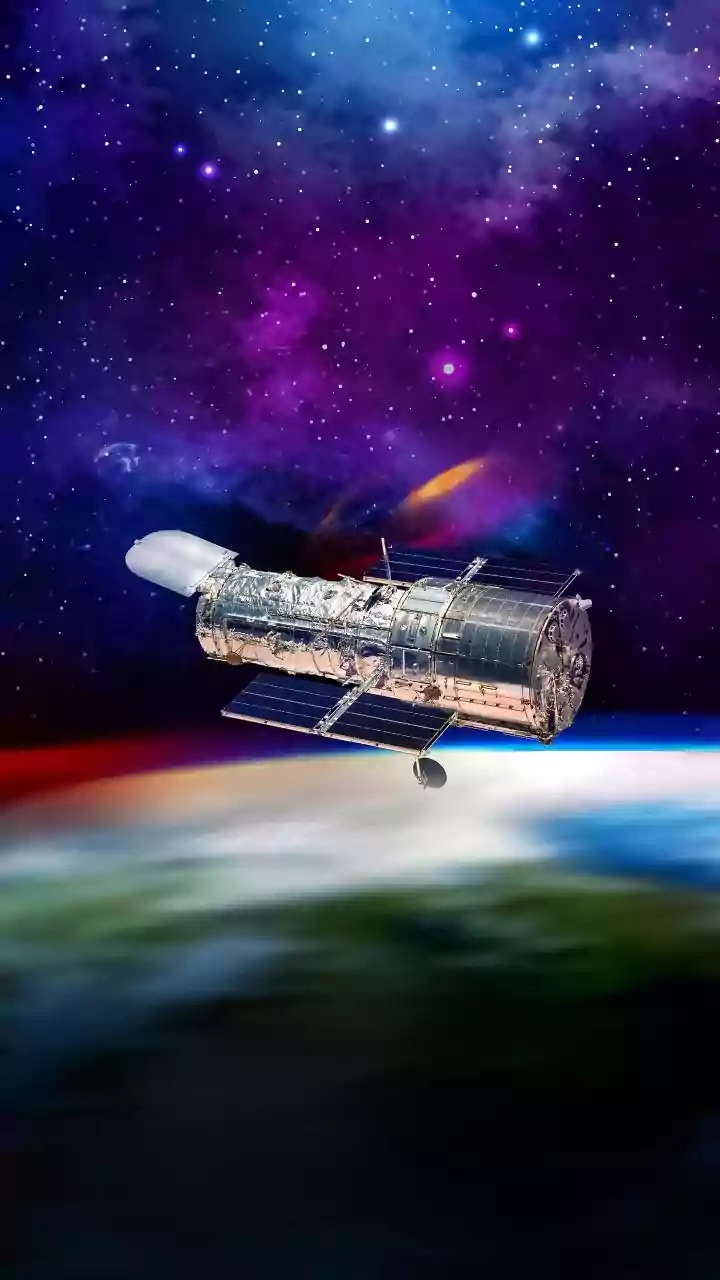
Launched as the successor to Hubble, the James Webb Space Telescope is a technological marvel designed to see the universe in infrared light. This capability is its superpower, allowing it to peer through cosmic dust clouds and detect the faint heat signatures
of distant objects. But one of its most game-changing missions is to study exoplanets—planets orbiting other stars. By giving us an unprecedented look at their chemical makeup, the JWST is transforming our understanding of planetary systems and moving us closer to answering fundamental questions about our place in the universe. It represents a multi-billion dollar investment in knowledge, and the initial returns have been nothing short of spectacular.
How to Read an Alien Atmosphere
So, how does Webb actually 'see' what’s in the air on a planet 700 light-years away? The primary method is called transit spectroscopy. As an exoplanet passes in front of its host star from our perspective, a tiny fraction of the starlight filters through the planet's atmosphere. Different chemicals and molecules in that atmosphere absorb specific wavelengths, or colors, of light. Think of it like a barcode. The light that reaches the JWST has certain colors missing, creating a unique pattern. By reading this 'barcode,' astronomers can determine precisely which molecules are present, from water vapour to carbon dioxide and beyond, without ever directly imaging the planet itself.
Water, Water Everywhere
One of the most exciting revelations from JWST is just how common water appears to be. Water vapour has now been definitively detected in the atmospheres of numerous exoplanets. For example, observations of WASP-96b showed clear signatures of water. Even more intriguing is the planet GJ 9827 d, now dubbed a 'steam world,' which has an atmosphere composed almost entirely of hot water vapour. While these specific worlds are too hot to be habitable as we know it, the consistent discovery of water is a monumental step. It confirms that one of the key ingredients for life is readily available in planetary systems across the galaxy, providing the raw material for potentially habitable worlds.
A Full Chemical Menu
Webb's scans go far beyond just H2O. A comprehensive study of the hot gas giant WASP-39 b provided a full menu of its atmospheric ingredients, including sodium, potassium, carbon dioxide, and carbon monoxide. Crucially, JWST made the first-ever detection of sulfur dioxide (SO2) in an exoplanet's atmosphere. This molecule is created by chemical reactions powered by the energetic light from the parent star—a process called photochemistry. This is significant because a similar process creates Earth's protective ozone layer. Discovering active chemistry on another world shows that exoplanet atmospheres are dynamic, evolving environments, not just static collections of gas.
Tantalising Hints of Habitability
The conversation gets truly exciting when focused on K2-18 b, a planet larger than Earth that orbits within its star's habitable zone. JWST confirmed the presence of carbon-bearing molecules like methane and carbon dioxide in its atmosphere. This combination is noteworthy because it's consistent with a 'Hycean' world—a planet with a hydrogen-rich atmosphere over a water ocean. Early observations also contained a faint, tantalising hint of dimethyl sulfide (DMS), a gas that, on Earth, is overwhelmingly produced by life. However, scientists are extremely cautious. This potential detection is still heavily debated and has not been confirmed, requiring much more data to be considered evidence. It shows the complexity of the search, where even a slight signal must be rigorously tested.