



What Exactly Is Galangal?
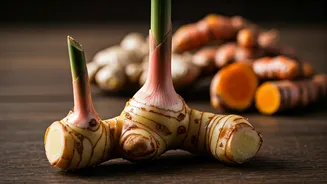
Galangal is a rhizome, or underground stem, that's a close cousin to ginger and turmeric. Often called Thai or Siamese ginger, it's a staple in many Southeast Asian cuisines, including Thai, Indonesian, and Malaysian. Though it resembles ginger, galangal
has a smoother, paler skin, often with pinkish or yellowish hues, and its flesh is much harder and more fibrous. This density means it has to be sliced or pounded rather than grated like its softer relative. Its name in Thai is "kha," and if you've ever enjoyed a bowl of Tom Yum soup or a rich curry, you've likely already experienced its unique flavour.
The Ginger-Galangal Showdown
The most common question is: can you just use ginger instead? The short answer from chefs and food experts is a firm no. While they are related, their flavours are worlds apart. Ginger is known for its pungent, spicy heat and slightly sweet notes. Galangal, on the other hand, delivers a completely different experience. Its flavour is sharp, citrusy, and has a distinct pine-like, earthy quality. Some describe its aroma as refreshing and even slightly medicinal, in a pleasant way, reminiscent of a pine forest. Using one for the other would fundamentally change the taste of a dish, so it’s best to seek out the real deal to achieve authentic flavour.
A Star in Southeast Asian Kitchens
Galangal isn't just an ingredient; it's the backbone of many iconic dishes. In Thailand, it's essential for soups like Tom Yum (hot and sour soup) and Tom Kha Gai (a creamy chicken coconut soup), where it lends a complex, aromatic sharpness. It's also a key component in curry pastes, from red to green, where it is pounded with other ingredients like lemongrass and chillies to create a flavour base. In Malaysian and Indonesian cuisine, you'll find it in rich, slow-cooked dishes like Beef Rendang, where its potent flavour cuts through the richness of the coconut milk and spices. In these recipes, galangal is often added in thick slices to infuse a broth and then removed before serving, as the pieces themselves are too tough to chew.
Health and Wellness Properties
Beyond its culinary uses, galangal has a long history in traditional and Ayurvedic medicine. It is a rich source of antioxidants, particularly polyphenols, which are compounds that help protect the body's cells from damage. Studies have noted its potent anti-inflammatory properties, which may help reduce pain and inflammation associated with conditions like arthritis. Some research has also explored its antimicrobial effects against certain bacteria and its potential role in supporting digestive health by easing issues like bloating and nausea. While more research is always needed, its historical use points to a root valued for both flavour and function.
How to Buy, Store, and Use It
Fresh galangal is your best bet for vibrant flavour and can be found at Asian markets or specialty grocery stores. Look for firm rhizomes with smooth skin. Unlike ginger, fresh galangal can be prone to mould and doesn't last as long in the fridge. For longer storage, the best method is to slice it and freeze it. Lay the slices on a tray in a single layer to freeze before transferring them to a freezer bag. This prevents them from sticking together and makes it easy to grab what you need. You can also find dried slices, powder, and paste. To use fresh galangal, you'll need a sharp knife. For soups, cut it into thin coin-like slices to infuse the broth. For pastes or stir-fries, you'll need to finely chop or pound it to break down its tough, fibrous texture.