


The City as a Living Canvas
For five main days, from Shashthi on October 16 to Dashami on October 21, the city sheds its skin. Streets become galleries, neighbourhoods become stages, and millions of people become a moving audience in a grand spectacle of creativity. This isn't art
confined to a museum; it's a living, breathing ecosystem of craftsmanship that takes over an entire metropolis. In December 2021, UNESCO recognized this unique phenomenon by adding Kolkata's Durga Puja to its list of Intangible Cultural Heritage of Humanity, calling it the 'best instance of the public performance of religion and art'. The recognition wasn't just for the scale, but for the collaborative spirit that fuels it—from the idol makers of Kumartuli who sculpt the goddess from river clay, to the designers, lighting artists, and community organisers who build dazzling temporary temples, known as pandals.
Pandals: From Worship to Social Commentary
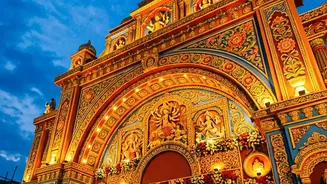
The soul of this city-wide exhibition lies in the pandals. These temporary structures have evolved from simple platforms for the idol into complex, narrative-driven installations. This year is no exception, with themes ranging from history and mythology to urgent social issues. For example, some pandals are recreating architectural marvels like Jaipur's Hawa Mahal at Sreebhumi or a South Indian temple at Mohammad Ali Park. Others delve into history, with Suruchi Sangha paying tribute to Dr. Syama Prasad Mookerjee and Dum Dum Park Tarun Sangha evoking Bengal's maritime trade history with a pandal shaped like a merchant ship. Perhaps most powerfully, themes are tackling contemporary concerns. The 'Shodhan' (Purification) theme at Rajdanga Naba Uday Sangha presents a future where nature has been depleted, forcing visitors to reflect on environmental destruction. This is where Durga Puja transcends festival status and becomes a platform for public discourse, using art to provoke thought and conversation.
The Artistry of Impermanence
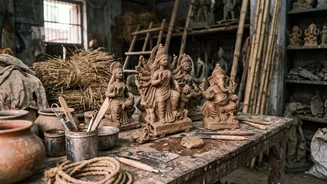
At the heart of every pandal is the idol of Goddess Durga, defeating the demon Mahishasura. The creation of these idols is an art form passed down through generations in hubs like Kumartuli. Artisans sculpt the divine figures from unfired clay, and the festival officially begins when the eyes are painted on the idol in a ritual that is believed to bring the goddess to life. But the true masterclass lies in the festival's embrace of impermanence. After days of worship and admiration, these magnificent idols and the elaborate pandals are dismantled. The clay idols are returned to the river they came from in a ritual immersion. This cycle—of meticulous creation followed by deliberate dissolution—is a profound artistic statement. It mirrors performance art, where the value lies in the experience, not ownership. The art isn't meant to be preserved in a gallery; it's meant to be lived, witnessed, and then let go, making the memory of it even more precious.
A Symphony of Creative Collaboration
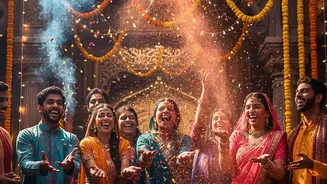
What makes Durga Puja a masterclass is that it is fundamentally collaborative and inclusive. It's an economic powerhouse, generating a significant portion of West Bengal's GDP through its creative industries. But more importantly, it dissolves social barriers. People from all walks of life, regardless of class or creed, participate in 'pandal-hopping', the city-wide pilgrimage to admire the art. This 'Sarbojonin' or 'for all people' spirit has defined the community festival for nearly a century. It's a system where local clubs raise funds, artisans find patronage, and entire communities come together to create something beautiful. The artistry isn't just in the pandals or the idols; it's in the social fabric that is woven together each year, in the shared experience of creating and celebrating something larger than oneself.