


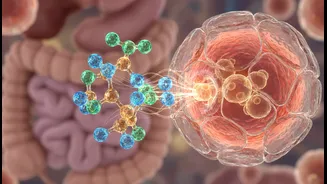



Not All Protein Is Created Equal
Protein is fundamental for everything from muscle repair to immune function. Proteins are made of building blocks called amino acids. There are nine essential amino acids that our bodies can't produce, so we must get them from food. The concept of 'protein
quality' refers to two things: a food's amino acid profile and its digestibility—how well our body can absorb and utilize those amino acids. Animal proteins like meat, eggs, and dairy are considered 'complete' because they contain all nine essential amino acids in proportions our bodies need. Many plant proteins, on the other hand, are 'incomplete', meaning they are low in one or more of these essential amino acids.
The Scorecards: PDCAAS and DIAAS
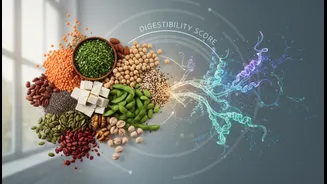
To measure protein quality, scientists developed scoring systems. The most well-known is the Protein Digestibility Corrected Amino Acid Score (PDCAAS), adopted by the FDA in 1993. It evaluates a protein based on human amino acid needs and corrects for digestibility, with 1.0 being a perfect score. However, PDCAAS has limitations. Its scores are capped at 1.0, meaning it can't distinguish between two very high-quality proteins. It also measures digestibility over the entire digestive tract, which can be misleading. More recently, the Food and Agriculture Organization (FAO) has proposed a newer method: the Digestible Indispensable Amino Acid Score (DIAAS). DIAAS is considered more accurate because it measures the absorption of individual amino acids in the small intestine, where most nutrient uptake happens. Unlike PDCAAS, DIAAS scores are not capped, providing a more detailed comparison of high-quality proteins.
Why Plant Proteins Often Score Differently
Many plant-based staples score lower on these scales. For instance, cereals are often low in the amino acid lysine, while legumes tend to be low in methionine. Furthermore, plant foods can contain 'anti-nutritional factors,' like lectins and trypsin inhibitors, which can slightly reduce protein absorption. This is why a food's digestibility is a crucial part of its score. A lower score doesn't mean a food is unhealthy; it simply means that on its own, it may not provide a complete amino acid profile or be as readily absorbed as a higher-scoring protein. This is where understanding the system becomes a powerful tool for preventing nutritional deficits.
Using the Scale to Build a Better Plate
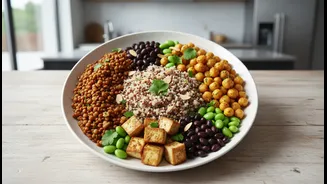
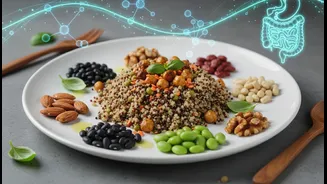
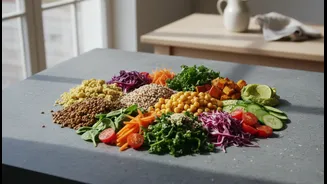
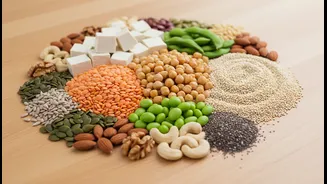
You don't need a calculator at every meal. The knowledge behind these scores can be applied through a simple, time-tested strategy: protein complementation. By combining different plant foods throughout the day, you can easily get all the essential amino acids. The classic example is rice and beans. Rice is low in lysine but beans are rich in it; together, they form a complete protein. The same principle applies to combinations like hummus (chickpeas) and pita bread (wheat), or peanut butter on whole-grain toast. You don't even need to eat them in the same meal; your body maintains a pool of amino acids it can draw from throughout the day. Some plant foods are also complete proteins on their own, including quinoa, soy products (like tofu and edamame), buckwheat, and chia seeds.
A Tool, Not a Rule
While digestibility scales are valuable scientific tools, they are not meant to create dietary dogma. For most people, the key to a healthy plant-based diet isn't obsessing over scores but rather focusing on variety. Eating a wide range of fruits, vegetables, whole grains, legumes, nuts, and seeds generally ensures you cover all your nutritional bases, including protein. Nutritional deficits on plant-based diets are real risks, but they often relate to micronutrients like vitamin B12, iron, and vitamin D, which require separate attention through fortified foods or supplements. Think of protein scores as a helpful guide to understand why variety is so important, empowering you to build a resilient, balanced, and nutritionally sound plant-based lifestyle.