
The Soul of Kutch on Your Walls
Imagine the walls of a home in the Gujarat desert, shimmering under the sun. This is the origin of Lippan Kam, or mud mirror work, a craft born from both necessity and artistry. Traditionally practiced by communities like the Rabari and Mutwa, this art form
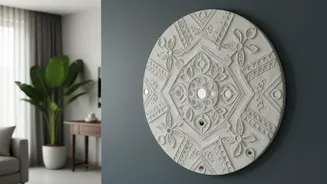
was used to decorate the inner and outer walls of circular mud huts, known as 'bhungas'. The intricate, raised patterns were not just for beauty; the clay mixture provided insulation, keeping homes cool in the blistering desert heat, while the embedded mirrors, or 'aabhla', would catch the faint light of a single lamp and illuminate the entire room. It was a functional art, deeply woven into the fabric of daily life and passed down primarily through women, who would beautify their homes with motifs of peacocks, camels, and geometric designs inspired by their surroundings.
From Humble Mud to Glistening Art
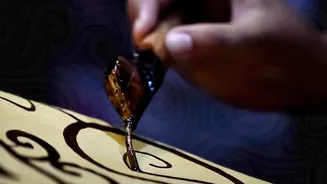
The traditional process is a testament to sustainable craftsmanship. Artisans would prepare a dough-like mixture from locally sourced clay and animal dung, typically from camels or wild asses, which acted as a binding agent. This mixture was then skillfully applied by hand onto moistened walls, with artisans rolling and pinching the clay to create raised relief patterns freehand. While the clay was still wet, small pieces of mirror were carefully pressed into the design. Traditionally, the artwork was left in its natural, earthy state or coated with white clay from the salt-rich sands of the Kutch region. The result was a stunning mural that was both a part of the home’s structure and its soul.
A Bridge Between Tradition and Trend
The very thing that made Lippan Kam so unique—its connection to the mud walls of a bhunga—also limited its reach. To bring this beautiful craft into contemporary urban spaces, artisans have innovated, marking a significant evolution in the art form. The most crucial change has been the move from walls to portable bases. Today, artists create Lippan art on waterproof plywood or Medium-Density Fibreboard (MDF), making it possible to hang these intricate pieces in a Mumbai high-rise or a Delhi flat. The materials for the dough have also been updated. To make the art more durable, lighter, and free from odour, many now use a mixture of chalk powder, sawdust, and adhesives instead of dung. This allows for finer, more precise lines and makes the art accessible to a wider audience.
New Designs for Modern Tastes
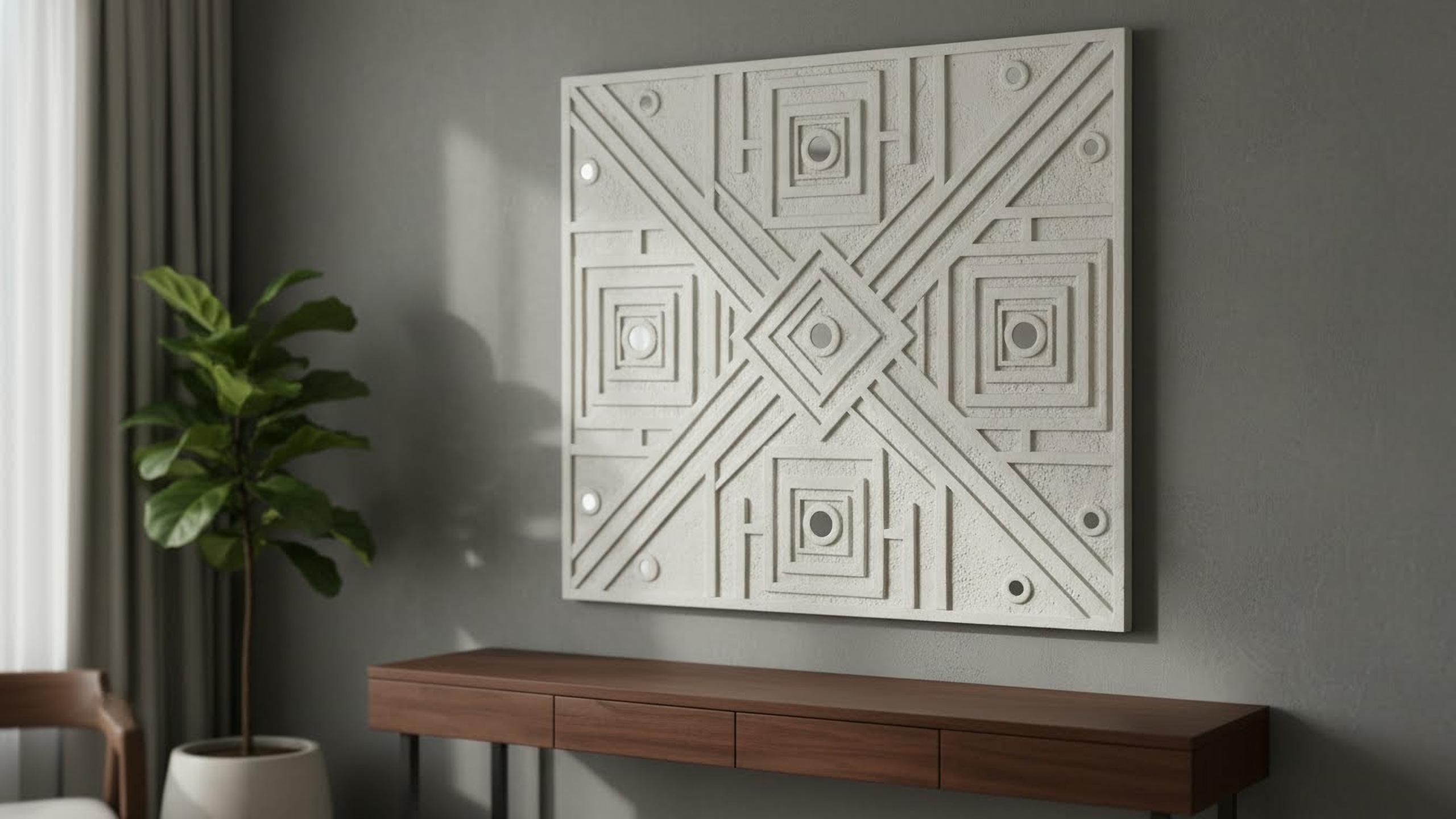
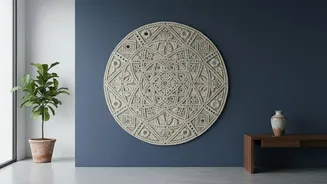
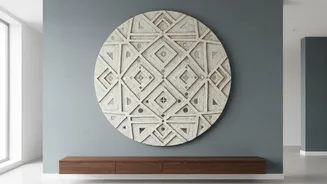
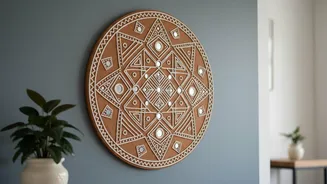
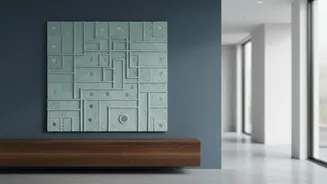
This modernisation extends to the aesthetic as well. While traditional motifs remain popular, artisans are now exploring more minimalist and abstract geometric patterns to suit modern interior design trends. The classic all-white finish is often preferred for its stark, architectural feel, but vibrant colours are also being used. Contemporary artists might use acrylic paints to introduce bold blues, reds, and greens, transforming a traditional piece into a modern statement. These adaptations have opened up new applications for the craft, with Lippan designs now appearing on everything from furniture and coasters to fashion accessories. This evolution ensures the craft not only survives but thrives, providing a vital livelihood for artisan communities, a movement that gained momentum after the 2001 Gujarat earthquake sparked a renewed focus on preserving cultural heritage.
Styling Lippan Art in Your Home
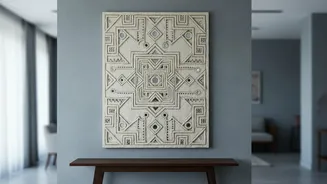
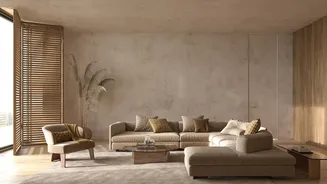
Incorporating Lippan art into a modern home is about celebrating texture and handcrafted beauty. A large, monochrome white Lippan panel can serve as a stunning focal point in a living room, its subtle relief work and shimmering mirrors adding depth and elegance without overwhelming the space. Smaller pieces can be grouped together to create a unique gallery wall, telling a story of tradition and artistry. The reflective quality of the mirrors makes Lippan art particularly effective in entryways or hallways, where it can make the space feel brighter and more welcoming. By pairing this ancient craft with contemporary decor, you not only add a unique piece of art to your home but also support the artisans who are carrying this beautiful legacy into the future.