





The Physics of Forward Propulsion
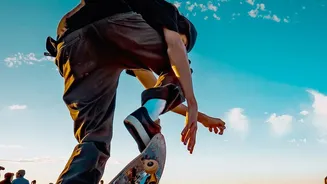
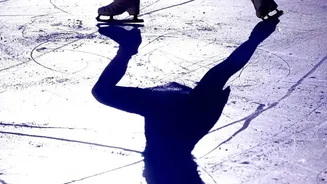
Skating, whether on ice or wheels, is a masterclass in physics. The goal is to maximize forward motion while minimizing the forces that hold you back, namely friction and air resistance. A skater generates speed by pushing off the surface, typically in a sideways
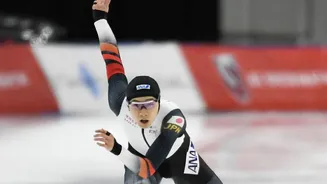
or backward direction. According to Newton's third law, for every action, there is an equal and opposite reaction; this push propels the skater forward. The efficiency of this movement depends on biomechanics: a low body posture reduces air drag, while powerful leg strides and coordinated arm swings contribute to momentum. It's an explosive, cardiovascular activity that relies on generating and conserving energy to glide effortlessly. The faster a skater wants to go, the more power they must generate to overcome the exponential increase in air resistance.
The Art of Intentional Slowness
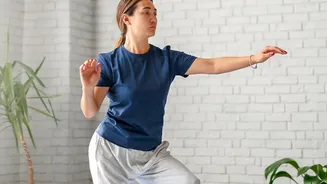
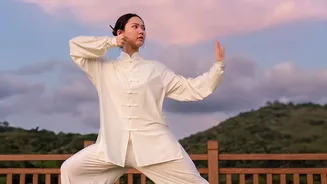
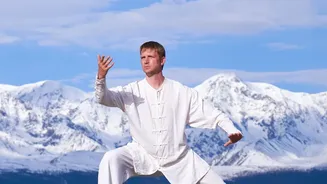
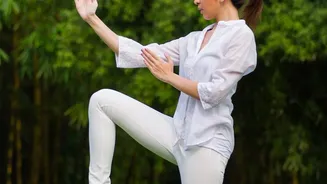
In stark contrast, Tai Chi is often described as 'meditation in motion'. Its movements are characteristically slow, gentle, and flowing. The purpose here is not to travel from point A to point B quickly, but to cultivate awareness, balance, and internal energy. This slowness is intentional; it forces the practitioner to pay close attention to the precise alignment of their body, the shifting of their weight, and the quality of their breath. By moving slowly, practitioners develop what is known as proprioception—the body's ability to sense its own position in space. This creates a state of relaxed focus, reducing mental 'chatter' and calming the nervous system.
A Tale of Two Muscle Groups
The different speeds of skating and Tai Chi engage the muscular system in entirely different ways. Skating is a power-based activity that primarily utilizes fast-twitch muscle fibres, which are responsible for quick, forceful contractions needed for acceleration and speed. The propulsive push-off and quick recovery of the legs build concentric strength. Tai Chi, on the other hand, builds strength through sustained, controlled movements. Holding postures and transitioning between them without haste engages slow-twitch muscle fibres, which are crucial for endurance and stability. It strengthens the body's smaller stabilizing muscles, particularly in the legs and core, which are essential for maintaining balance. This can be compared to a form of isometric exercise, where muscles are engaged without significant movement of the joints.
The Brain on Speed vs. Stillness
The neurological demands of these two activities are as distinct as their speeds. High-speed skating requires rapid processing of sensory information, quick reflexes, and constant adjustments to maintain balance while in motion. It's a workout for the parts of the brain responsible for reaction time and spatial awareness. Tai Chi's 'moving meditation' offers different cognitive benefits. Its focus on slow, deliberate action and coordinated breathing has been shown to improve executive functions like planning and attention. Studies suggest that regular practice can enhance memory, increase gray matter volume in the brain, and even help slow age-related cognitive decline. It strengthens the connection between mind and body through a focused, internal awareness rather than a reaction to external stimuli.