



Our Digital World in Orbit
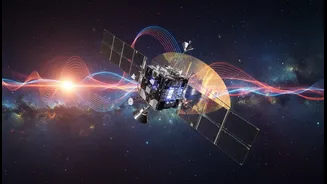
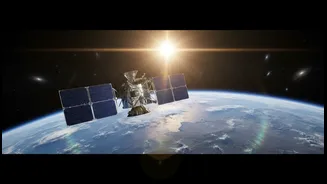
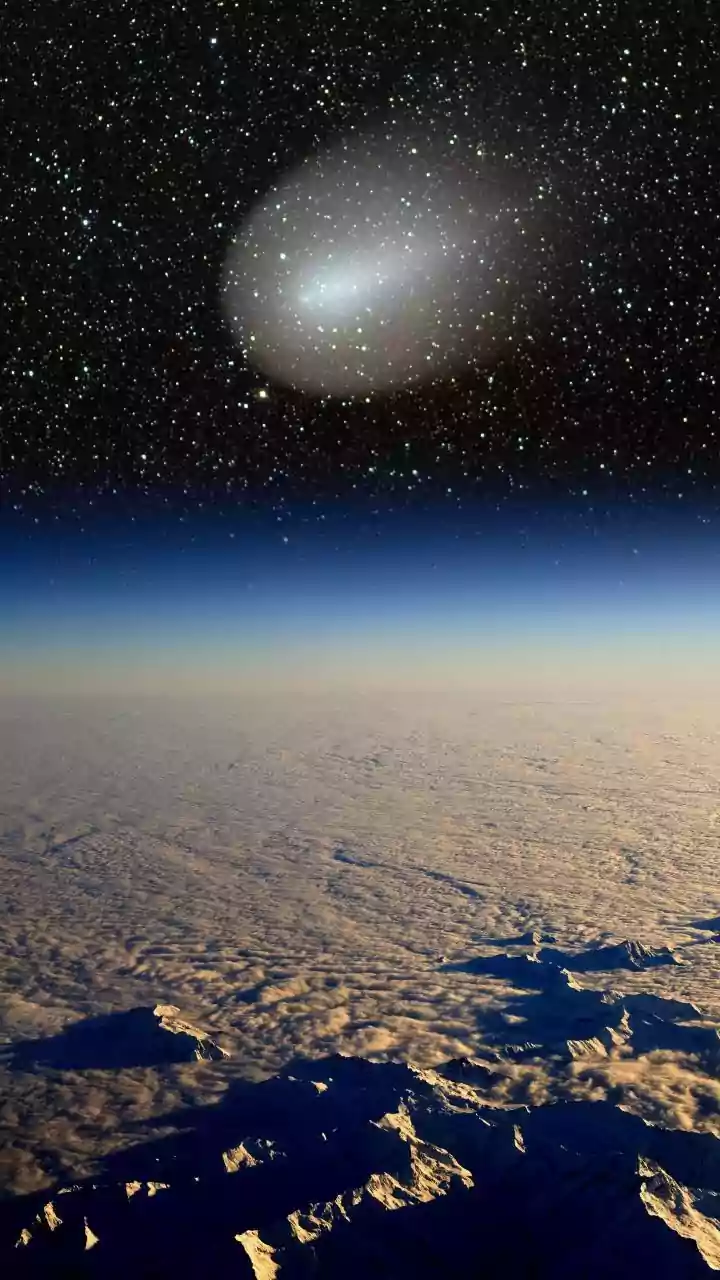
Beneath the quiet night sky, thousands of active satellites are whizzing above our heads. These machines are the unsung heroes of the 21st century, forming the backbone of global communication, navigation, finance, and defence. Every time you use a GPS
service, watch a live international sports match, or even check a weather forecast, you are using data relayed by a satellite. This dependence is only growing, with tens of thousands more satellites expected to launch in the coming years. But this increasing reliance comes with a growing vulnerability to the unpredictable and powerful nature of our own Sun. A recent and potent example of this vulnerability was the loss of India's private Earth-observation satellite, Mission Drishti, which was likely lost due to a severe geomagnetic storm in 2026.
What Exactly Is Space Weather?
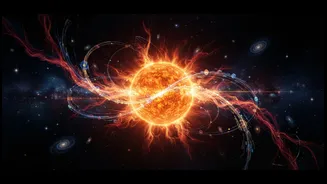
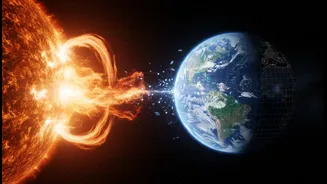
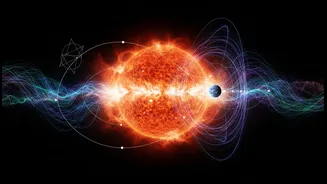
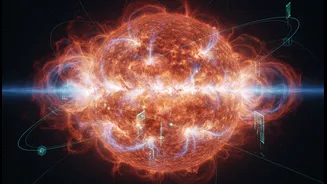
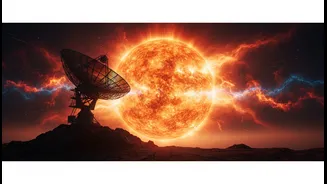
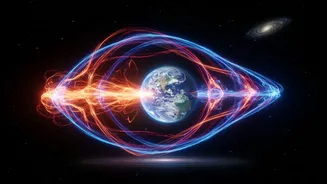
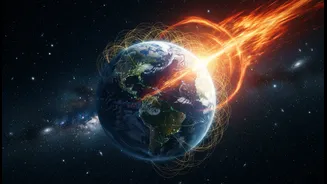
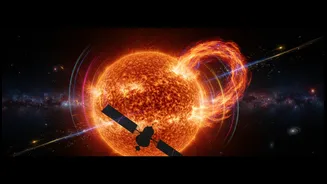
Space weather refers to the changing conditions in space driven by the Sun's activity. Unlike weather on Earth, it doesn't involve wind or rain. Instead, it involves a constant stream of charged particles known as the solar wind, along with more violent and unpredictable events. The main culprits are solar flares and coronal mass ejections (CMEs). A solar flare is an intense burst of radiation from the Sun's surface, releasing enormous energy. A CME is a massive eruption of plasma and magnetic fields from the Sun's outer atmosphere, the corona. When these events are directed towards Earth, they can interact with our planet's magnetic field and upper atmosphere, creating what are known as geomagnetic storms.
Satellites Under Solar Siege
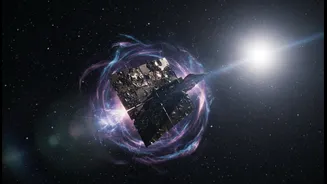
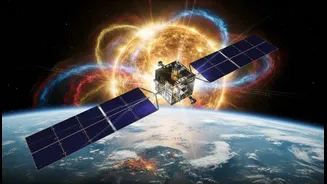
Geomagnetic storms pose a multi-faceted threat to satellites. One major issue is increased atmospheric drag. During a storm, the Earth's upper atmosphere heats up and expands, increasing the density of gas particles in low-Earth orbit (LEO). This increased density acts like a brake on satellites, causing them to lose altitude. If they can't correct their orbit, they can re-enter the atmosphere and burn up, a fate that befell a batch of Starlink satellites in 2022. Another danger is radiation. High-energy particles from solar events can penetrate satellite shielding and damage or destroy sensitive electronics, a phenomenon that can shorten a satellite's lifespan by years or cause total failure. This radiation can also cause 'surface charging', where an electrical charge builds up on the satellite's exterior, leading to discharges that can damage components. Finally, space weather can disrupt the very signals satellites transmit, degrading GPS accuracy and causing radio blackouts by disturbing the Earth's ionosphere.
A Cycle of Increasing Risk
The Sun's activity is not constant; it follows a roughly 11-year cycle, moving from a quiet period (solar minimum) to a highly active one (solar maximum). We are currently in Solar Cycle 25, which began in 2019 and is expected to reach its peak activity through 2025 and 2026. This cycle has already proven to be stronger than the previous one, meaning we are experiencing a higher frequency of solar flares and CMEs. Our technological dependence has grown exponentially since the last major solar maximum, meaning the potential for widespread disruption is higher than ever before. The recent loss of the Mission Drishti satellite is a stark reminder of these heightened risks.
Forecasting and Fortification
While we can't control the Sun, we can take steps to mitigate the risks. A crucial element is space weather forecasting. Agencies like NOAA in the US constantly monitor the Sun, providing alerts that give satellite operators time to prepare. When a major storm is predicted, operators can put satellites into a 'safe mode' to protect sensitive electronics. Another strategy is building more resilient spacecraft. This includes using 'radiation-hardened' components that are better able to withstand the harsh environment of space, although this adds cost and weight. For large constellations, redundancy is also a key strategy; the business model accepts the potential loss of a few satellites. Ultimately, protecting our vital orbital assets requires a combination of better forecasting, stronger satellites, and smarter operational protocols.