



An Unprecedented Crisis at 30,000 Feet
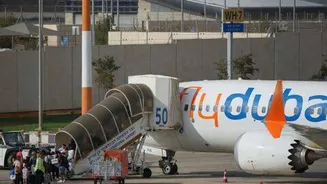
On September 30, 2026, passengers aboard a Tel Aviv-bound Flydubai flight experienced a terrifying ordeal. In an event now being investigated as a potential terrorist attack, the co-pilot allegedly stabbed the captain and attempted to crash the aircraft.
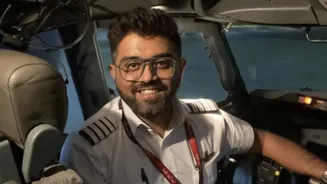
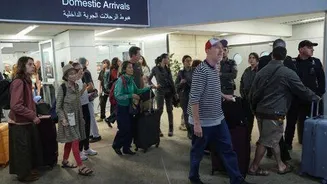
The plane plunged dramatically before the cockpit door was opened, allowing passengers and off-duty crew to intervene and subdue the attacker. The wounded captain, identified as Indian national Smit Machchhar, was hailed as a hero for his actions in enabling the intervention. The flight, carrying 174 passengers, was safely diverted to Saudi Arabia by other Flydubai pilots who were traveling as passengers. While this type of event—an intentional assault within the cockpit—is exceedingly rare, it thrusts into focus the layers of procedure and human resilience designed to handle any crisis, whether mechanical or man-made.
First Principle: Aviate, Navigate, Communicate
In any emergency, pilots are trained to follow a simple but critical mantra: Aviate, Navigate, Communicate. The absolute first priority is to 'aviate'—fly the aircraft. This means maintaining positive control, managing altitude, airspeed, and attitude, no matter what else is happening. Studies have shown that pilots can get so focused on a problem that they forget their primary duty, which is why this rule is paramount. Once the aircraft is stable, the next step is to 'navigate.' This involves knowing your position and determining a safe course of action, like identifying the nearest suitable airport for an emergency landing. Only after control is established and a plan is in place does the third step, 'communicate,' come into play. This involves informing air traffic control (ATC) of the situation by declaring an emergency—using the terms "Mayday" for distress or "Pan-Pan" for urgency—and coordinating with the cabin crew.
The Power of Teamwork and Checklists
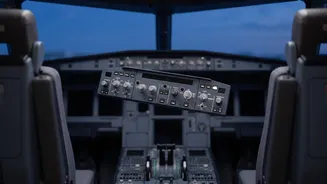
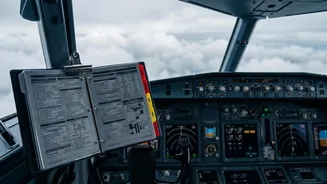
A modern cockpit is not a one-person show. The concept of Crew Resource Management (CRM) is a cornerstone of aviation safety, emphasizing teamwork, clear communication, and workload management between pilots, cabin crew, and even ground support. It fosters a culture where co-pilots are encouraged to question captains if they spot an error, moving away from a strictly authoritarian hierarchy. In an emergency, one pilot is typically designated the 'pilot flying' while the other becomes the 'pilot monitoring.' The monitoring pilot handles checklists, communicates with ATC, and helps diagnose the problem, freeing up the flying pilot to focus entirely on controlling the aircraft. For predictable failures like an engine fire or hydraulic loss, pilots don't rely on memory alone. They turn to the Quick Reference Handbook (QRH), a book of checklists for nearly every conceivable malfunction, ensuring a methodical and proven response under immense pressure.
Training for the Unthinkable
Pilots don't just learn these skills once; they practice them relentlessly. A crucial tool for this is the full-flight simulator, a high-tech replica of a cockpit that can recreate a vast range of emergencies in a safe environment. In the simulator, pilots practice everything from engine failures on takeoff to rapid depressurizations and electrical fires. This repetitive, hands-on training builds the muscle memory and cognitive resilience needed to manage stress and make critical decisions when adrenaline is pumping. Increasingly, training programs are also incorporating unpredictable and variable scenarios to better prepare pilots for novel or 'surprise' events that don't fit a standard checklist. The goal is to train for the unexpected, ensuring pilots can adapt and apply their core skills to any situation, no matter how unprecedented.