






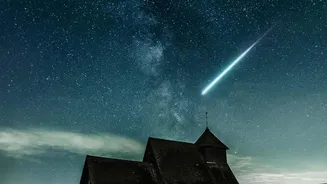
An Annual Spectacle from a Famous Comet
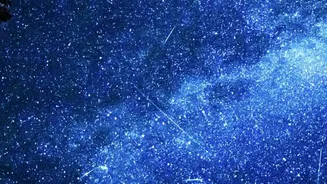
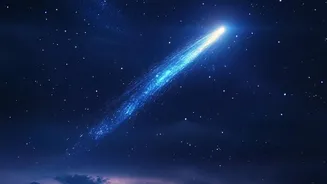
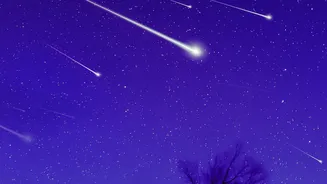
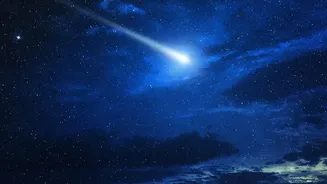
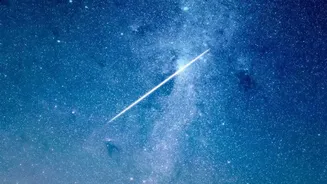
Each October, Earth passes through a stream of cosmic debris left behind by one of the most famous objects in our solar system: Halley's Comet. These tiny particles, no bigger than grains of sand, burn up in our atmosphere, creating the beautiful streaks
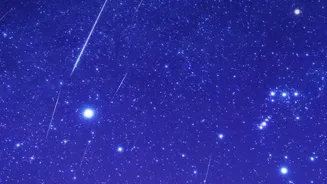
of light we call the Orionid meteor shower. They are named the Orionids because the meteors appear to radiate from a point near the constellation Orion. These meteors are known for their speed and brightness, often leaving glowing trails that can linger for a few seconds after the initial flash. While a dark, rural sky might offer a rate of 15 to 25 meteors per hour, seeing even a handful from a city can be a magical experience.
Mark Your Calendar for October 2026
The key to any sky-watching event is timing. The Orionid meteor shower will be active from early October to early November, but the best time to watch will be during its peak on the night of October 21-22, 2026. For city dwellers, the viewing window is even more specific. On these nights, a bright waxing gibbous Moon will illuminate the sky for the first half of the night, making it difficult to see fainter meteors. However, the Moon is expected to set around 3 a.m. local time. This creates a prime viewing window of truly dark skies between moonset and the first light of dawn. So, set an early alarm; the pre-dawn hours offer your best shot at a memorable celestial show.
Scout Your Urban Viewing Spot
The biggest challenge for any urban astronomer is light pollution. The pervasive glow from streetlights, buildings, and traffic can wash out all but the brightest stars. Your first mission is to minimise this. You don't necessarily need to drive for hours, but you do need to find a location that offers the darkest possible patch of sky. Think about local parks, sports fields, or even a tall building with rooftop access that is shielded from direct street-level glare. The goal is to find a spot with a wide, open view of the sky, away from the immediate glare of any single light source. Even a backyard can work if you turn off all your house and garden lights. The less direct light in your field of vision, the better your eyes will be able to adapt.
The Art of Patient Observation
Once you've found your spot, the most important tool you have is patience. Your eyes need time to adjust to the darkness—a process called dark adaptation. It takes about 20 to 30 minutes for your pupils to fully open and for you to start noticing fainter sources of light. During this time, it is crucial to avoid looking at bright screens, especially your phone, as a few seconds of white light can reset the entire process. If you need a light, use a red-filtered flashlight, as red light has a minimal effect on night vision. Get comfortable. Lie on a blanket or a reclining lawn chair so you can look straight up without straining your neck. You don't need a telescope or binoculars; their narrow fields of view are not suitable for catching the random, fleeting streaks of meteors.
Where to Look in the Sky
While the meteors are called Orionids because they appear to come from the direction of the constellation Orion, you shouldn't stare directly at it. In fact, the meteors will be visible across the entire sky. For the best view, find a comfortable position and look toward the darkest patch of sky you can find, ideally about 45 degrees away from the radiant point in Orion. Meteors that appear farther from the radiant will seem to have longer trails as they streak across your field of vision. Simply relax, look up, and be patient. The show lasts until dawn, so you have plenty of time.