


The Lab of the Future is a Headset
For generations, hands-on science education has meant access to a physical laboratory. But what if you could conduct experiments that are too dangerous, too expensive, or simply too complex for a typical school lab? Imagine being able to manipulate gravity,
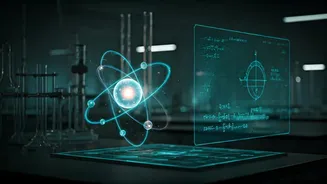
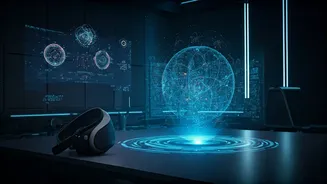
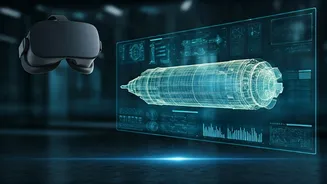
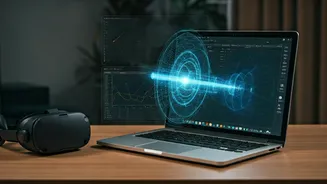
collide particles, or build a virtual circuit board without fear of breaking anything. This is the promise of immersive virtual reality (VR) labs. Unlike a simple video or a 2D simulation on a screen, VR places the user directly inside a three-dimensional, interactive environment. You can pick up virtual objects, conduct experiments with your own hands, and see the laws of physics play out in a tangible, intuitive way. It’s the difference between reading about Newton's laws and actually experiencing them in a world where you control the variables.
What Does 'Predictive AI' Add?
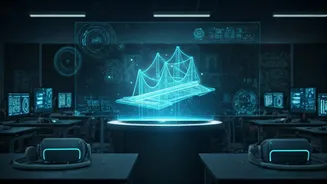
While VR provides the immersive space, predictive artificial intelligence (AI) is the engine that makes the magic happen. The term isn’t about fortune-telling; it's about creating a deeply realistic and responsive simulation. In this context, the AI acts as a sophisticated 'what if' engine. It uses the fundamental laws of physics to predict and render the outcomes of your actions in real-time. For example, if you build a virtual bridge and apply a certain amount of stress, the AI predicts how the structure will behave, showing you the exact points of failure. In more advanced simulations, it can model complex, non-linear systems—like weather patterns or quantum phenomena—that are impossible to calculate on the fly without AI. This predictive layer also enables personalised learning, where the software can identify a student's misconceptions and generate new problems to help them grasp a difficult concept.
Unlocking Impossible Experiments
The true power of this technology lies in its ability to make the impossible possible. A high school student in a small town can now perform experiments that were once reserved for researchers at top-tier universities with multi-million dollar facilities. They can visit the event horizon of a black hole to understand gravitational lensing, shrink down to the subatomic level to see how electrons behave in a circuit, or design and test a fusion reactor. Companies like Labster and VictoryXR are already deploying virtual labs that cover a wide range of subjects, from basic chemistry to advanced molecular biology. By removing physical and financial constraints, these platforms democratise access to high-quality, experiential learning, allowing curiosity to be the only limit.
A Game-Changer for Indian Education?
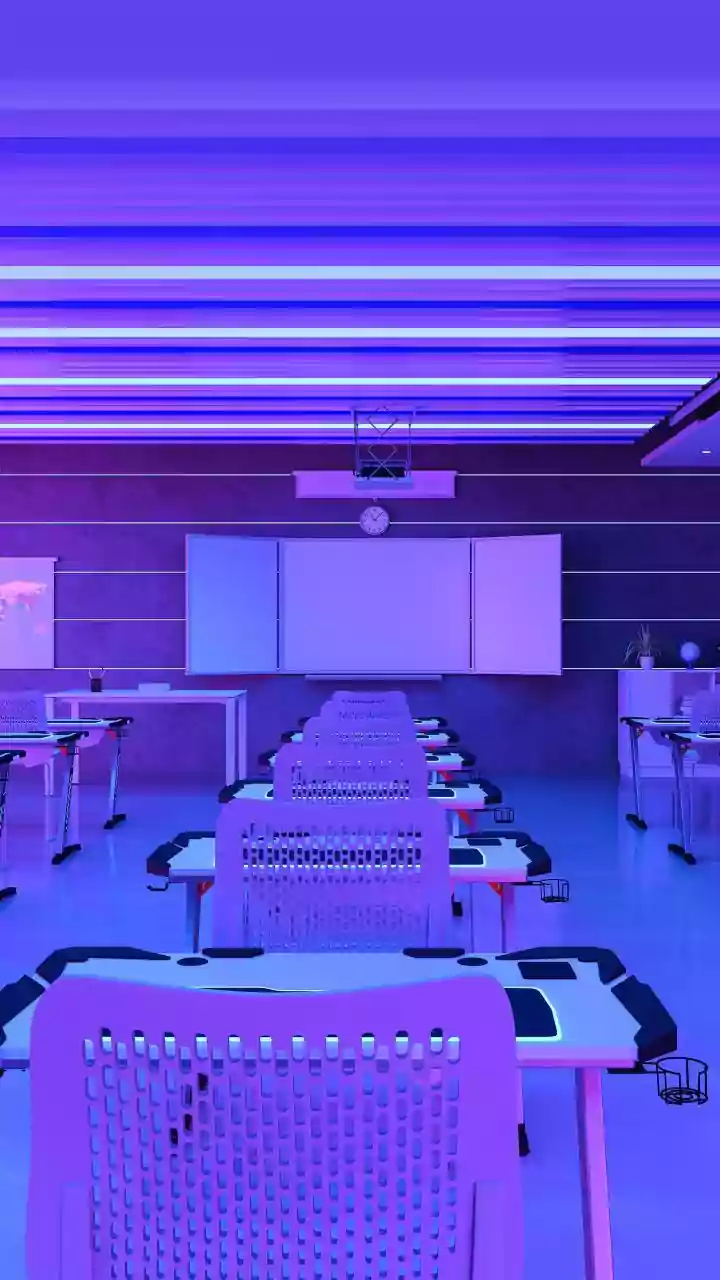
In India, where there's a significant disparity in infrastructure between urban and rural educational institutions, this technology could be revolutionary. The National Education Policy (NEP) 2020 heavily emphasizes conceptual understanding and experiential learning over rote memorization. AI-powered VR labs are a perfect tool to achieve this goal. They offer a scalable solution to a chronic problem: the lack of well-equipped science labs in many schools and colleges. For a fraction of the cost of building and maintaining a physical lab, an institution could provide its students with access to hundreds of virtual experiments. This could level the playing field, giving every student the chance to engage with science in a meaningful way and preparing a new generation for STEM careers.
The Hurdles on the Horizon
Despite the immense potential, the road to widespread adoption is not without its obstacles. The primary challenge is accessibility. High-quality VR headsets, while cheaper than they used to be, are still a significant investment for most individuals and schools. A stable, high-speed internet connection is another prerequisite that remains a challenge in many parts of the country. Furthermore, educators need to be trained not just on how to use the technology, but on how to integrate it effectively into their curriculum. Simply replacing a physical lab with a virtual one isn't enough; the pedagogy must evolve as well. The software itself must also be carefully designed to be more than just a novelty, ensuring it delivers real educational value.