



The Science of Cosmic Colour
A common misconception is that Hubble's images are what you would see if you could fly up to these celestial objects. In reality, the process is part art, part science. Hubble's cameras capture light in monochrome, or black and white. They do this using
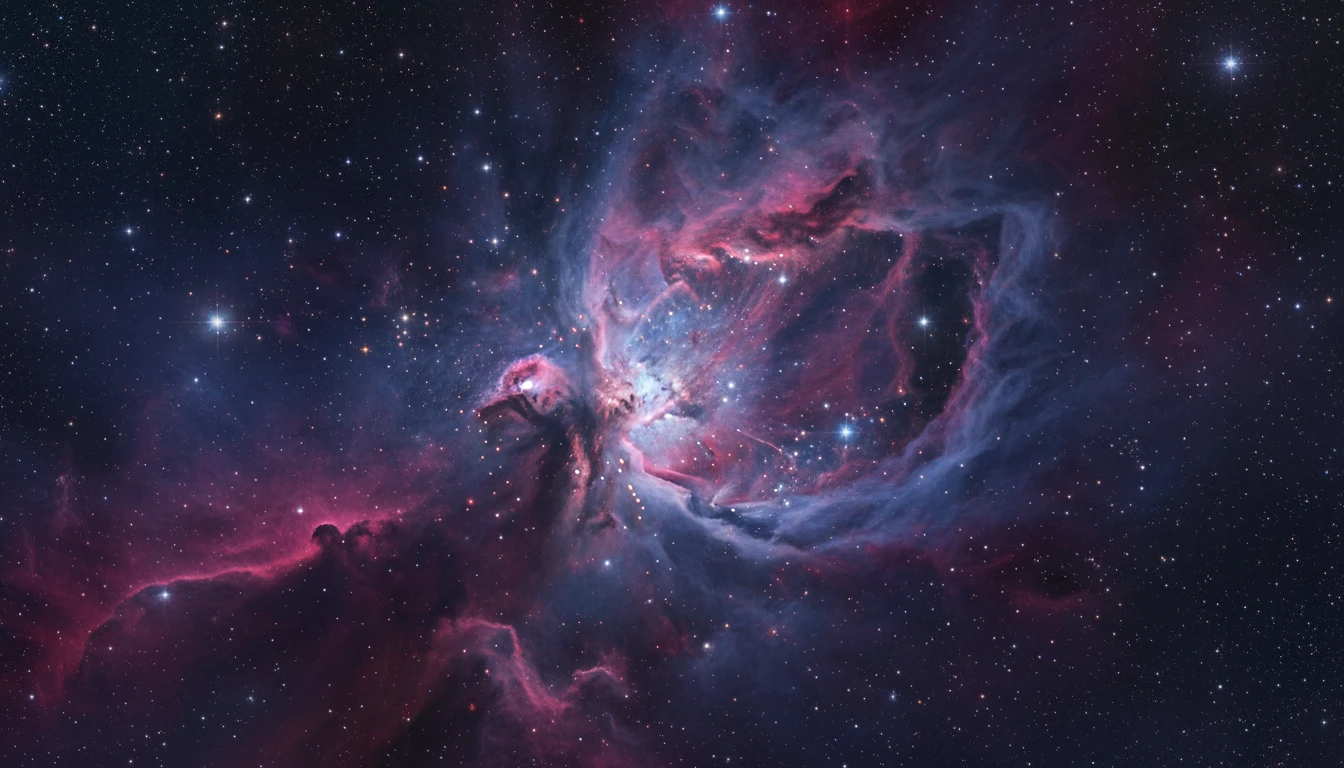
various filters that isolate specific wavelengths of light, including those invisible to the human eye, like ultraviolet and infrared. Scientists then assign colours to these different black-and-white layers. This technique, called false-colour imaging, isn't for decoration; it's a vital tool. By assigning colours like red, green, and blue to different chemical elements or light wavelengths, astronomers can visualize complex structures and processes that would otherwise be invisible. This method allows them to essentially translate data into a rich, detailed portrait of the universe.
Pillars of Creation
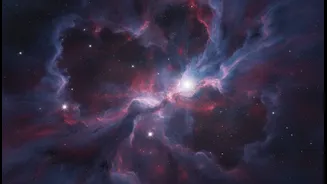
Arguably Hubble's most iconic image, the 'Pillars of Creation' captures towering columns of interstellar gas and dust in the Eagle Nebula, roughly 7,000 light-years away. These structures, spanning about four to five light-years, are active star-forming regions. The stunning colours reveal a dramatic story: the blue glow represents oxygen, red signifies sulfur, and the green highlights hydrogen and nitrogen. The pillars are being slowly eroded by intense ultraviolet light and stellar winds from a cluster of young, massive stars located just out of frame. Within the dense, finger-like tips of these pillars, new stars are being born. Revisiting the pillars over the years has allowed scientists to observe subtle changes, offering a clearer understanding of how stellar nurseries evolve.
Hubble Ultra-Deep Field
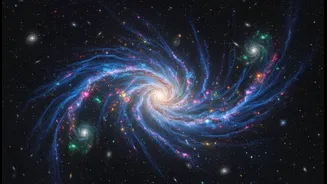
What happens when you point a powerful telescope at a seemingly empty patch of sky for a very long time? The Hubble Ultra-Deep Field (HUDF) is the answer. By collecting light for over 11 days from a tiny region in the Fornax constellation, Hubble revealed an estimated 10,000 galaxies. This image is one of the deepest portraits of the visible universe ever taken, acting like a core sample of cosmic history. It contains galaxies of all shapes, sizes, and ages. The smallest, reddest specks are among the most distant galaxies ever observed, existing when the universe was just 800 million years old. The larger, brighter spirals and ellipticals are more mature, seen as they were billions of years later. The HUDF provided a stunning confirmation that the early universe was a chaotic place filled with smaller, irregular galaxies that eventually merged and evolved into the grand structures we see today.
The Bubble Nebula
Located 7,000 light-years away, the Bubble Nebula (NGC 7635) is a beautiful example of how a single, powerful star can shape its environment. The 'bubble' is a seven-light-year-wide cloud of gas and dust being pushed outwards by the intense stellar wind from a hot, massive star at its center. This star is estimated to be about 45 times more massive than our sun. The colours in Hubble's image tell a scientific story of this interaction. The blue represents the glow of oxygen heated by the star's energy, while the cooler, outer regions where hydrogen and nitrogen are present appear yellow and red. The image showcases the dynamic and often violent processes that sculpt the interstellar medium, creating structures of immense scale and delicate beauty.
The Antennae Galaxies
Not all cosmic beauty is serene. Hubble's image of the Antennae Galaxies provides a stunning look at a dramatic galactic collision in progress. Once two separate spiral galaxies, NGC 4038 and NGC 4039 have spent the last few hundred million years crashing into each other. The gravitational tug-of-war is so intense that it has ripped stars and gas from their hosts, creating long, streaming arcs that resemble insect antennae, giving the pair its name. The colours highlight the chaos and creation sparked by the merger. The bright blue regions are massive clusters of new star formation, triggered as clouds of gas are compressed during the collision. The golden cores represent the original, older stars of each galaxy. These images provide astronomers with a close-up view of how galaxy mergers drive evolution and trigger bursts of star birth across the cosmos.