


What is the Shukrayaan Mission?
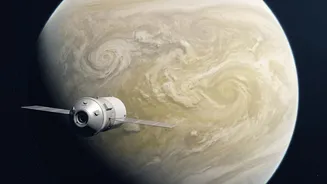
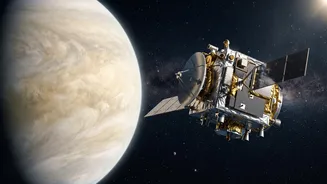
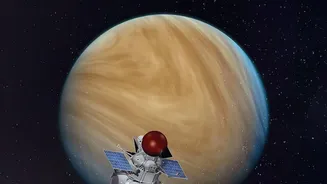
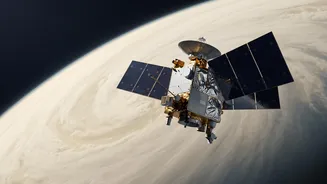
Shukrayaan, which translates to 'Venus Craft' in Sanskrit, is ISRO's Venus Orbiter Mission. Following the historic success of Chandrayaan and Mangalyaan, this mission marks India’s next major leap in interplanetary exploration. Officially approved in September
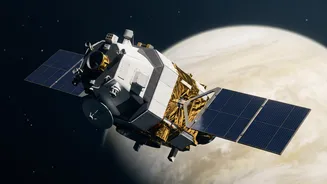
2024 with a budget of approximately ₹1,236 crore, the mission is designed to conduct a comprehensive study of Venus from orbit. Unlike Mars, Venus is a world of extremes, with a crushing atmosphere and surface temperatures hot enough to melt lead, making it a formidable challenge for any space agency. The goal is to place a sophisticated orbiter, weighing around 2,500 kg, into a precise elliptical path around the planet to unlock secrets hidden beneath its thick cloud cover.
The Scientific Blueprint: Unveiling Venus's Mysteries
The mission has three core scientific objectives. Firstly, it aims to map the surface and shallow subsurface of Venus. This will be achieved using a high-resolution Synthetic Aperture Radar (SAR), which can peer through the dense clouds, and a ground-penetrating radar — a first for any Venus mission. This technology will help scientists study geological features like volcanic hotspots and lava flows. Secondly, Shukrayaan will investigate the dense, toxic atmosphere, analyzing its chemical composition, dynamics, and the mysterious super-rotating winds. The third objective is to study the interaction between the solar wind and the Venusian ionosphere, providing crucial data on how the planet has evolved.
A Toolkit for a Hostile World
To achieve its ambitious goals, the Shukrayaan orbiter will carry a payload of about 100 kg, comprising around 19 advanced scientific instruments. A key instrument is the Venus S-Band SAR, expected to have up to four times the resolution of NASA's Magellan orbiter from the 1990s. The mission will also feature significant international collaboration. Instruments developed with Russia, France, Sweden, and Germany will be on board. For instance, an instrument co-developed with Russia and France will analyze atmospheric gases, including searching for phosphine, a potential biosignature. Another collaboration with Sweden will study how the solar wind affects Venus's atmosphere. These tools are specifically designed to operate in the harsh Venusian environment.
The Journey to the 'Evening Star'
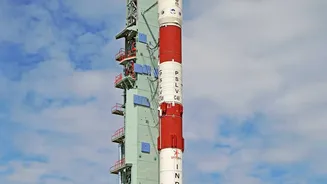
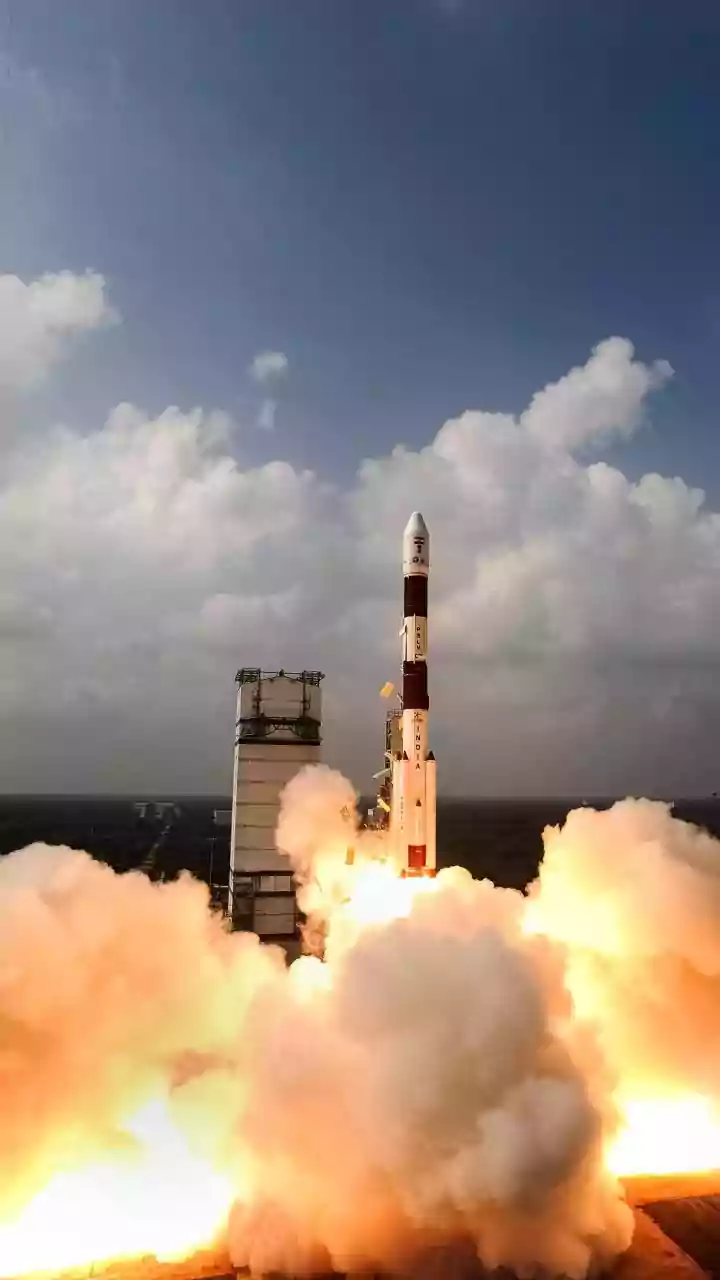
The launch is currently scheduled for March 29, 2028, aboard India’s most powerful rocket, the Launch Vehicle Mark-3 (LVM-3), the same launcher used for the Chandrayaan missions. This heavy-lift rocket provides the necessary power to send Shukrayaan on its 112-day journey to Venus. Upon arrival, expected around July 19, 2028, the spacecraft will perform a crucial orbit insertion manoeuvre. It will initially enter a large elliptical orbit of 500 km by 60,000 km. To get closer for scientific observations, ISRO plans to use a technique called aerobraking. This involves carefully dipping the orbiter into the upper atmosphere multiple times, using atmospheric drag to gradually slow down and lower its orbit to a more effective altitude of 200 km by 600 km, saving precious fuel.
Why Venus is an Engineer's Nightmare
Preparing a mission for Venus presents enormous challenges. The planet's surface pressure is over 90 times that of Earth, equivalent to being nearly a kilometre deep in the ocean. Surface temperatures average over 460 degrees Celsius. Furthermore, the atmosphere is composed mainly of carbon dioxide with thick clouds of corrosive sulfuric acid, which can damage spacecraft components. These extreme conditions are why landers have only ever survived for a couple of hours on the surface. For Shukrayaan, an orbiter, the primary challenges involve protecting its sensitive electronics from radiation and heat, ensuring its systems can withstand the corrosive environment, and successfully navigating the complex aerobraking process in a poorly understood upper atmosphere.