
The Essential Shopping List
A successful Sadya begins with the right ingredients. The flavour profile relies heavily on fresh produce and coconut in its many forms. Your shopping list should be divided into fresh vegetables and pantry staples. For vegetables, prioritise essentials
like raw banana, yam (chena), ash gourd, pumpkin, snake gourd, drumsticks, and beans. These form the base of many core dishes like Avial and Thoran. Of course, staples like ginger, green chillies, and curry leaves are non-negotiable. For the pantry, stock up on Kerala matta rice, which is distinct for its plump, reddish grains. You will need plenty of coconuts for grating, extracting milk, and for oil. Lentils, particularly moong dal (cherupayar) and toor dal, are needed for the Parippu and Sambar. Spices like mustard seeds, cumin, turmeric, and dried red chillies are fundamental. For the sweet and sour elements, make sure you have tamarind and jaggery on hand. Finally, don't forget the accompaniments: papadams for frying and a small, ripe banana (like Rasakadali or Palayankodan) to be served on the leaf.
The Core Dishes To Cook
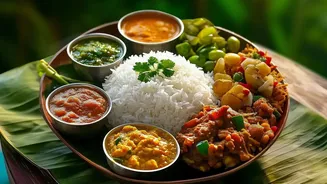
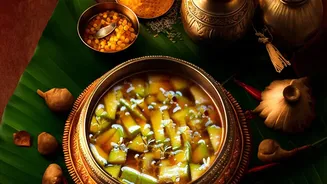
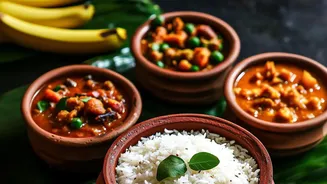
While a full Sadya can have over 26 dishes, you can create a wonderful experience by focusing on a few key preparations that offer a balance of flavours and textures. Start with the pickles and accompaniments, such as Inji Puli (a sweet and sour ginger-tamarind pickle) and a simple mango or lime pickle. For the main vegetable dishes, Avial is a must; it's a thick medley of mixed vegetables in a coconut and yogurt gravy. A Thoran, which is a dry stir-fry of vegetables like cabbage or beans with grated coconut, provides a contrasting texture. Olan is a milder, gentler dish of ash gourd and cowpeas in coconut milk. Other important dishes include Kalan, a thicker, tangy curry made with yoghurt and yam, and Erissery, which combines pumpkin and peas with a roasted coconut garnish. For the liquid curries, Sambar is essential, as is Parippu, a simple moong dal curry that is the first thing to be mixed with rice. Rasam, a thin, peppery soup, and a yoghurt-based curry like Pulissery are also central to the meal's progression.
The Grand Finale: Payasam
No Sadya is complete without Payasam, the dessert course. There are many varieties, but two classics stand out. Ada Pradhaman is considered by many to be the king of Payasams; it is made with rice flakes (ada), jaggery, and rich coconut milk, often garnished with cashews and coconut pieces. Palada Pradhaman is a creamier, milk-based alternative, using rice ada and sugar. Often, a Sadya will feature at least two types of Payasam, allowing guests to enjoy different sweet profiles. The Payasam is typically served in the middle of the meal, sometimes mixed with a banana and a crushed pappadam for a unique combination of sweet, savoury, and crunchy.
The Art of Serving
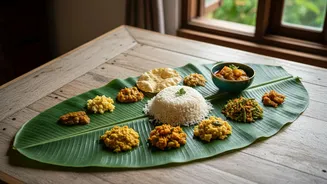
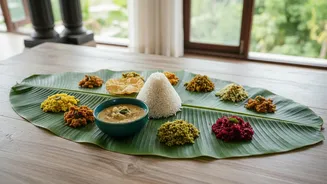
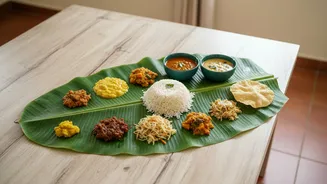
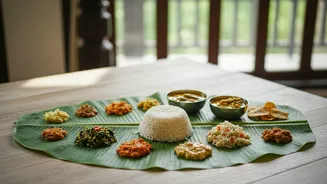
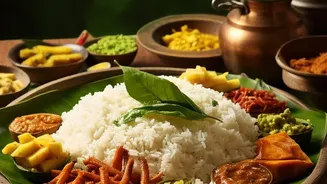
How the Sadya is served is as important as the food itself. The feast is traditionally laid out on a fresh banana leaf, known as a 'thooshanila'. The leaf should be placed with its narrow tip pointing to the left of the diner. There's a specific order and placement for each item. The accompaniments are served first on the top half of the leaf. Starting from the left tip, you'll place a pinch of salt, a banana, banana chips (upperi), and jaggery-coated chips (sharkara varatti). Next to these come the pickles, like Inji Puli and mango pickle. The main side dishes like Thoran, Olan, Avial, and Kalan are served in a row along the top right. The lower half of the leaf is reserved for the rice, which is served in the centre. The meal begins by pouring Parippu curry and a spoonful of ghee over the first serving of rice. This is followed by Sambar, and then the other curries like Rasam and Pulissery. Finally, Sambaram, a spiced buttermilk, is often served as a digestive at the very end.