




Engage Their Brain, Not Just Their Body
Physical exercise is only half the equation; mental stimulation is just as important for a happy pet. A tired brain can lead to a calm pet. Mental enrichment helps prevent boredom-related behaviours, reduces stress, and strengthens your bond. Activities
that make your pet think, problem-solve, and use their natural instincts are incredibly effective at burning energy. A 15-minute training or puzzle session can be more tiring than a 30-minute walk. So instead of just trying to wear them out physically, focus on providing challenges that work their mind.
Turn Mealtime into a Game
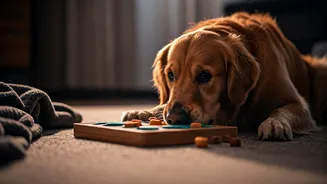
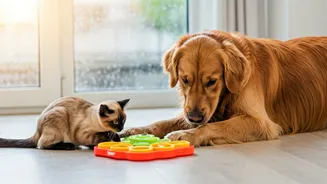
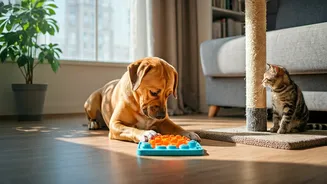
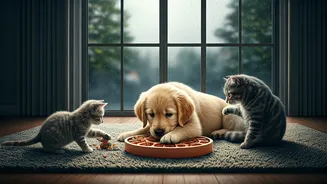
Instead of serving food in a bowl, make your pet work for it. Puzzle toys, snuffle mats, and treat-dispensing balls are fantastic tools. Hiding their kibble in these toys turns a five-minute meal into a 20-minute brain game, satisfying their natural foraging instincts. For a simple DIY option, place treats in a muffin tin and cover each cup with a tennis ball or another toy. Your pet will have to figure out how to remove the obstacle to get their reward. You can even use empty cardboard tubes: just fold the ends and let them figure out how to get the treats inside.
Master the Art of 'Find It'
A dog's sense of smell is powerful, and putting it to work is a deeply satisfying and tiring activity for them. The 'find it' game, or nose work, is simple to set up. Have your pet wait while you hide treats around a room. Start easy, putting them in obvious places, and give the command 'find it!'. As they get better, you can hide treats under towels, behind furniture, or in another room. This game doesn't just work for dogs; cats also enjoy using their senses to hunt for rewards.
Build a DIY Obstacle Course
Your living room can become an exciting agility course with a little creativity. Use couch cushions for them to climb over, chairs to weave through, and a blanket draped over two chairs to create a tunnel. Lure your pet through the course with a favourite toy or treat. This activity not only provides physical exercise but also builds confidence as they navigate the new challenges. For cats, simple cardboard boxes can be arranged into a fun fort or maze for them to explore and climb.
Teach a New Trick or Refresh Old Ones
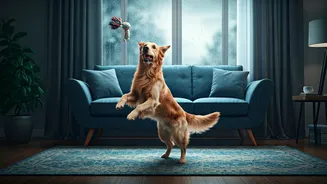
A rainy day is a perfect opportunity for a training session. Teaching a new trick like 'roll over', 'shake paw', or 'sit pretty' requires a lot of concentration from your pet, making it a great mental workout. Keep sessions short, fun, and positive, using plenty of praise and rewards. Even practicing commands your pet already knows can be stimulating. Try stringing together a sequence of commands like 'sit', 'stay', and 'come' to challenge their focus.
Embrace Calm Activities
Not every indoor activity has to be high-energy. Sometimes, the goal is to encourage calmness. Chewing is a natural stress-reliever for dogs, so a long-lasting chew can keep them occupied and content. Similarly, a 'lick mat' spread with pet-safe peanut butter or yogurt can be very soothing for both dogs and cats, as the repetitive licking motion is calming. You can also simply create a 'chill zone' for your pet—a quiet corner with a comfy bed and their favourite toy where they learn to settle and relax.