




A New Window on Cosmic Nurseries
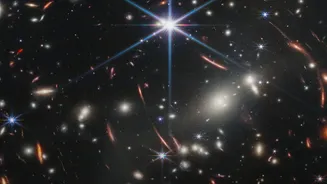
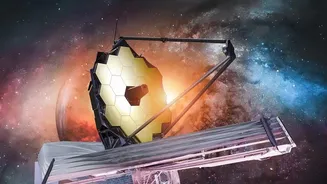
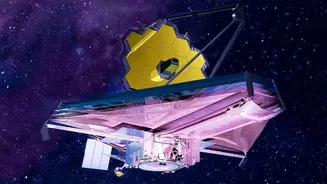
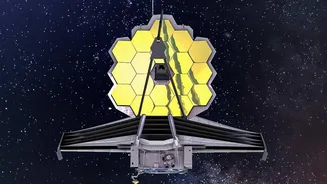
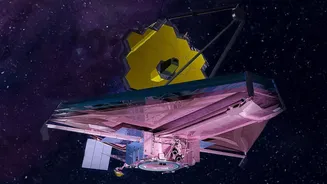
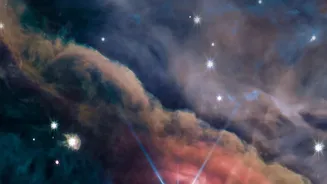
The James Webb Space Telescope is not just another telescope; it's a time machine. Its powerful infrared instruments can peer through cosmic dust clouds that obscure the view of other observatories, including its famous predecessor, Hubble. This allows
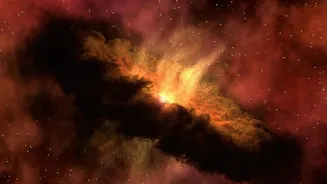
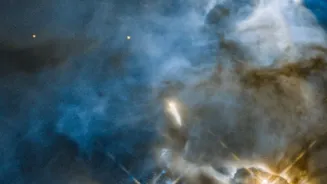
astronomers to gaze directly into the heart of protoplanetary disks—vast, spinning platters of gas and dust that surround young stars. These disks are the raw materials from which all planets, moons, and asteroids are built. By studying systems like HH30 in the Taurus Molecular Cloud or PDS 70, scientists are essentially watching a blueprint for our own solar system as it existed over 4.5 billion years ago. The telescope's sensitivity is so acute that it can detect the chemical fingerprints of various gases and the faint glow of dust, revealing the intricate processes at play.
The Race Against Dissipation
One of the most dramatic dynamics JWST is revealing is the intense race against time that defines planet formation. These protoplanetary disks are not static environments; they are fiercely active places. Powerful winds, driven by the young star's intense radiation and magnetic fields, are constantly working to blow the gas and dust away. Recent studies of dozens of young star systems show this material being steadily swept away into space. This means planets, especially gas giants like Jupiter and Saturn, have a surprisingly short window—a few million years—to gather the massive atmospheres they need before their building blocks are gone forever. It's a cosmic battle between gravity, which pulls material together to form worlds, and stellar forces that try to blast it all away.
The Chemistry of Creation
Beyond just seeing the structure, JWST is a powerful chemical sniffer. Its spectrographs can analyze the light passing through these disks to identify the molecules present. This has led to the detection of water vapor, carbon monoxide, and other key ingredients for life as we know it, swirling in the regions where rocky planets are expected to form. For the first time, scientists are getting a detailed inventory of the materials available for building new worlds. By observing a variety of disks, astronomers are finding that the chemical makeup can vary significantly from one star system to another. This diversity helps explain the vast array of exoplanets we see across the galaxy and provides crucial clues about which systems might one day host habitable, Earth-like planets.
Challenging Old Theories
These new observations are already refining and challenging long-held theories of planet formation. The classic model imagined a relatively orderly process of dust grains slowly sticking together. However, JWST's views suggest a much more complex and dynamic reality. For instance, observations of jets and outflows from young stars confirm that these features play a crucial role in sculpting the disk and influencing how a star grows. Some studies even suggest that planetesimals—the building blocks of planets—may form big and fast, with clouds of pebble-sized material collapsing under their own gravity rather than growing slowly. The ability to directly image spiral arms and gaps within the disks provides tangible evidence of young planets already carving out their orbits, a process previously only simulated in computers.