









Understanding the Core Principles
The advice to adopt a 'wider stance' isn't about fitting broader tyres, which can actually increase the risk of hydroplaning. Instead, it's a driving technique. It means positioning your vehicle in the tyre tracks of the car ahead of you. This path has
less standing water, offering your tyres a better chance to grip the road. 'Slower control' is the second pillar. Wet roads drastically increase your braking distance, sometimes doubling it. All your inputs—steering, braking, and accelerating—must be smooth and gentle. Sudden manoeuvres can easily lead to a skid. Braking should start earlier and with less force than on a dry road. This deliberate, measured approach is the key to maintaining control when the surface is slick.
The Danger of Hydroplaning
Hydroplaning happens when a layer of water builds up between your tyres and the road surface, causing you to lose all traction and control. It can occur at speeds as low as 55 km/h. To prevent it, the first and most effective step is to slow down. Avoid cruise control, as you need to be fully in command of your speed. Be wary of puddles and standing water. If you do feel the steering become suddenly light, which is a sign of hydroplaning, do not panic or brake hard. Ease your foot off the accelerator and keep a firm, steady grip on the steering wheel until you feel the tyres regain contact with the road.
See and Be Seen: Maximising Visibility
In heavy rain, visibility can drop to almost zero, making it one of the biggest dangers. Use your low-beam headlights during the day, not just at night. This helps other drivers see you much more easily. High beams are counterproductive as they reflect off raindrops and can blind oncoming traffic. Ensure your windscreen wipers are in excellent condition; if they leave streaks, they need replacing. Your car’s defogger and air conditioning system are also crucial for keeping the windows from fogging up on the inside due to humidity.
Navigating Waterlogged Roads
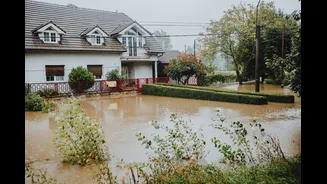
Waterlogging is a common hazard during Indian monsoons. The golden rule is: if you can't be sure of the depth, don't drive through it. A safe limit is generally water that doesn't come above the bottom of your car's doors or the centre of your wheels. If you must proceed, switch off your air conditioning to prevent water from being sucked into the engine. Engage first gear and keep engine RPMs high but your speed low and steady, around 5 km/h. This creates exhaust pressure that stops water from entering the tailpipe and pushes a bow wave of water ahead of you. If your car stalls, do not attempt to restart it, as this can cause catastrophic engine damage known as hydrostatic lock.
Your Pre-Monsoon Vehicle Health Check
Preparation is your best defence. Before the rains set in, get your vehicle checked. Tyres are critical. The tread channels water away, and if it’s worn down (less than 3mm is a good indicator for replacement), your risk of hydroplaning soars. Ensure they are inflated to the manufacturer’s recommended pressure. Have your brakes inspected; their effectiveness is reduced on wet surfaces, so they need to be in top condition. Finally, replace worn wiper blades and top up your windshield washer fluid. These simple checks can be lifesavers.