






The Daily Struggle with Water and Power
Across Maharashtra, particularly in drought-prone regions like Marathwada and Vidarbha, farmers have long been hostage to forces beyond their control. An inconsistent monsoon cycle means rain-fed agriculture is a gamble, making irrigation essential. However,
reliance on the state's electricity grid for powering water pumps brings its own set of problems. Erratic power supply, voltage fluctuations, and high tariff costs make consistent irrigation difficult and expensive. Many farmers are forced to irrigate at night when power might be available or turn to costly and polluting diesel generators as a backup. This unreliability directly impacts crop cycles, yields, and ultimately, a farmer's income.
A Solution Powered by the Sun
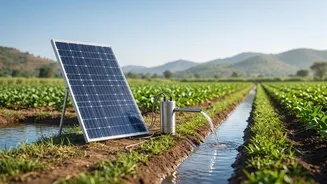
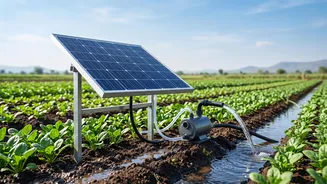
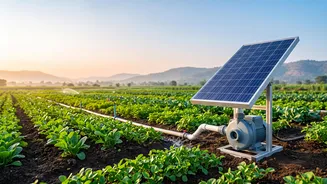
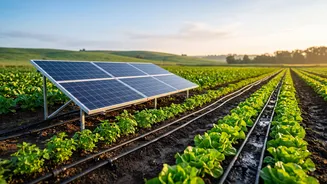
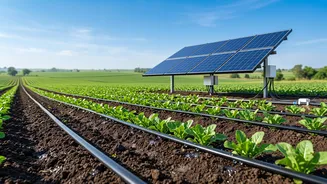
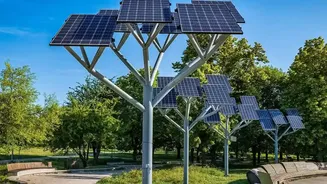
Enter the off-grid solar micro-pump. These standalone systems consist of photovoltaic (PV) panels that capture sunlight and convert it into electricity to run a water pump. Because they are not connected to the main power grid, they offer complete energy independence. This means farmers are no longer subject to power cuts or unpredictable electricity schedules. They can pump water whenever the sun is shining, providing a reliable and consistent flow for their fields during crucial daylight hours. This newfound autonomy is transformative, allowing for better farm management and reducing the daily stress associated with water access.
From Flood Irrigation to Water Efficiency
One of the most significant advantages of solar micro-pumps is their synergy with modern irrigation techniques. The consistent, low-pressure water supply from these pumps is perfectly suited for drip and sprinkler systems. This enables a shift away from traditional, inefficient flood irrigation, where large quantities of water are lost to evaporation and runoff. Micro-irrigation delivers water directly to the plant's roots, drastically improving water-use efficiency. This is a critical benefit in a water-stressed state like Maharashtra. By using water more judiciously, farmers can cultivate larger areas, diversify into new crops, and achieve higher yields with the same amount of water, making their operations more resilient and profitable.
The Economic Case for Going Solar
While the initial investment for a solar pump can seem high, the long-term economics are compelling. The primary saving comes from the elimination of electricity bills or diesel fuel costs, which are major operational expenses for farmers. Government initiatives like the central Pradhan Mantri Kisan Urja Suraksha evam Utthaan Mahabhiyan (PM-KUSUM) scheme and Maharashtra's own Mukhyamantri Saur Krushi Pump Yojana provide substantial subsidies, often covering up to 60% or more of the installation cost. These schemes make the technology accessible to small and marginal farmers. With low maintenance requirements and a lifespan of over 20 years for solar panels, the pumps pay for themselves within a few years through energy savings alone.
A Greener, More Resilient Future
The adoption of solar pumps extends beyond individual farm economics. It represents a significant step towards sustainable agriculture. By replacing diesel pumps, farmers reduce their carbon footprint and contribute to cleaner air. Reducing reliance on grid electricity, which is often produced from fossil fuels, further supports India's clean energy goals. For farmers, this shift means increased productivity, income stability, and a reduced dependence on seasonal labor migration. The ability to cultivate a second or even a third crop transforms farming from a seasonal activity into a year-round livelihood, building a more climate-resilient agricultural system for the future.