







More Than Just a Cosy Corner
Forget the grand, library-style nooks you see in magazines. The modern reading nook is less about architectural grandeur and more about psychological function. It’s a designated ‘reset space’—a small, personal sanctuary where you can consciously disconnect
from the demands of daily life. In an era where our homes double as offices, gyms, and classrooms, carving out a zone dedicated solely to quiet and restoration has become a radical act of self-care. It’s not just a place to sit; it’s a boundary you set against burnout, a physical manifestation of your permission to pause.
The Psychology of Your Sanctuary
Why does a dedicated nook feel so different from simply curling up on the sofa? The power lies in psychological association. When you consistently use a specific spot for a single, calming activity like reading, your brain begins to link that space with relaxation. Stepping into your nook sends a powerful signal to your nervous system that it’s time to switch off. This concept, known as ‘stimulus control’ in psychology, is incredibly effective for building healthy habits. It helps create a clear separation from ‘work’ or ‘chore’ zones within the same four walls, making genuine rest possible even in the most hectic households. This isn't just about escaping others; it's about escaping the constant 'on' switch in our own minds.
How to Find Your Nook
You don’t need a sprawling home to create a reset space. The most effective nooks are often born from overlooked areas. Look for a spot with a sense of enclosure and privacy. This could be an under-utilised corner of your living room or bedroom, the space under a staircase, a wide windowsill with a pleasant view, or even a small, cleared-out section of a large closet. The key is to find a place that feels slightly removed from the main traffic flow of your home. It doesn't need to be big—just big enough for you to sit comfortably and feel cocooned from the world.
The Three Essentials of Comfort
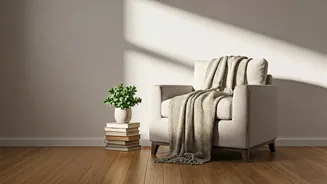
Once you've identified your spot, focus on three core elements. First, seating. It must be exceptionally comfortable. Think a plush armchair, a soft chaise lounge, or even a pile of oversized floor cushions. Second, lighting. Good lighting is non-negotiable for reading and creating ambiance. A dedicated floor or table lamp with a warm-toned bulb is ideal, allowing you to read without eye strain and create a soft glow. Third, a surface. Include a small side table or a sturdy stool. It doesn't have to be large, just big enough to hold a cup of chai, your current book, and perhaps a small plant or candle.
Layering in Personal Touches
This is where your nook transforms from a furniture arrangement into a personal sanctuary. Layering textures is key to making the space feel inviting and luxurious. Add a soft throw blanket, a velvet cushion, or a plush rug underfoot. Consider other senses, too. A scented candle or an essential oil diffuser can introduce a calming aroma that you associate with your reset time. Most importantly, make it a screen-free zone. The purpose is to disconnect from the digital world, so leave your phone, tablet, and laptop elsewhere. This space is for analogue peace.
Setting Boundaries for Your Space
For your nook to truly function as a reset space, its purpose must be respected—by you and everyone else in your home. Gently communicate that this is your quiet spot. It’s not an extra chair for guests or a dumping ground for laundry. Explain that when you’re in your nook, you’re taking a few moments to recharge and would prefer not to be disturbed unless it's urgent. Honouring these boundaries is crucial. Don’t bring work into your nook or use it for scrolling through social media. Protecting its sanctity is what gives it its restorative power.