



Opening the Financial Floodgates
Until recently, India's space sector operated under tight regulations, with foreign investment in satellite operations permitted only through a stringent government approval route. In a landmark shift aligned with the Indian Space Policy 2023, the government has
dramatically liberalised these norms. The new policy creates a tiered system for FDI, allowing up to 100% foreign ownership via the automatic route for manufacturing components and systems for satellites and ground segments. For more sensitive areas, it permits up to 74% FDI for satellite manufacturing and operations and up to 49% for launch vehicles and spaceports under the automatic route, with higher stakes requiring government approval. This move is designed to slash red tape and attract significant global capital into a sector poised for explosive growth.
Fuel for a Capital-Intensive Industry
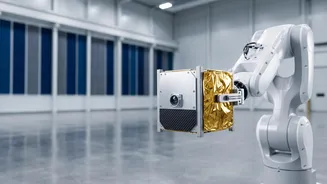
Building rockets, satellites, and ground stations is an incredibly expensive endeavour. For India's burgeoning ecosystem of over 400 space startups, access to capital is the primary constraint. While domestic funding has been on the rise, hitting a record $200 million in 2025 and seeing strong inflows in 2026, it remains modest compared to the sector's needs. The liberalised FDI policy directly addresses this gap. A greater influx of foreign capital will enable startups to move beyond the drawing board and into scalable manufacturing. It provides the financial firepower needed for extensive research and development, building advanced manufacturing facilities, and covering the high operational costs of launch services, accelerating their journey from promising concepts to commercially viable enterprises.
More Than Just Money
The benefits of increased FDI extend far beyond the initial investment. Foreign partners bring with them invaluable technological expertise, advanced manufacturing practices, and access to global supply chains that can be difficult for domestic firms to penetrate on their own. This transfer of technology and knowledge is crucial for Indian startups aiming to compete on a global stage. Collaboration with established international players can help local firms meet stringent international aerospace standards, allowing them to secure contracts with major global space agencies and commercial giants. This integration into the global market not only boosts the capabilities of individual startups but also strengthens India's position in the worldwide space economy, which is projected to grow to over $44 billion by 2033.
Navigating New Risks and Competition
While the opportunities are immense, opening the sector to more foreign investment is not without its challenges. One key concern revolves around national security, particularly in strategic areas like launch vehicle technology. The government's tiered FDI limits are a deliberate attempt to balance the need for capital with the imperative to protect strategic interests. Another significant challenge is the risk of market domination by large, well-funded foreign entities, which could potentially stifle smaller, indigenous startups before they have a chance to scale. This could lead to a scenario where Indian companies are relegated to being component suppliers rather than end-to-end service providers. Striking the right balance to foster a competitive yet collaborative environment will be crucial for regulators like IN-SPACe, the single-window agency overseeing private space activities.
The View From Orbit
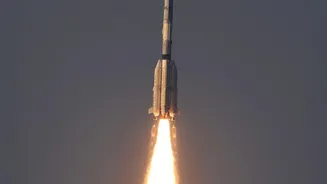
The success of companies like Skyroot Aerospace, which became the first private Indian company to launch a rocket into orbit, demonstrates the immense potential of the sector. With a five-fold growth projection for India's space economy by the early 2030s, the timing of the FDI liberalisation is critical. The influx of foreign capital and expertise is expected to create a hyper-competitive market, driving down costs for services like satellite fabrication and launch. This not only benefits the startups themselves but also cascades down to a host of downstream industries that rely on space-based data for everything from precision agriculture and climate monitoring to logistics and urban planning. The move positions India's skilled but cost-effective engineering talent to capture a much larger share of the global space market.