

A New Kind of Eye on the Cosmos
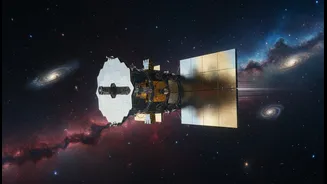
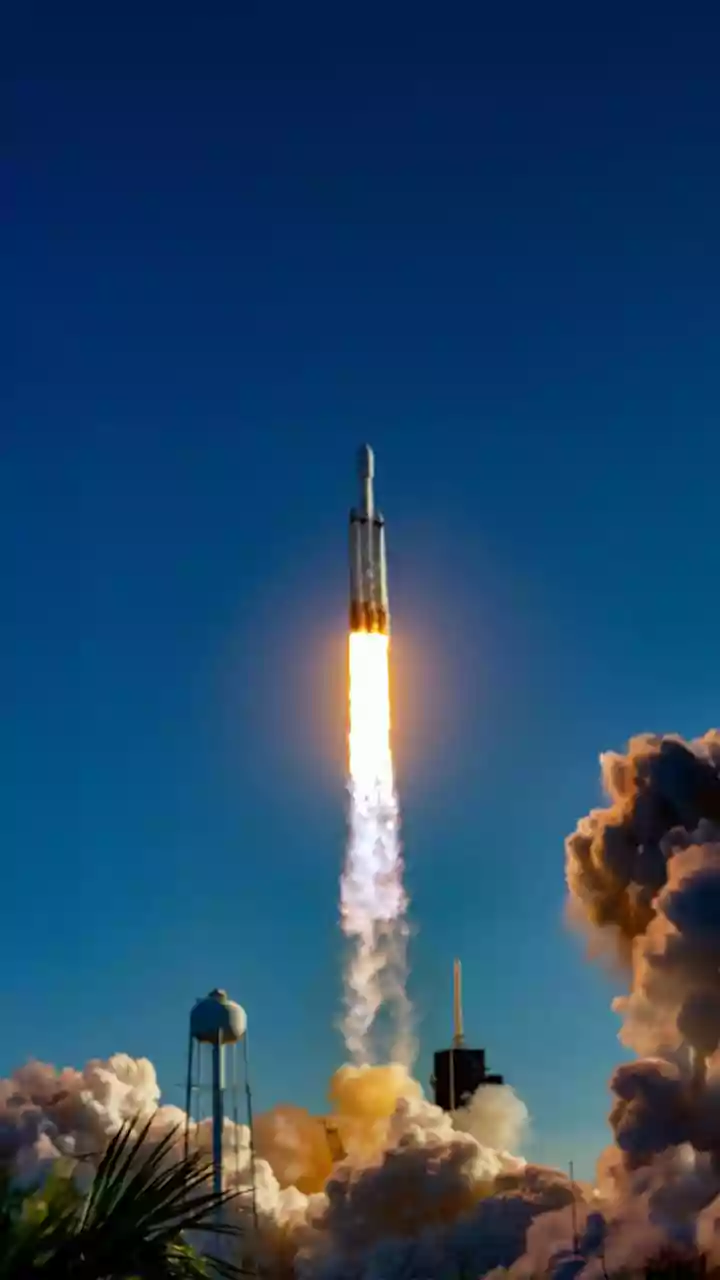
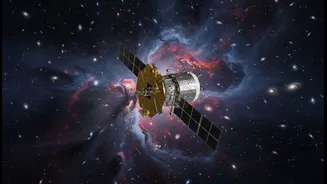
Scheduled to launch by August 2026, the Nancy Grace Roman Space Telescope is NASA's next flagship astrophysics mission. It's named after Dr. Nancy Grace Roman, the agency's first chief of astronomy, whose tireless advocacy for the Hubble Space Telescope earned
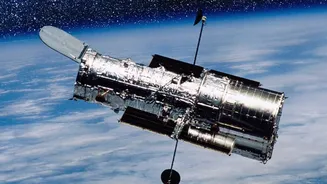
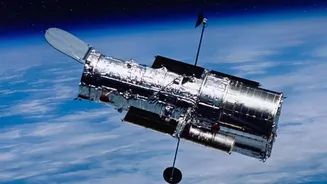
her the title "Mother of Hubble." It’s a fitting tribute, as Roman is set to build on Hubble’s legacy in a revolutionary way. While the James Webb Space Telescope (JWST) was engineered to peer back to the dawn of time with incredible sensitivity, Roman is built for breadth. Its primary mirror is the same size as Hubble's, but its instrumentation is designed for cosmic cartography on an unprecedented scale. The mission has two primary goals: to study the enigmatic dark energy that is accelerating the universe's expansion and to conduct a sweeping census of planets beyond our solar system.
The Power of a Panoramic View
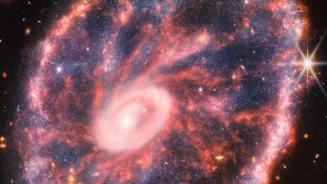
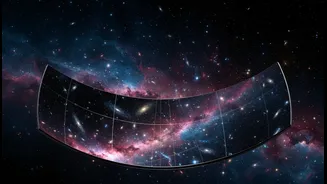
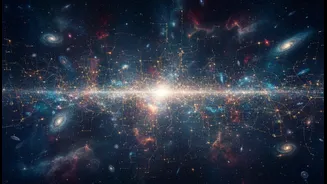
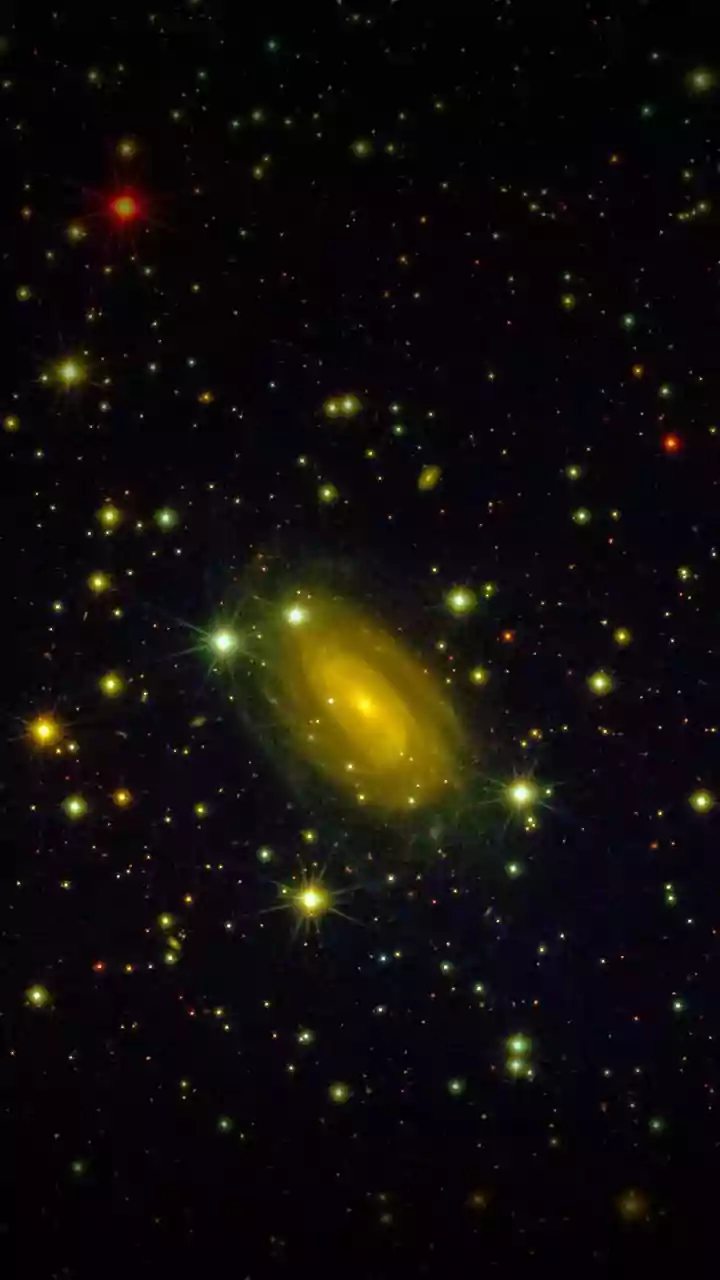
Roman's key advantage is its Wide Field Instrument (WFI), a 300-megapixel camera that gives it a field of view at least 100 times larger than that of Hubble or Webb. This immense digital real estate means that where Hubble would need to painstakingly stitch together hundreds of images to capture a galaxy like Andromeda, Roman could do it in just two. This isn't just about creating beautiful mosaics; it's about efficiency and statistics. By surveying huge swaths of the sky quickly and repeatedly, Roman will generate enormous datasets that astronomers can mine for decades. It's the difference between taking a detailed photograph of a single tree and creating a high-resolution satellite map of the entire forest. This survey capability will enable scientists to tackle big-picture questions about the structure and evolution of the universe that are impossible to answer with the narrow views of other telescopes.
Hunting for the Universe's Dark Side
One of the biggest mysteries in physics is dark energy, the unknown force causing the universe to expand at an accelerating rate. Roman will attack this problem from multiple angles. Its High-Latitude Wide-Area Survey will map the three-dimensional positions of hundreds of millions of galaxies, revealing how the universe's structure has changed over cosmic time. It will also track thousands of Type Ia supernovae, exploding stars that serve as 'standard candles' to precisely measure cosmic distances and clock the expansion rate. By observing how the tug-of-war between gravity (pulling things together) and dark energy (pushing things apart) has played out over billions of years, Roman will provide a tenfold improvement in the precision of our dark energy measurements, helping to distinguish between competing theories about its nature.
A Galactic Census of New Worlds
While telescopes like Kepler and TESS have found thousands of exoplanets, they've mostly used the 'transit' method, which is best at finding large planets orbiting very close to their stars. Roman will use this method to find an estimated 100,000 more planets, but its true innovation is its reliance on a different technique: gravitational microlensing. This effect, predicted by Einstein, occurs when a star and its planet pass in front of a more distant star. The gravity of the foreground system acts like a lens, briefly magnifying the background starlight. Roman's stable, high-resolution view from space makes it exceptionally good at detecting these fleeting events. Microlensing is sensitive to planets of all sizes, including worlds as small as Mars, and is particularly adept at finding planets in wide orbits—like those in our own solar system—and even 'rogue' planets that drift through space without a host star. This will provide a more complete statistical census of the planets in our galaxy.
More Than Just Its Main Mission
Beyond its core surveys, Roman is a versatile observatory. It carries a second instrument, the Coronagraph, which is a technology demonstration. This device is designed to block the overwhelming glare of a star, which will allow astronomers to directly image giant planets orbiting it—a feat akin to spotting a firefly next to a searchlight. The technology developed for Roman's coronagraph will pave the way for future missions aimed at directly imaging Earth-like planets. Furthermore, the telescope's vast surveys will create a treasure trove of data for all fields of astronomy, enabling studies of everything from asteroids in our solar system to the behavior of supermassive black holes in the early universe.