





The Allure of the Royal Legacy
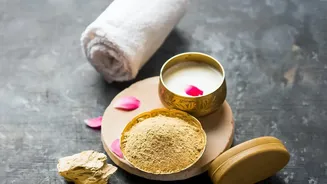
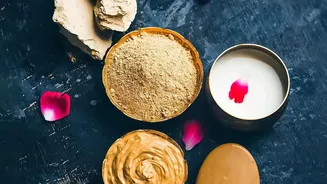
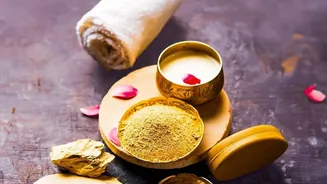
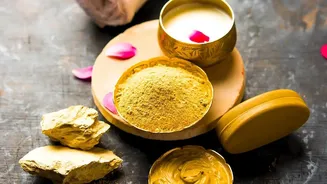
The narrative is intoxicating: Mughal empresses like Noor Jahan bathing in rose petals, and Rajput queens applying golden masks of saffron and milk. This legacy, passed down through generations, paints a picture of beauty as a sacred, elaborate ritual,
using nature’s finest offerings. Brands today often tap into this imagery, selling not just a product but a connection to a regal, romantic past. The promise is that by using these 'ancient secrets,' one can attain a timeless, flawless glow fit for royalty. This story is powerful because it's rooted in a real history of using potent botanicals, but it has also been embellished for the modern market.
What the Legacy Proves: Potent Plants
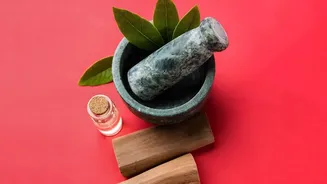
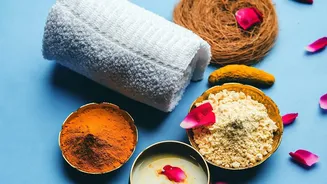
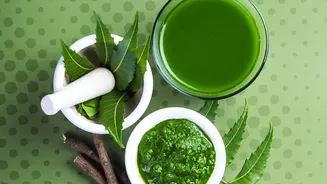
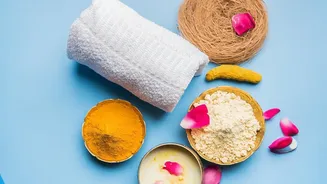
The foundation of Ayurvedic beauty lies in its use of powerful botanicals, and modern science has begun to validate what ancient practitioners knew through observation. Turmeric, a staple in rituals like 'Ubtan', contains curcumin, a compound with proven anti-inflammatory and antioxidant properties that can help purify and brighten skin. Sandalwood, prized for its cooling nature, has antimicrobial properties, making it effective for soothing irritated skin. Similarly, herbs like neem are known for their antibacterial qualities, while amla is a rich source of Vitamin C, crucial for hair health and skin vitality. These ingredients aren’t magical; their efficacy is based on their chemical compounds, which have demonstrable effects on skin and hair health.
What the Legacy Proves: Beauty Is Health
Perhaps the most significant truth of the Ayurvedic legacy is its core philosophy: true beauty is a reflection of inner health. Ancient texts like the Charaka Samhita emphasize that radiant skin isn't just the result of a face mask, but of a balanced system. This includes proper digestion, adequate sleep, stress management, and a diet suited to one's individual constitution or 'dosha' (Vata, Pitta, Kapha). The 'royal rituals' were part of a larger, disciplined lifestyle. This holistic approach is Ayurveda’s greatest strength, reminding us that no single product can substitute for overall well-being.
What the Legacy Doesn't Prove: The Myth of Miracles
The romantic narrative often leads to unrealistic expectations. One of the biggest myths is the idea of an overnight transformation. Ayurvedic formulations work cumulatively, supporting the skin’s natural renewal cycle, which takes weeks, not hours. Any product promising an instant 'royal glow' is likely selling a temporary cosmetic effect, not deep, lasting health. Furthermore, the idea that 'natural' always means 'safe' is a dangerous misconception. Poison ivy is natural, but you wouldn't apply it to your face. Some botanicals and essential oils can cause irritation or allergic reactions, which is why patch testing is always recommended, regardless of a product's 'ancient' origins.
Navigating the Modern Ayurvedic Market
In a market saturated with products claiming to be 'Ayurvedic' or 'herbal,' it's crucial to be a discerning consumer. An authentic Ayurvedic product is not just about including a pinch of turmeric; it's about the quality of ingredients, the formulation, and the philosophy behind it. Look for brands that are transparent about their full ingredient lists and manufacturing processes. Be wary of marketing that relies heavily on folklore without explaining how the product works. Lastly, remember that even in Ayurveda, there is no one-size-fits-all solution. A ritual that worked for a queen in a specific climate may not be suitable for your unique skin type and environment today.