







So, What Exactly Is This UPI Thing?
Think of UPI as a universal translator for money. Launched in 2016 by the National Payments Corporation of India (NPCI), it's a real-time payment system that lets you transfer money instantly between bank accounts using a single mobile app. Instead of needing
complex bank account numbers and codes, you use a simple, unique ID (like an email address) or just a mobile number. The system is built on an open network, meaning hundreds of banks and dozens of payment apps—like Google Pay, PhonePe, and Paytm—are all plugged into the same infrastructure. This ensures that a user of any app can pay another user on a different app, seamlessly.
The Secret Sauce: QR Codes and Zero Fees
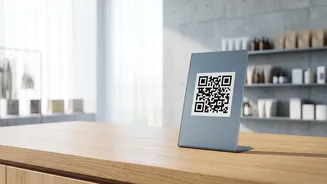
The true genius of UPI lies in its simplicity and accessibility, especially for small merchants. Walk up to almost any local shop, tea stall, or street vendor in India, and you'll likely see a small, laminated QR code hanging nearby. To pay, a customer simply scans this code with their phone, enters the amount, types in a secure PIN, and the transaction is done. The money moves directly from their bank account to the merchant's in seconds. Crucially, for a long time, there have been no transaction fees for users or small merchants, a government-backed policy that removed the biggest barrier to digital payment adoption. This encouraged millions of small-scale entrepreneurs to join the formal digital economy, as they could accept tiny payments without losing a percentage to fees.
A Financial Revolution on the Streets
The scale of this change is staggering. UPI has become the backbone of India's digital economy, processing billions of transactions every month. In August 2026 alone, the platform handled over 24.5 billion transactions. This isn't just about convenience; it's about profound financial inclusion. It has brought millions of people, many of whom operated entirely in cash, into the formal banking system. This digitization of the economy has also made it more transparent, helping to formalize what was once a massive informal sector. Daily life has been reshaped, with UPI used for everything from splitting bills with friends to paying utility bills and, of course, buying from local shops.
Why Doesn't the U.S. Have This?
While the U.S. has plenty of payment apps like Venmo, Zelle, and Apple Pay, its system remains fragmented. Venmo can't directly pay a Cash App user; each is a closed network. Zelle is close, offering bank-to-bank transfers, but it is run by a consortium of large banks and isn't as universally adopted by merchants. The U.S. payments landscape is dominated by private companies and credit card networks, whose business models often rely on transaction fees. UPI, by contrast, was designed as a piece of public digital infrastructure—an interoperable, low-cost utility for the entire nation. This fundamental difference in philosophy is why the U.S. has multiple, competing systems, while India built a single, unified one that has since become the world's largest real-time payments platform.