



Jamun (Java Plum): The Purple Powerhouse
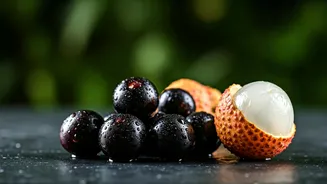
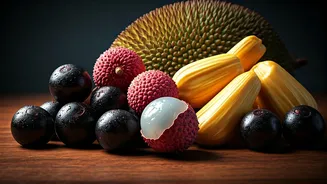
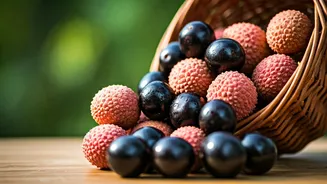
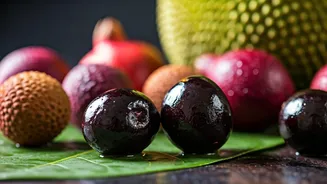
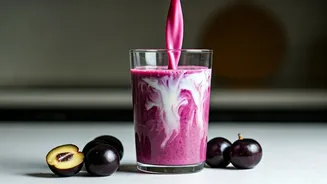
Imagine a fruit that looks like a small, dark olive but tastes like a sweet, tangy, and slightly astringent grape. That’s jamun. Also known as Java plum or black plum, this deep-purple fruit is a quintessential monsoon treat in India and Southeast Asia.
Its vibrant color is a dead giveaway to its nutritional prowess—it's loaded with anthocyanins, powerful antioxidants that help fight cellular damage. The “heavy lifting” from jamun comes from its reputation in traditional medicine, particularly for its low glycemic index. While modern science continues to study its effects, its rich fiber content is known to aid digestion and promote a feeling of fullness. It’s also a fantastic source of Vitamin C and iron, crucial nutrients for maintaining energy levels and a robust immune system, especially during a season when sniffles are common. You can often find jamun frozen or as a juice concentrate in South Asian grocery stores.
Lychee: The Hydration Hero
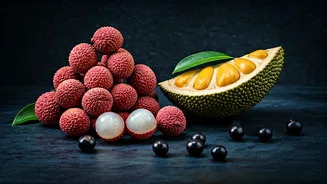
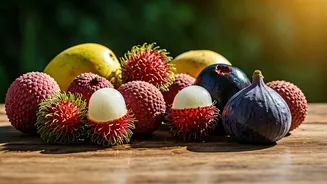
Peeling a lychee is a sensory experience. The rough, bumpy red shell gives way to a translucent, pearly-white fruit that’s incredibly juicy and fragrant. The flavor is a delicate balance of sweet and floral, with notes of grape and rose. Originating in Southeast Asia, lychees come into their prime during the hot, humid lead-up to the monsoon, offering a burst of refreshing hydration. Its primary superpower is its high water content, making it a delicious way to stay hydrated. But it’s not just water; lychees are packed with Vitamin C, a vital antioxidant that supports collagen production for healthy skin and boosts the immune system. They also provide a decent amount of potassium, which is essential for maintaining fluid balance and healthy blood pressure. While fresh lychees have a short season, they are widely available canned in syrup (just rinse to reduce sugar) or frozen at Asian markets year-round.
Pomegranate: The Ruby-Red Shield
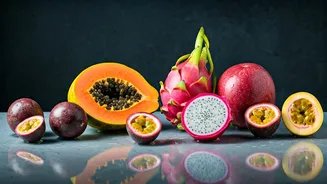
While pomegranates are familiar to most Americans, they hold a special place as a monsoon-season fruit in many parts of South Asia. Breaking one open to reveal hundreds of jewel-like seeds, or arils, feels like uncovering treasure. Each aril is a tiny explosion of sweet-tart juice. The real workhorse here is a unique class of antioxidants called punicalagins, found in the juice and peel. These compounds are so potent that pomegranate juice has been found to have higher antioxidant activity than red wine or green tea. This makes the fruit a powerful ally in protecting your body from oxidative stress. Pomegranates are also famously rich in Vitamin C and Vitamin K. The combination helps fortify your immune defenses—acting like a shield during a season known for health challenges—and supports everything from blood clotting to bone health. It’s a fruit that truly works hard for your wellness.
Jackfruit: The Versatile Giant
As the world’s largest tree-borne fruit, the jackfruit is a botanical marvel. When ripe, its custardy, yellow pods deliver a uniquely sweet flavor, often described as a blend of banana, pineapple, and mango. But its unripe, green form is where it has gained fame in the U.S.—as a shockingly effective plant-based substitute for pulled pork or chicken. This duality is part of its strength. As a ripe fruit, it provides a good dose of dietary fiber, which is crucial for a healthy gut, along with essential vitamins like Vitamin C. But as a savory ingredient, the unripe fruit is low in calories and high in fiber, making it a filling and nutritious base for meals. It contains more protein than many other fruits, and its complex carbohydrates provide sustained energy. Whether sweet or savory, jackfruit is a nutritional chameleon that supports digestive health and offers a satisfying, versatile food source that thrives in monsoon climates. Look for it canned in brine (for savory dishes) or syrup (for dessert) in most major supermarkets.