



The Undeniable Benefits of Seated Exercise
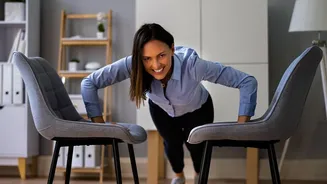
Chair-based workouts are more than just a convenient option; they are a powerful tool for people of all fitness levels. For beginners or those with mobility concerns, they provide a safe starting point without the stress on joints that can come from standing
exercises. These routines are brilliant for improving strength, flexibility, and balance, which helps in performing daily activities with greater ease. Regular seated exercises can boost circulation, particularly important if you sit for long periods, and even enhance your mood and mental well-being by releasing endorphins. Whether at the office or at home, using a chair allows you to build foundational strength and improve posture, making it a practical and effective fitness solution.
Safety First: What Beginners Must Know
Before you begin, a few simple considerations will ensure your workout is both safe and effective. First, choose the right chair. It should be sturdy, stable, and without wheels. A firm chair with a solid back offers good support. Always sit up tall, engaging your core by gently pulling your navel toward your spine to maintain good form. Most importantly, listen to your body. You might feel minor muscle soreness at first, but sharp pain is a signal to stop. Start slowly with a smaller range of motion and fewer repetitions, gradually increasing as you feel stronger and more confident. Warming up with gentle movements like shoulder rolls is also a great idea.
Seated Marching
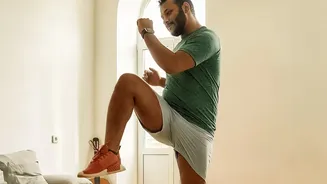
This is a perfect warm-up exercise to get your heart rate up. Sit upright, away from the back of the chair, with your feet flat on the floor. Lift your right knee toward the ceiling as high as is comfortable, then lower it. As your right knee comes down, lift your left knee. Continue alternating legs in a steady marching rhythm. For an extra challenge, you can swing your arms as if you were walking. This movement strengthens the hips and thighs while improving cardiovascular health.
Knee Extensions
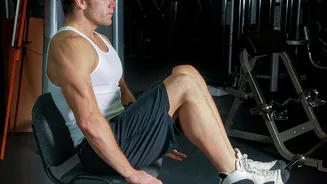
This exercise is excellent for strengthening the muscles in your thighs. Sit tall with your feet flat on the floor. Hold the sides of the chair for support if needed. Keeping your back straight, slowly extend your right leg until it is parallel to the floor, or as straight as you comfortably can. Feel the muscle engagement in your thigh. Hold for a moment before slowly lowering your foot back to the starting position. Complete 8 to 10 repetitions with one leg before switching to the other.
Arm Circles and Shoulder Presses
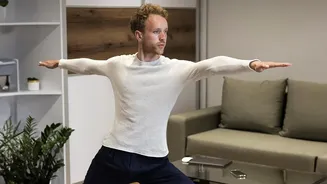
Don't forget the upper body. For arm circles, extend your arms straight out to your sides at shoulder height. Make small, controlled circles forward for about 15 seconds, then reverse the direction for another 15 seconds. For a shoulder press, start with your elbows bent and hands at your shoulders, palms facing forward. Press your arms straight up overhead, then lower them back to the starting position. Both exercises improve shoulder mobility and strength.
Torso Twists
A healthy spine is a flexible spine. Sit upright with your feet firmly on the floor. Cross your arms over your chest or place your hands on your temples. Keeping your hips still, gently twist your upper body to the right. Hold the stretch for a few seconds, then slowly return to the centre and twist to the left. This movement helps maintain flexibility in the upper back and engages your core muscles.
Your Five-Minute Beginner Routine
Ready to put it all together? Here is a simple, effective five-minute routine to get you started. Perform each exercise for the suggested time, moving smoothly from one to the next. 1. Seated Marching: 60 seconds (to warm up and increase your heart rate). 2. Torso Twists: 60 seconds (30 seconds per side, focusing on slow, controlled movement). 3. Knee Extensions: 2 minutes (60 seconds per leg, alternating legs for rest). 4. Arm Circles: 30 seconds (15 seconds forward, 15 seconds backward). 5. Shoulder Presses: 30 seconds (as many controlled reps as you can manage).