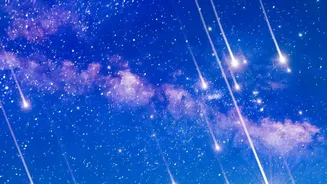



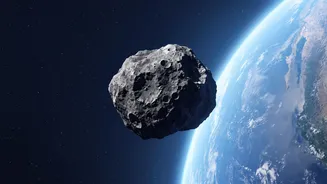
That fleeting streak of light you call a 'shooting star' is one of the most magical sights in the night sky. But what's really happening up there? The breathtaking display has less to do with a falling star and more to do with incredible physics.
From Space Rock to Shooting Star
First,
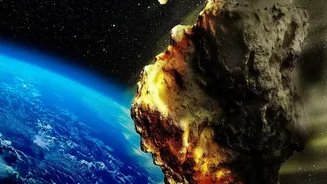
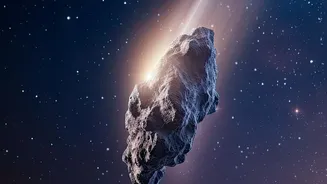
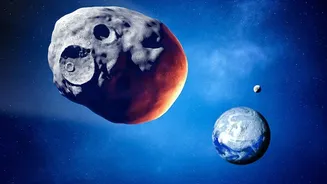
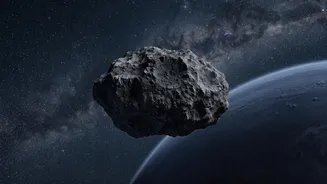
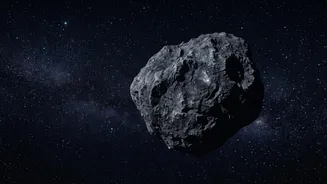
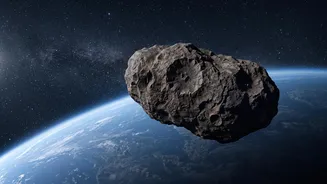
let's clear up the terms. While floating in space, a piece of rock or metal is called a meteoroid. These can be tiny, like a grain of sand, or much larger. They are often fragments broken off from comets or asteroids. When one of these meteoroids enters Earth's atmosphere, it becomes a meteor—that's the streak of light we see. And if any part of it survives the journey and lands on the ground, it's called a meteorite. So, a shooting star is actually a meteor: a small piece of space debris making a dramatic, fiery entrance.
It’s Not Friction, It’s Pressure
Many people believe the light from a meteor is caused by friction, like rubbing your hands together to create warmth. While friction plays a small part, the real cause is far more extreme: immense pressure. Meteoroids enter our atmosphere at incredible speeds, anywhere from 11 to 72 kilometres per second. At this velocity, the space rock can't push air molecules out of the way fast enough. Instead, the air in front of it gets compressed and heats up to temperatures over 1,600°C. This intense heat, caused by what is known as ram pressure, is what makes the surrounding air and the meteoroid itself glow.
A Trail of Glowing Gas
The brilliant streak we see isn't the rock itself burning like a log in a fire. The light is actually a glowing trail of superheated gas and vaporised particles. As the meteoroid heats up from atmospheric compression, its surface layers vaporise. This process, called ablation, creates a trail of incandescent material. Furthermore, the extreme heat strips electrons from the air molecules in its path, creating a channel of ionised gas, or plasma. This glowing plasma trail is what we perceive as a bright, continuous streak of light that can last for a precious second or two.
A Cosmic Colour Show
Not all meteors are the same whitish-yellow. Sometimes, they can flash with vibrant colours, and this tells a story about their chemical makeup. The colours come from the different elements within the meteoroid vaporising as they burn up. For example, sodium produces a bright orange-yellow glow, while iron tends to appear yellow. A green or blue-green flash is often caused by magnesium or nickel. Rarer violet or purple hues can indicate the presence of calcium. The red glow you might see is typically caused by nitrogen and oxygen molecules in our own atmosphere getting superheated.
Why Meteor Showers Happen
While you can spot a random, or 'sporadic', meteor on any clear night, there are specific times of the year when they become much more frequent. These events are called meteor showers, and they happen when Earth passes through a dense stream of debris left behind by a comet or, occasionally, an asteroid. As comets orbit the sun, they shed dust and ice, creating a trail along their orbital path. When Earth's orbit intersects with one of these trails, we plough through this cosmic dust field, resulting in dozens or even hundreds of meteors per hour, all appearing to radiate from the same point in the sky.