







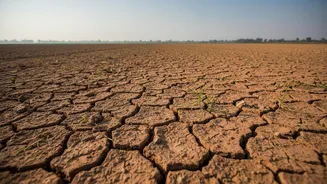

An Uneven and Unpredictable Season
The India Meteorological Department (IMD) had earlier predicted a "below-normal" monsoon for 2026, largely influenced by the development of El Niño conditions in the Pacific Ocean, a phenomenon known to weaken monsoon circulation. The season began with
a significant rainfall deficit in June, stalling early crop sowing. While July saw a recovery in some regions, the overall distribution of rain has been worryingly uneven. As of early August, the cumulative seasonal rainfall for the country remained below the long-period average. Data shows that hundreds of districts have recorded deficient rainfall, even as other areas grapple with heavy showers and flood risks. This spatial disparity is critical; it means that even if the national average seems to improve, key agricultural belts might still be grappling with dry conditions, impacting crop health and sowing decisions.
The Direct Hit on Kharif Crops
A weak or erratic monsoon directly threatens the Kharif or summer crop season, which is heavily rain-dependent for a majority of India's farmers. Nearly half of the country's farmland lacks irrigation, making timely monsoon showers essential for sowing and crop growth. As of mid-August 2026, the total area sown with Kharif crops was trailing the previous year's figures by about 2%. The most significant lags were seen in major crops like rice, with acreage down by over 3.6%. The sowing of some pulses and oilseeds also remained below last year's levels. With the sowing window nearly closed, the final harvest now depends heavily on the rainfall received through the rest of August and September to support crop development and determine yields. Any prolonged dry spells from this point could severely dent the productivity of standing crops like paddy, soybean, and maize.
The Ripple Effect on Your Kitchen Budget
For urban and rural households alike, the most tangible impact of a poor monsoon is felt through rising food prices. Lower agricultural production tightens supply, leading to higher costs for essential commodities. Vegetables, pulses, and edible oils are particularly vulnerable to price hikes in a weak-monsoon scenario. Even before the full impact of the harvest is known, food inflation has been climbing, driven by price increases in vegetables like onions, ginger, and garlic. A deficient monsoon not only affects crop output but can also reduce the availability of fodder for cattle, potentially leading to an increase in milk prices. According to some estimates, a middle-income urban family could see their monthly expenses rise by ₹1,000 to ₹3,000 in a weak monsoon year due to this broad-based food inflation.
Beyond the Farm: Broader Economic Headwinds
The consequences of a weak monsoon extend far beyond the agricultural sector. Lower crop yields lead to reduced income for a vast portion of the rural population. This, in turn, dampens rural demand for a wide range of goods, from tractors and fertilisers to fast-moving consumer goods. Furthermore, higher food inflation poses a significant challenge for the Reserve Bank of India (RBI), which is tasked with keeping overall inflation in check. While the central bank may be patient for now, persistent price pressures could force it to consider policy changes later in the year. The monsoon also impacts water security and power generation, as it replenishes reservoirs that are crucial for drinking water, irrigation, and hydroelectric power plants throughout the year.