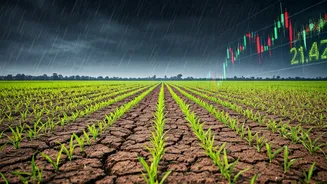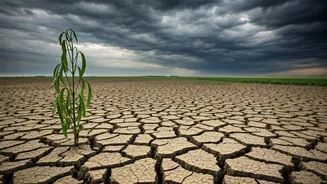









The Lifeline of the Rural Economy
The Indian stock market's deep connection to the monsoon is rooted in the agricultural sector. The southwest monsoon provides about 70-75% of the country's annual rainfall, and with over half of India's farmland still being rain-fed, its performance is paramount.
[5, 19] A timely and well-distributed monsoon leads to healthy crop yields, which is crucial for an economy where agriculture supports nearly half the workforce. [6, 7] When harvests are bountiful, farm incomes rise, putting more money into the hands of rural households. This boosts their purchasing power and helps keep food inflation in check, creating a stable macroeconomic environment that investors view favourably. [6, 13] Conversely, a weak or erratic monsoon can strain the farm economy, reduce output, and stoke inflation, creating negative sentiment that weighs on the market. [13, 18]
The Ripple Effect on Key Sectors
The impact of the monsoon extends far beyond the farm gates. Increased rural income acts as a powerful demand engine for several key industries. Companies in the Fast-Moving Consumer Goods (FMCG) sector, selling everything from soaps to packaged foods, often see a direct sales boost as rural consumption grows. [3, 5] Similarly, the automobile sector, particularly manufacturers of two-wheelers and tractors, is highly sensitive to monsoon trends, as a significant portion of their sales comes from rural India. [2, 7] A good monsoon also benefits agri-input companies dealing in fertilizers, seeds, and agrochemicals as farming activity intensifies. [9] Even the banking and finance sector feels the effect, with healthier rural incomes leading to better credit growth and loan repayments. [5] On the other hand, sectors like IT and pharmaceuticals remain largely insulated, as their revenues are tied to global demand cycles rather than domestic rainfall. [7, 11]
A Barometer of Market Psychology
Financial markets are inherently forward-looking, meaning they often react to forecasts and expectations rather than waiting for events to unfold. This is especially true for the monsoon. Market sentiment can shift dramatically based on predictions from agencies like the India Meteorological Department (IMD). [5, 9] A forecast for a normal or above-normal monsoon can trigger a rally in monsoon-sensitive stocks well before the rains even arrive. [4] This is because investors anticipate higher corporate earnings and rush to position themselves accordingly. Conversely, predictions of a deficit or the emergence of weather patterns like El Niño can spark profit-booking and caution among investors. [15, 26] As one economist noted, "bad rains bring bad sentiment," impacting both equity markets and rural spending patterns almost instantaneously. [13, 18] The market essentially trades on the probability of future prosperity, and in India, that prosperity is often measured in millimetres of rain.
An Evolving but Enduring Relationship
While the monsoon's influence is undeniable, the nature of its relationship with the economy is evolving. With the significant growth of the services and manufacturing sectors, agriculture's direct share of India's GDP has declined over the decades. [17] This has led some to believe that the market's overall dependence on the monsoon has weakened. [6] While it's true that a bad monsoon may no longer derail the entire economy as it might have in the past, its impact on rural income and consumption remains as potent as ever. [17] The link between rainfall and the cash flow of millions of households has not diminished. [17] Therefore, while the broader market indices like the Nifty might show resilience thanks to diversified sectors like IT, the performance of specific, rural-focused companies remains closely tethered to the season's rainfall. [3] India is structurally better positioned to manage a weak monsoon with grain reserves and expanded irrigation, but for key sectors, the monsoon remains a powerful market mover. [24]