







A Land Shaped By Rain
For the residents of Mizoram, the annual monsoon is a double-edged sword. While essential for life and agriculture, the intense rainfall on its hilly terrain poses a constant risk. Soil erosion is a major concern, washing away fertile topsoil and degrading
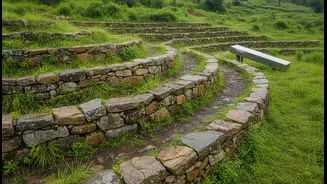
the land. In the worst cases, this leads to landslides that can threaten homes, disrupt infrastructure, and endanger lives. The state’s geography, characterised by steep slopes, makes it particularly vulnerable. For years, communities and authorities have battled this seasonal challenge, searching for a sustainable way to secure the land and protect its people from the destructive power of water.
Nature’s Perfect Engineer
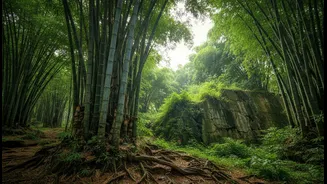
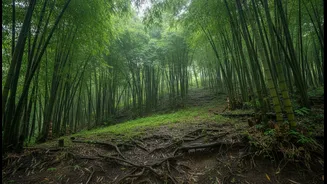
The answer to this modern problem lies in a plant that has been part of Mizoram’s landscape and culture for centuries: bamboo. This remarkable grass is far more than just a source of food and material; it is a master of soil conservation. The secret lies beneath the surface in its dense, fibrous network of roots and rhizomes. This underground web acts like a natural net, tightly binding soil particles together and preventing them from being washed away. Unlike many trees, bamboo’s root system is shallow and extensive, making it exceptionally effective at stabilising topsoil on slopes. Furthermore, its rapid growth—some species can grow several feet in a single day—means it can establish itself quickly and provide a permanent canopy that disperses heavy raindrops, further reducing their erosive impact.
A Community's Green Shield
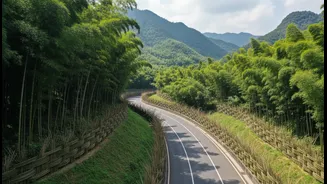
The success of this initiative is not just about the plant itself, but about the people planting it. Mizoram has one of the highest concentrations of bamboo forests in India, and its government is harnessing this resource through schemes like the State Bamboo Mission. Working in convergence with the National Bamboo Mission, the state provides subsidies, high-quality planting material, and technical support to local communities. This empowers families and village councils to take an active role in protecting their own environment. It’s a powerful model of decentralised green infrastructure, where community participation ensures that plantations are maintained and valued, creating a living shield against erosion that grows stronger with each passing year.
Harvesting More Than Stability
The benefits of bamboo planting extend far beyond preventing landslides. For the people of Mizoram, bamboo is ‘green gold’—a cornerstone of the local economy. It is a primary raw material for a thriving handicraft industry, producing everything from furniture and baskets to construction materials. The State Bamboo Mission actively supports the creation of value-added products, with recent initiatives focusing on bamboo charcoal and processing units to boost local industry. These projects create sustainable livelihoods, offering an economic incentive that reinforces the environmental goals. By planting bamboo, communities are not just securing their soil; they are cultivating a future of economic independence and resilience, turning abandoned lands from practices like shifting cultivation into productive, green ecosystems.
A Blueprint for Resilience
Mizoram's story is a compelling case study for the power of nature-based solutions. As climate change intensifies weather patterns across India, other hilly states like Uttarakhand, Himachal Pradesh, and Kerala are facing similar challenges with landslides and erosion. The Mizo model offers a replicable and scalable blueprint. It demonstrates that by combining traditional ecological knowledge with strategic government support and robust community involvement, it is possible to build infrastructure that is both effective and sustainable. Instead of relying solely on expensive and often intrusive concrete engineering, Mizoram is showing that sometimes the most resilient solutions have been growing in our own backyards all along.