





What are the Proposed BS-VII Norms?
The Ministry of Road Transport and Highways has issued draft notifications for the next generation of emission standards, known as BS-VII. Set to be rolled out in phases starting with passenger cars and SUVs from April 1, 2029, these rules represent a significant
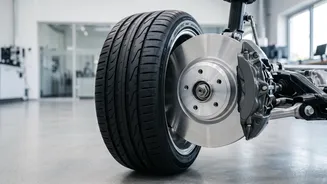
evolution from the current BS-VI standards. The focus is not just on reducing tailpipe pollutants like nitrogen oxides (NOx) and particulate matter (PM), but also on a more holistic view of vehicle pollution. For the first time, the regulations will address non-exhaust emissions, setting limits for particles released from brake wear and tyre abrasion. This is a crucial change, as these particles are generated even by electric vehicles. Furthermore, the rules mandate stricter real-world emissions testing and advanced On-Board Monitoring systems to ensure compliance throughout a vehicle's life.
The Government's Push for Cleaner Air
The government's primary motivation is the urgent need to tackle India's severe urban air pollution, a major public health crisis. By aligning with the latest global standards, similar to Europe's Euro 7 regulations, India aims to significantly cut down on harmful vehicular emissions. The proposed rules will measure particulate matter down to 10 nanometres, much smaller than the current 23-nanometre threshold, targeting the fine particles that pose the greatest health risks. Beyond public health, the move is also strategic. It positions India as a potential hub for manufacturing technologically advanced, clean-energy vehicles that are ready for export. The government often points to the country's rapid and successful, albeit challenging, leap from BS-IV to BS-VI in 2020 as evidence of the auto industry's ability to adapt quickly to stringent environmental mandates.
An Industry Bracing for Impact
While automakers support the goal of cleaner air, they have voiced significant concerns about the proposed timeline. The Society of Indian Automobile Manufacturers (SIAM) has reportedly been in discussions to request a delay, suggesting a phased rollout starting in 2032 instead of 2029. The industry argues that unlike the BS-VI transition, which largely involved adapting existing global technology, achieving BS-VII compliance requires substantial new research and development. This is especially true for India's dominant multi-point fuel injection petrol engines, which may need new particulate-control technologies. Manufacturers warn that the compressed timeline for developing, testing, and validating these new systems is simply not feasible.
The High Cost of a Quick Transition
The financial implications of the proposed timeline are a major point of contention. Automakers caution that they would need to make massive investments in R&D and retooling factory lines, coming on the heels of the heavy capital expenditure for the BS-VI transition. These costs would inevitably be passed on to consumers, leading to potentially significant price hikes for new vehicles. Industry executives also worry that the rush to upgrade internal combustion engine models, which still form the bulk of their sales, could divert critical engineering resources and investment away from the development of electric vehicles (EVs), potentially slowing down India's broader e-mobility goals. This could force companies to revisit and delay product launch plans scheduled between 2027 and 2030.
What This Means for the Consumer
For the average person, the BS-VII debate boils down to two key outcomes: cleaner air and more expensive cars. The proposed norms will not affect existing vehicles, so current owners of BS-VI or older cars will not need to make any changes. However, for those looking to buy a new vehicle after 2029, the upfront cost is likely to be higher. On the positive side, the new rules will introduce an 'Environmental Vehicle Passport' for new cars, providing clear data on emissions, fuel economy, and battery durability for EVs. This increased transparency, combined with the long-term health benefits of reduced air pollution, is the promised payoff for the potentially disruptive and costly transition ahead.