





The Flaw in the Average
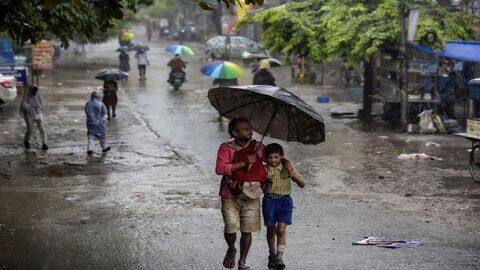
In a country as vast and geographically diverse as India, a 'normal' monsoon can be anything but. A national or even state-level rainfall average often masks extreme local variations. One district might experience drought-like conditions while another,
just a few hundred kilometres away, faces floods. For a farmer deciding the crucial moment to sow seeds, or a district official preparing for a potential deluge, a broad-stroke prediction is almost as unhelpful as no prediction at all. This patchiness of rainfall, a defining characteristic of the Indian monsoon, can render large-scale forecasts dangerously misleading, leading to crop loss and inefficient resource management. The entire agricultural cycle, from sowing to irrigation and harvesting, depends on timing that national averages simply cannot provide.
A Revolution in Forecasting
The India Meteorological Department (IMD) has initiated a significant shift from this broad approach to a highly granular one. Leveraging a combination of advanced technology and an expanding ground network, the agency is now issuing forecasts at the district and even block level. This move is powered by a new generation of tools, including AI-driven models, an expanding network of Doppler radars and automatic weather stations, and a blended approach that combines historical data with real-time global models. In May 2026, the IMD unveiled a system to provide block-level forecasts for the monsoon's arrival across 15 states, a first-of-its-kind initiative. This new model can generate probabilistic forecasts for up to four weeks, giving stakeholders an unprecedented window to plan.
From Field to Floodplain
The real-world impact of this enhanced precision is profound. For farmers, it transforms agriculture from a reactive gamble to a predictive science. Hyper-local advisories, often delivered via SMS or WhatsApp in local languages through District Agro-Meteorological Units (DAMUs), provide actionable advice. A farmer in Karnataka, for instance, can receive a five-day forecast that guides decisions on when to apply fertiliser, spray pesticides, or harvest crops, significantly reducing the risk of weather-related losses. Studies have shown very high adoption rates for these advisories, with tangible economic benefits for small and marginal farmers. For disaster management authorities, district-specific warnings about heavy rainfall or extreme weather events allow for targeted preparedness, evacuation planning, and more effective deployment of resources.
The Technology Behind the Accuracy
This leap in forecasting capability is not accidental. It is the result of a concerted effort to upgrade India's meteorological infrastructure and modelling power. The IMD now employs a hybrid technology framework that uses AI and machine learning to analyse nearly a century's worth of meteorological data alongside global weather models and inputs from INSAT series satellites. This allows for 'downscaling' of data to a much finer resolution. In a pilot project in Uttar Pradesh, for example, the IMD is generating rainfall forecasts with a 1-km resolution, a level of detail previously unimaginable. This is made possible by the state's extensive network of automatic weather stations, highlighting the importance of ground-level data infrastructure in sharpening predictions.
The Road Ahead
Despite the remarkable progress, challenges remain. The new block-level system currently covers just under half of India's blocks, primarily in the rain-fed monsoon core zone. Expanding this coverage nationwide will require further investment in automatic weather stations and other observational infrastructure. Perhaps the most critical challenge is last-mile delivery: ensuring that these highly valuable and localised forecasts reach every farmer and local official in a timely and understandable format. Integrating these advisories with mobile-based services and strengthening the network of DAMUs will be essential to truly democratise weather data and maximise its impact on building climate resilience across the country.