





From Blurry Dot to Detailed World
The night sky, with its distant planets and shimmering stars, has long been the domain of expensive telescopes and dedicated DSLR cameras. For the average person, capturing anything more than the Moon has been a fruitless exercise. However, a quiet revolution
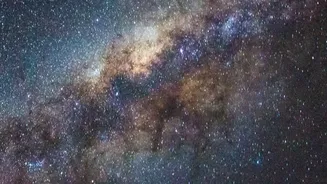
has been taking place in the palm of your hand. Smartphone manufacturers, in their relentless pursuit of the perfect camera, have turned their attention to the heavens. Using a powerful blend of software and hardware, new computational astrophotography modes are allowing everyday users to take surprisingly clear and detailed images of celestial objects, including bright planets like Jupiter and Saturn. This technology is democratising a hobby once reserved for dedicated enthusiasts, making stargazing more accessible than ever before.
The Magic of Computational Photography
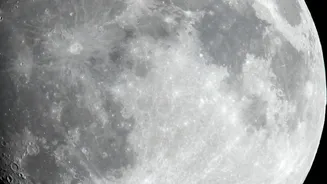
So, how does your phone turn a faint point of light into a recognisable planet? The secret lies in a technique called computational photography. Instead of taking one long exposure, which would be blurry without a professional tripod, your phone's astrophotography mode captures multiple short exposures over several minutes. For example, Google's Pixel phones, pioneers in this field, can take a series of 16-second images over a four-minute period. An AI-powered algorithm then gets to work. It aligns these individual frames, intelligently stacking them to enhance detail and reduce 'noise'—the grainy effect common in low-light photos. This process effectively simulates a much longer, cleaner exposure than the phone's hardware could manage on its own. Some phones also use AI to recognise what you're pointing at, applying specific enhancements. While this has caused some controversy, especially with moon photos where AI can add details that aren't really there, the end result for planets is a significantly clearer image than a simple point-and-shoot photo.
Putting Your Phone to the Test
The leaders in this space are currently Google's Pixel and Samsung's Galaxy flagship series. Google's Pixel line, such as the Pixel 9 and 10 Pro, is lauded for its user-friendly and highly effective Astrophotography mode, which activates automatically within Night Sight when the phone is held steady. It excels at capturing wide starfields and can even reveal details on Jupiter and the shape of Saturn's rings under the right conditions. Samsung's high-end models, like the Galaxy S26 Ultra, leverage their powerful 'Space Zoom' capabilities. While the extreme 100x zoom is mostly a digital gimmick for planets, the optical zoom lenses (up to 10x) provide a significant advantage, allowing you to get a much closer view before the computational magic even begins. These features make them excellent for targeting specific objects like planets. Other brands are also entering the fray, but for now, Pixel and Samsung offer the most robust and accessible experiences for budding planetary photographers.
Tips for Capturing the Cosmos
While the technology is powerful, you can't just point and shoot. To get the best results, you need to follow a few key steps. First and foremost, stability is crucial. You must use a tripod or prop your phone securely on a stable surface. Any movement during the multi-minute exposure will result in a blurry image. Second, escape light pollution. The darker your surroundings, the more light your phone's sensor can gather from your celestial target. Use a stargazing app to locate bright planets like Jupiter, Saturn, Venus, and Mars. Finally, use your camera's pro or manual mode if it has one. Even without a dedicated astro mode, you can manually set a long exposure and low ISO to capture more detail. For taking pictures of planets through a telescope eyepiece, a simple smartphone adapter can make a world of difference by holding the phone steady and perfectly aligned.