




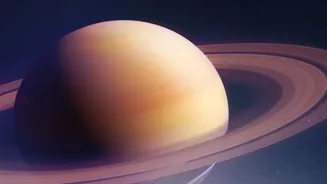
A Celestial Meeting in the October Sky
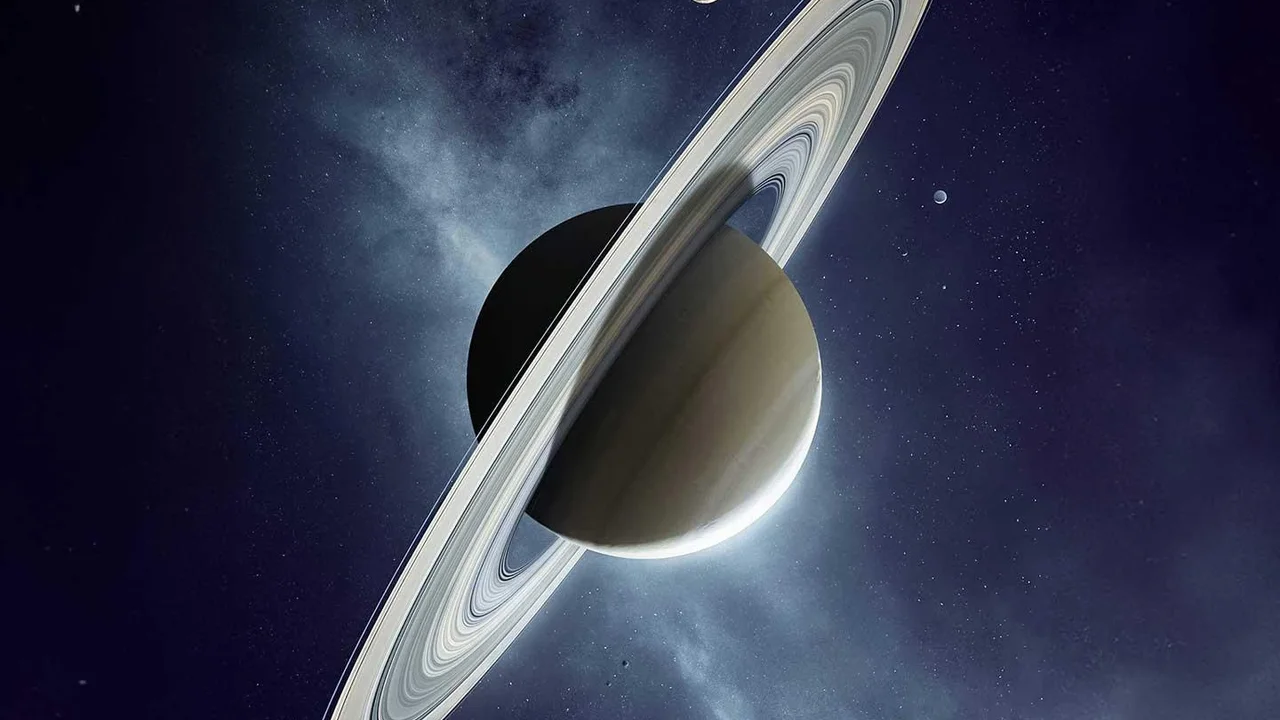
October is shaping up to be a fantastic month for stargazers. Following its 'opposition' in early October, when it was at its brightest and closest to Earth for the year, Saturn remains a brilliant fixture in our evening sky. This month offers another
treat: a close approach with the Moon, an event astronomers call a conjunction. During the nights of October 24th and 25th, the waxing gibbous Moon will appear to glide past the gas giant. While they may look like close neighbours from our vantage point, it's a line-of-sight illusion; the two are, of course, separated by an immense distance in space. The visual proximity, however, provides a wonderful opportunity to spot and appreciate both celestial bodies at once.
When and Where to Look
The prime nights for viewing this alignment are October 24th and 25th, 2026. After sunset, look towards the eastern or southeastern sky. On October 24th, the nearly full Moon will appear to the upper left of Saturn. As the night progresses, you'll see them travel across the sky together. Saturn will be visible all night long, rising in the east as the Sun sets and making its way across the sky. By October 25th, the Moon will have moved to appear near Saturn again, continuing the spectacle. The official full Hunter's Moon occurs on October 26th, so the Moon will be exceptionally bright throughout this period, making the pair impossible to miss on a clear night.
Identifying the Ringed Planet
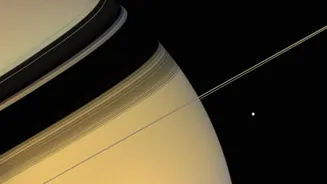
Finding Saturn will be straightforward thanks to its proximity to the bright Moon. While stars twinkle, planets tend to shine with a steady, unwavering light. Look for a bright, yellowish-white point of light near the Moon. That will be Saturn. Its steady glow makes it distinguishable from the flickering stars surrounding it. Since its opposition on October 4th, Saturn has been shining brightly in the constellation Pisces, a region of the sky without many other bright stars, making the planet stand out even more.
Do You Need a Telescope?
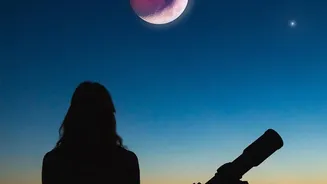
No special equipment is required to see the alignment of the Moon and Saturn; they will be easily visible to the naked eye as two bright objects in the sky. However, if you have a pair of binoculars, you can get a slightly better view. Binoculars may reveal Saturn as a tiny, non-circular or slightly oval shape, which is the effect of its famous rings. To truly resolve the rings and see them as separate from the planet's disk, you will need a telescope. Even a small backyard telescope with modest magnification (around 50x) can provide a breathtaking view of the rings, which are currently tilted about 10 degrees toward us. With a telescope, you might also spot Saturn's largest moon, Titan, glowing as a tiny point of light nearby.
Tips for the Best Viewing Experience
For the best experience, find a location with a clear view of the eastern horizon, away from the glare of city lights. While this pairing is bright enough to be seen from urban areas, a darker sky will always make the view more impressive by revealing more surrounding stars. Give your eyes about 15-20 minutes to fully adapt to the darkness; this will help you see more detail. The Moon's brightness can be overpowering, so you might want to observe Saturn first or use your hand to block the Moon's direct glare when trying to spot the planet. Dress warmly, as autumn nights can get chilly. Finally, be patient and allow yourself time to simply enjoy the cosmic display unfolding above you.