




What is a 'Food Flex'?
In an age where every meal is a potential Instagram post, the ‘food flex’ has evolved. It’s no longer just about dining at the most expensive restaurant or sourcing a rare truffle from Italy. Today’s ultimate flex is about knowledge, access, and seasonality.
It’s about being able to procure and appreciate something that money alone can’t always buy—an ingredient that is hyper-local, available for a ridiculously short window, and deeply connected to nature. This is where seasonal wild mushrooms come in. They are the antithesis of the mass-produced, always-available produce in supermarkets. Serving them tells your guests, ‘I know what’s in season, I know where to get it, and I know how to cook it.’
The Magic of Monsoon Fungi
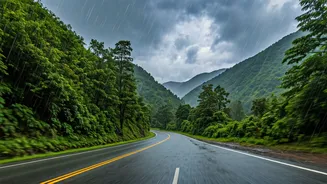
The Indian monsoon doesn't just bring relief from the summer heat; it transforms the landscape into a forager's paradise. As the rain soaks into the soil, it awakens a hidden, subterranean network of mycelium. This network, the true body of the fungus, sends up its fleeting fruit: the mushroom. From the foothills of the Himalayas to the termite mounds of the Western Ghats, a spectacular variety of edible fungi make their brief appearance. This ephemeral nature is key to their allure. Unlike button mushrooms that are cultivated year-round, these wild varieties are a direct taste of the season, a gift from the rain-drenched earth that will be gone in a matter of weeks.
The Ultimate Prize: Gucchi
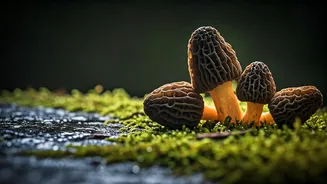
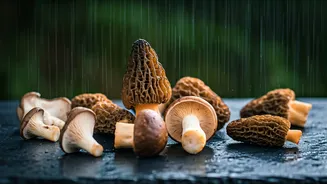
If there is one mushroom that defines this trend, it is the Gucchi, or Himalayan Morel. Found in the forests of Himachal Pradesh, Uttarakhand, and Kashmir, these honeycomb-capped fungi are notoriously difficult to find. They cannot be cultivated and must be foraged by hand, often by villagers who spend days searching for them. This scarcity drives up their price to astronomical levels, often commanding upwards of ₹25,000 to ₹30,000 per kilogram for the dried variety. Their flavour is intensely smoky, earthy, and nutty, making them the star of luxurious dishes like Gucchi Pulao. Putting Gucchi on your menu is the culinary equivalent of parking a luxury car in your driveway—it’s an unambiguous statement of indulgence.
The Local Hero: Termite Hill Mushrooms
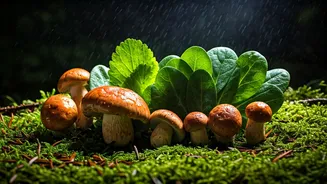
While Gucchi is the celebrity, the true insider’s flex might be the Termite Hill Mushroom. Known locally as ‘Ollun’ in Goa, ‘Almi’ in Konkani, or ‘Huttu’ in Kannada, this mushroom belongs to the Termitomyces genus. It has a fascinating life cycle, growing only on termite mounds in a symbiotic relationship with the insects. They sprout in clusters after the first few heavy rains and have a firm, meaty texture and a delicate, savoury flavour. Unlike Gucchi, they are highly perishable and rarely sold far from where they are found. Finding them at a local market in Goa, Maharashtra, or West Bengal is a matter of luck and timing, making them a prized possession for any chef or home cook who understands their unique value.
How to Join the Foray
Intrigued? The first rule of wild mushrooms is safety: never, ever eat a mushroom you have foraged yourself unless you are with an expert who can identify it with 100% certainty. Many poisonous mushrooms look dangerously similar to edible ones. The safest way to participate is to build a relationship with a trusted local vendor at your city's farmers' market. Ask them what’s fresh and what’s local. Specialty food stores and online gourmet grocers are also starting to stock seasonal Indian varieties. When you get them home, treat them simply. A quick sauté with garlic, butter, and herbs is often all that’s needed to let their unique, earthy flavours shine. Don't drown them in spices; the goal is to taste the mushroom itself.