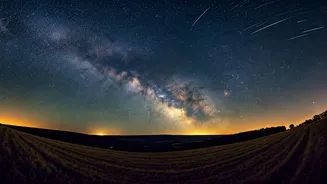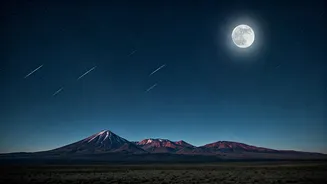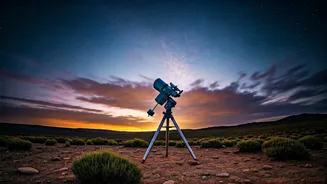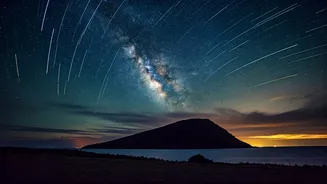




Get Ready for Stargazing
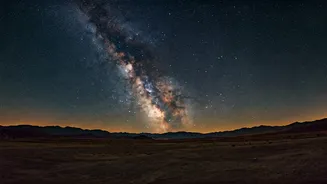
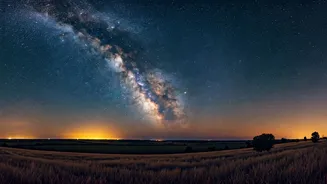
Before you head out, a few simple tips can make your stargazing experience much more rewarding. First, escape the city lights. Even a short drive away from urban centres can dramatically increase the number of stars you can see. Second, give your eyes
time to adjust. It takes about 20 to 30 minutes for your eyes to become fully adapted to the dark, revealing fainter stars and meteors. Third, you don't need expensive equipment. Most of the year's best events are perfectly visible to the naked eye. A reclining chair or a blanket will make for comfortable viewing, and a stargazing app on your phone can help you identify constellations and planets.
Late July: The Delta Aquariids
Kicking off the season, the Delta Aquariid meteor shower peaks around July 30-31. While not the year's most intense shower, it offers a steady stream of meteors, with rates of up to 20 per hour in ideal, dark-sky conditions. The shower's meteors are debris from comets Marsden and Kracht. For 2026, viewing will be challenging as the peak coincides with a bright, nearly full moon that will wash out fainter meteors. However, patient observers may still catch a few bright streaks. The best time to watch is in the pre-dawn hours, between 1:30 a.m. and 4:30 a.m. IST, looking toward the southern sky.
Mid-August: The Famous Perseids
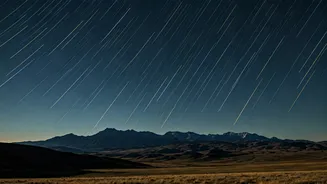
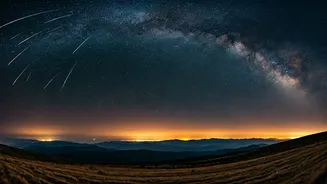
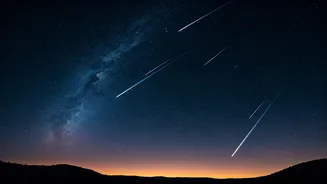
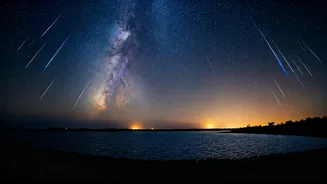
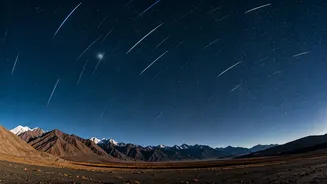
The Perseid meteor shower is one of the most beloved celestial events of the year, and 2026 promises a spectacular show. Peaking on the night of August 12-13, the shower can produce up to 100 bright meteors per hour. These 'shooting stars' are actually tiny particles shed by the comet Swift-Tuttle. The best part about the 2026 Perseids is that the peak coincides with a new moon, guaranteeing exceptionally dark skies for optimal viewing. Although the shower is associated with the monsoon season in India, finding a clear patch of sky away from city lights, especially in high-altitude regions like Ladakh or parts of Uttarakhand, can lead to an unforgettable experience. Look for the meteors after midnight until dawn.
Early October: Saturn at Its Best
On October 4, 2026, Saturn reaches opposition. This is when Earth passes directly between the Sun and Saturn, making the ringed planet appear at its biggest and brightest for the year. Visible all night long, it will rise in the east around sunset and set in the west around sunrise. While Saturn will shine brilliantly to the naked eye, looking like a steady golden star, a pair of binoculars or a small telescope will offer a much more rewarding view. With even modest equipment, you can get a glimpse of its magnificent rings.
Late October: The Orionids
The Orionid meteor shower, active from early October to early November, is set to peak on the night of October 21-22. This shower is special because it's produced by dust from the famous Halley's Comet. Observers can expect to see up to 20 meteors per hour under perfect conditions. In 2026, viewing will be impacted by a bright waxing gibbous moon during the evening. However, the moon will set after midnight, leaving the pre-dawn hours dark for a better show. The meteors will appear to radiate from the constellation Orion but can be seen streaking across any part of the sky.
Mid-December: The Geminids Grand Finale
Mark your calendars for the night of December 13-14, because the Geminid meteor shower is widely considered the best and most reliable of the year. What makes this shower unique is its origin: it's created by debris from an asteroid named 3200 Phaethon, not a comet. This results in bright, slow-moving meteors, with rates that can reach 120 to 150 per hour in a dark sky. In 2026, viewing conditions are excellent, as the waxing crescent moon will set early in the evening, leaving the sky dark for the peak. The show is visible across India, and with clear December skies being typical for much of the country, it's an event not to be missed.