


The Great Escape from Winter
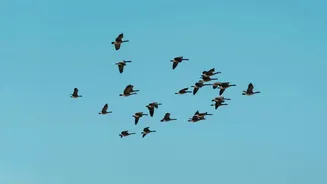
The story of November's avian visitors begins thousands of kilometres away in the freezing landscapes of Siberia, Central Asia, Russia, and the Tibetan Plateau. As winter tightens its grip there, food sources dwindle and lakes freeze over, making survival
impossible. In response, countless species of waterfowl, including ducks, geese, and waders, embark on an arduous journey south. They follow an ancient migratory superhighway known as the Central Asian Flyway, a vast corridor that stretches from the Arctic to the Indian Ocean, crossing 30 countries. India, with its tropical climate and extensive network of wetlands, serves as a crucial wintering ground, offering a safe haven with abundant food for the next few months.
November: The Month of Arrival
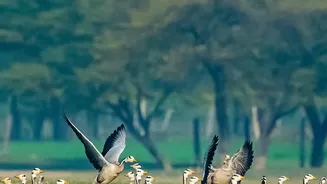
While migratory birds begin trickling in as early as October, November is when their arrival truly picks up pace, transforming quiet wetlands into bustling avian hubs. The birds have just completed a gruelling flight, with some, like the bar-headed goose, famously crossing the high altitudes of the Himalayas. November is a period of settling in. The weather across India is ideal—the monsoon has replenished the water bodies, and the harshness of deep winter has not yet set in. This allows the birds to rest, feed, and claim their territory for the season. For birdwatchers, this means witnessing the initial large flocks as they congregate, offering a dynamic and vibrant viewing experience before they disperse more widely.
Who to Watch For
The diversity of waterfowl arriving is staggering. Keep an eye out for the Northern Pintail, a graceful duck with a distinctive long tail, and the Northern Shoveler, easily identified by its large, spade-like bill. You might also spot the Common Teal, a small and compact duck, and the robust Gadwall. One of the most celebrated visitors is the Bar-headed Goose, a high-altitude marvel that breeds in Central Asia. In some locations, particularly the larger lagoons, majestic flocks of Greater Flamingos also make their appearance, adding a splash of pink to the landscape. Many of these species travel together in large, mixed flocks, creating a constant flurry of activity on the water.
India's Premier Waterfowl Destinations
India is dotted with wetlands that become prime birding real estate in winter. Keoladeo National Park in Bharatpur, Rajasthan, is a world-renowned UNESCO World Heritage site, famous for being a critical wintering ground for ducks, geese, and pelicans. Further east, Chilika Lake in Odisha, Asia’s largest brackish water lagoon, hosts millions of birds, with Nalbana Bird Sanctuary within the lake being a particularly crucial refuge. In the north, Sultanpur National Park near Delhi offers an accessible getaway to see a variety of species. Other key sites include Nalsarovar Bird Sanctuary in Gujarat, a massive wetland attracting flamingos and pelicans, and Harike Wetland in Punjab, a confluence of rivers that draws thousands of ducks and geese.
Tips for an Unforgettable Experience
To make the most of your birdwatching trip, timing is everything. Birds are most active in the early morning and late afternoon, so plan to be at your chosen spot at dawn or dusk. A pair of binoculars is essential for getting clear views without disturbing the birds. A field guide can help you identify the different species you spot. Many reserves offer the services of local guides, whose expertise can be invaluable in locating specific birds and understanding their behaviour. Finally, always practice ethical birding: maintain a respectful distance, keep noise to a minimum, and never feed the wildlife. The goal is to observe these magnificent travellers in their natural state, ensuring they remain safe and undisturbed during their vital winter stay.