





Renewed tensions between the United States and Iran have shifted the global focus beyond immediate military exchanges. The conflict is highlighting the strategic importance, and intense vulnerability, of Iran's foundational infrastructure.
A New Flashpoint in a Long Conflict
Recent days
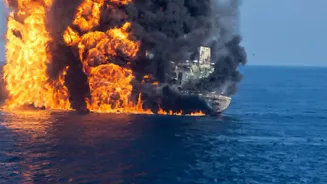
have seen a significant escalation in the long-simmering conflict, with the U.S. conducting 'self-defense' strikes on Iran's Qeshm Island in the Strait of Hormuz. This action was a direct response to a series of Iranian drone and missile attacks targeting U.S. personnel and allied military installations in Bahrain and Kuwait. These exchanges represent the latest flare-up in a conflict that has increasingly involved tit-for-tat strikes, sanctions, and disruptions to shipping in the vital Strait of Hormuz. This persistent state of 'no war, no peace' keeps the entire region on edge, with both sides testing each other's defenses and resolve.
Water as a Strategic Vulnerability
Beyond the military sphere, the conflict casts a harsh light on one of Iran's most critical vulnerabilities: its water supply. The nation is grappling with a severe, multi-year water crisis, driven by a combination of climate change, persistent drought, and decades of systemic mismanagement. Iran is entering its sixth consecutive year of drought, with major cities like Tehran facing the possibility of rationing as reservoirs sit at critically low levels. More than half of the country's groundwater aquifers are in critical condition due to over-extraction, much of it for heavily subsidized and inefficient agriculture. This 'water bankruptcy' has already fueled social unrest and is considered a direct threat to national security, making water infrastructure a point of extreme fragility.
Infrastructure as a Modern Battlefield
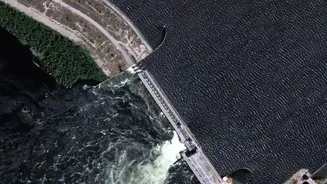
In modern warfare, civilian infrastructure is no longer just collateral damage; it is often part of the battlespace. The targeting of essential services like water and power can have devastating ripple effects on a population's health and a nation's stability, achieving strategic goals without a conventional military victory. Iran's water systems—including dams, desalination plants, and pipelines—are crucial for both its nearly 93 million people and its military and industrial operations. The disruption of these dual-use assets could trigger a humanitarian crisis, leading to mass displacement and long-term instability. The conflict has already strained Iran's ability to maintain this aging infrastructure, with funds being diverted to military preparedness.
Iran's Hardened Military Assets
In response to external threats, Iran has invested heavily in protecting its key military infrastructure. The Islamic Revolutionary Guard Corps (IRGC) controls a formidable missile arsenal stored in a network of underground facilities, often referred to as 'missile cities'. These bases, some dug up to 500 meters deep into mountains, are scattered across the country in strategic clusters near Tabriz, Kermanshah, and along the Persian Gulf coast. This dispersal and hardening of assets are designed to ensure survivability and maintain a second-strike capability. Key facilities include missile production and assembly plants in Isfahan and major launch and research centers in a corridor stretching from Shahroud to west of the capital, Tehran.
The High-Stakes Calculus of Escalation
The focus on both water and military infrastructure reveals the complex calculations facing both sides. For any potential adversary, targeting Iran's fragile water system presents a way to exert immense pressure on the regime by impacting the civilian population directly. However, such a move carries the immense risk of creating a humanitarian catastrophe and drawing international condemnation. Conversely, Iran's dispersed and deeply buried military sites complicate any plans for decisive strikes, forcing a reliance on sustained campaigns rather than single attacks. This dynamic—pitting a fragile civilian lifeline against a hardened military apparatus—defines the strategic landscape and underscores the devastating potential of any wider escalation of the conflict.