
The ‘Eye of God’ in the Sky
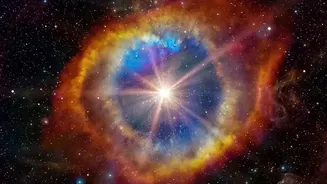
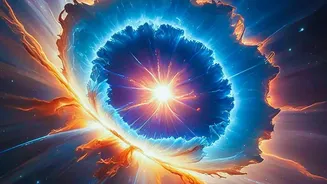
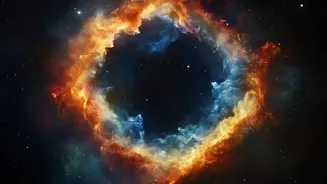
Located about 650 light-years away in the constellation Aquarius, the Helix Nebula is one of the most photographed objects in the night sky. Its popular nickname, the "Eye of God," is easy to understand; through powerful telescopes, it resembles a vast,
colorful eye staring back at us from the cosmos. For a long time, its true nature was a mystery. Early astronomers called these objects "planetary nebulae" because their round, hazy shapes looked a bit like planets through small telescopes. We now know they have nothing to do with planets. Instead, the Helix Nebula is the beautiful, glowing remnant of a dying star that was once much like our own sun. It’s a ghost of a star, spread across trillions of miles of space.
A Star's Final, Grand Act
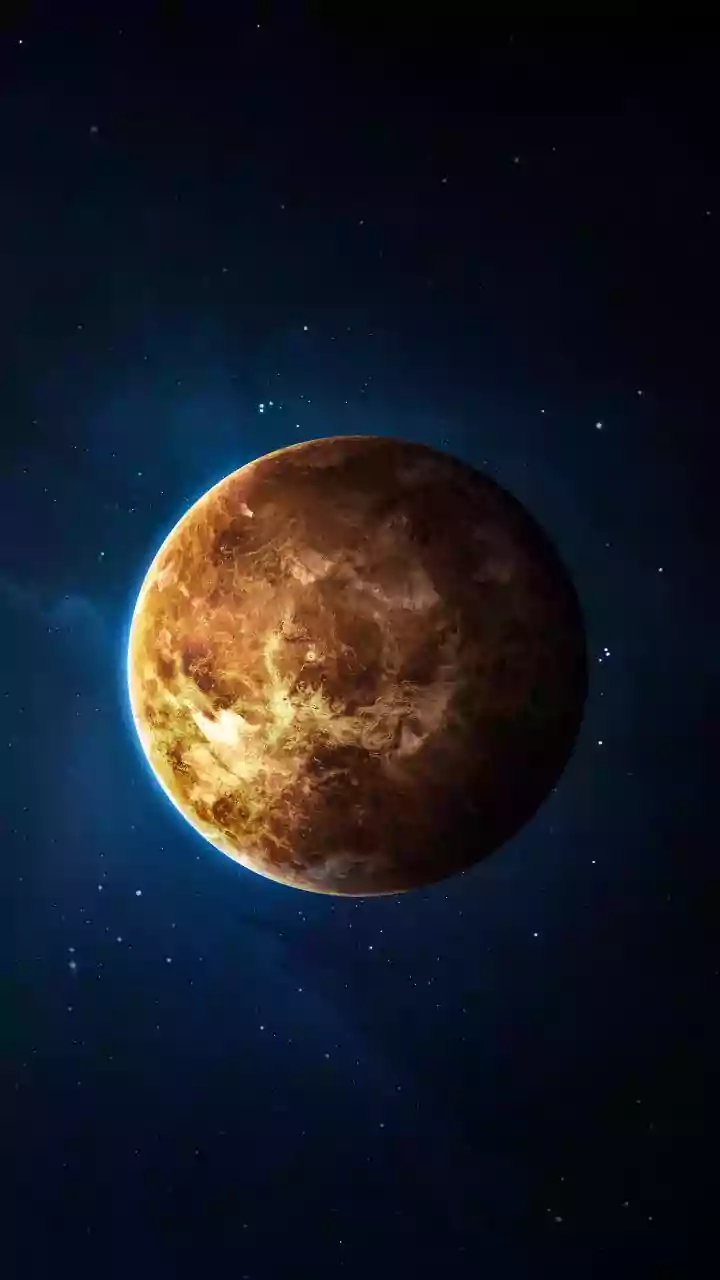
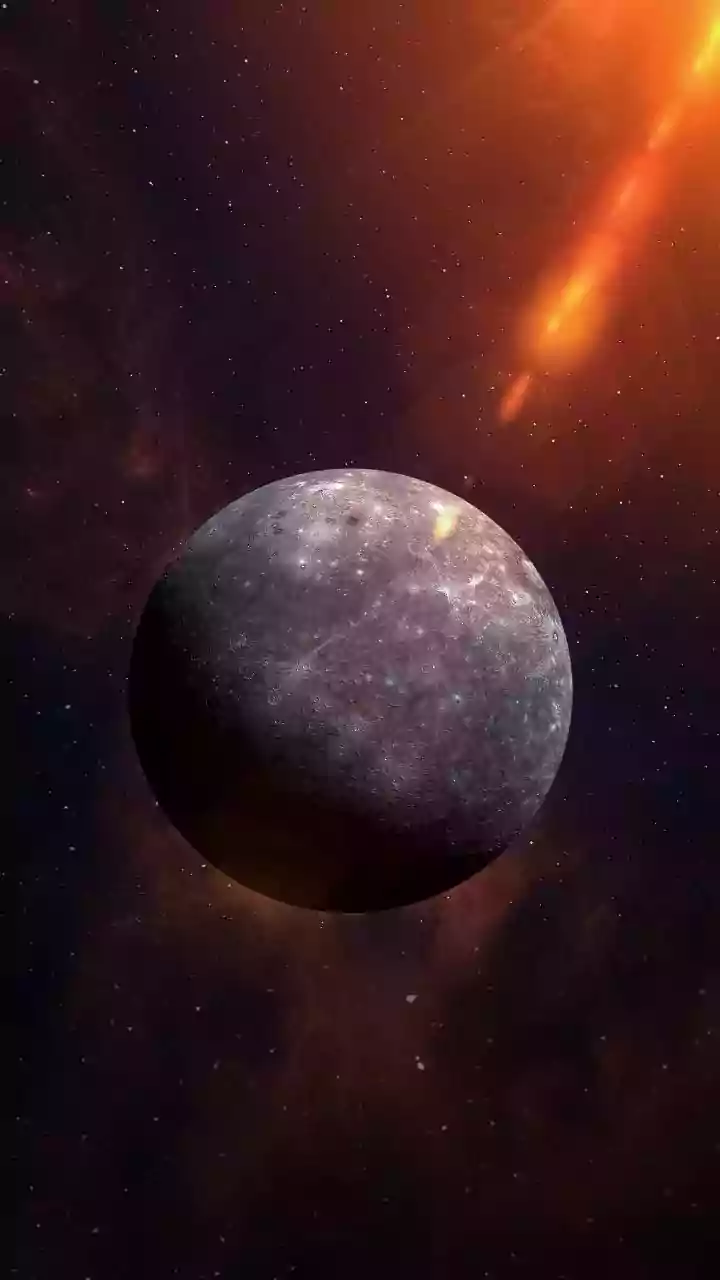
So, how does a star create such a breathtaking structure? It's the final chapter in the life of a sun-like star. Stars spend about 90% of their lives in a stable phase, fusing hydrogen into helium in their cores. This process is what makes our sun shine. But after billions of years, the hydrogen fuel begins to run out. For our sun, this will happen in about five billion years. When the fuel gets low, the star’s core contracts and heats up, causing its outer layers to expand dramatically. The star swells into a "red giant," growing so large it can engulf any inner planets. Our sun, as a red giant, is expected to expand enough to swallow Mercury and Venus, and possibly even Earth.
From Fiery Giant to Cosmic Ghost
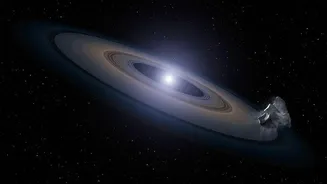
The red giant phase is temporary. Eventually, the dying star can no longer hold onto its bloated outer layers. Over thousands of years, these layers of gas and dust drift away into space. This expanding shell of stellar material is what forms the intricate patterns of the planetary nebula. The Helix Nebula is made of these exact cast-off layers from its parent star. At the center of it all is the star’s tiny, incredibly hot and dense core, known as a white dwarf. A white dwarf is about the size of Earth but contains the mass of the original star; a single teaspoon of its material would weigh as much as an elephant. This superhot white dwarf emits intense ultraviolet radiation, which causes the surrounding gas of the nebula to glow, or fluoresce, in brilliant colors.
Our Sun’s Distant Encore
By studying the Helix Nebula, astronomers get a direct look at the process our solar system will undergo in the far future. Just like the star that created the Helix Nebula, our sun will one day puff away its outer layers, creating a magnificent planetary nebula of its own. Its core will shrink into a white dwarf, illuminating the ghostly remnants of what was once our star. Recent observations of the Helix have even revealed thousands of comet-like knots of gas, each about the size of our solar system, which may have been formed from planets and comets being disrupted during the star’s death throes. The material shed by the Helix star is now being broken down and recycled back into the galaxy, where it might one day form new stars and planets. In this way, gazing at the Helix Nebula isn’t just a look at a star’s death—it’s a preview of a cosmic rebirth, and a glimpse of the sun’s ultimate legacy.