






A Cosmic Fire Alarm
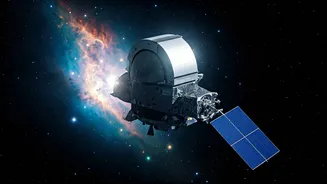
Launched in 2004, the Swift Observatory is a space-based detective specializing in gamma-ray bursts (GRBs), the most powerful explosions in the cosmos since the Big Bang. These events, caused by collapsing massive stars or merging neutron stars, are fleeting,
lasting from milliseconds to a few minutes. Swift's genius lies in its name; it can detect a burst and 'swiftly' pivot its three telescopes—working in gamma-ray, X-ray, and ultraviolet/optical light—to catch the fading afterglow. This rapid response capability has been revolutionary, allowing scientists to pinpoint the locations of over 1,700 GRBs and study them in unprecedented detail. It has helped confirm that short GRBs come from colliding neutron stars and even caught a supernova in the act of exploding for the very first time. This unique ability makes it a vital partner to other observatories, including the newer James Webb Space Telescope.
The Peril of a Falling Satellite
Despite its scientific triumphs, Swift faced a fundamental threat: gravity. The observatory is in a low Earth orbit and lacks its own propulsion system to maintain altitude. For years, it has been slowly losing height due to atmospheric drag. This process accelerated dramatically due to recent intense solar activity, which caused Earth's outer atmosphere to expand, creating more friction. By early 2025, scientists realized that without intervention, Swift was on track for an uncontrolled reentry and would burn up in the atmosphere by the end of 2026. With an original cost of around $250 million and a total operational investment of $500 million, simply letting this invaluable asset perish was a difficult prospect, especially when no replacement with its specific capabilities exists.
A Bold $30 Million Rescue
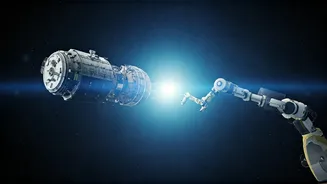
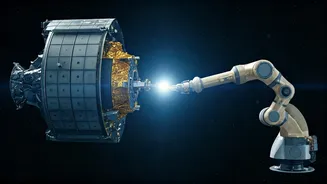
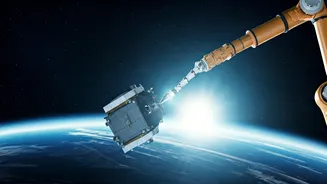
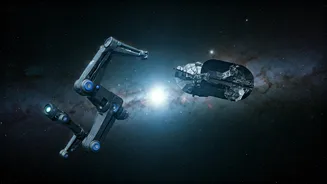
Instead of decommissioning the mission, NASA opted for a novel and cost-effective solution. The agency awarded a $30 million contract to Katalyst Space Technologies, an American startup, for a high-stakes rescue mission. This is not a traditional funding grant but a payment for a service: to send a robotic 'tugboat' to save Swift. The mission involves launching a small, robotic servicing spacecraft called LINK. This craft is designed to rendezvous with Swift, gently grab onto it with robotic arms, and then use its own thrusters to push the observatory back into a higher, more stable orbit. The launch, scheduled from a plane over the Pacific Ocean, is a historic attempt, as it will be the first time a commercial spacecraft docks with a government satellite not designed for such an operation.
A New Lease on Scientific Life
If successful, the $30 million boost will be a remarkable bargain, extending Swift's operational life by at least another five to ten years for a fraction of the cost of building a replacement. It allows the observatory to continue its crucial work hunting for GRBs and serving as a rapid-response alert system for the global astronomical community. The mission is also a major test case for a new business model in space. It could prove that valuable, aging satellites can be serviced, refueled, or repositioned rather than being abandoned. Success with Swift could pave the way for similar missions to other vital assets, including the iconic Hubble Space Telescope, which is also gradually losing altitude. This lifeline is about more than just one telescope; it's a pioneering step toward a more sustainable and economical future for space exploration.