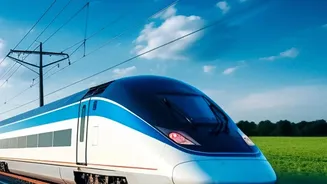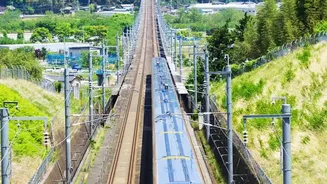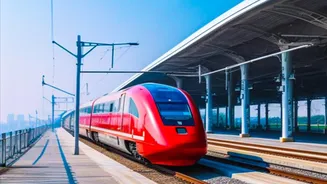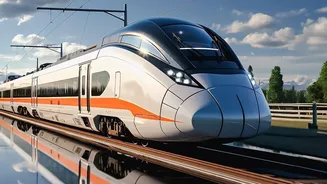



India's bullet train dream is moving off the blueprint and onto the tracks. A key section of the ambitious Mumbai-Ahmedabad corridor is slated to begin operations in 2027, marking a major milestone for the nation's infrastructure goals.
The First Step in a 508-Kilometre Journey
The focus is on
the stretch between Surat and Vapi in Gujarat, which officials have identified as the first segment of the entire 508-kilometre Mumbai-Ahmedabad High-Speed Rail (MAHSR) corridor to become operational. According to Railway Minister Ashwini Vaishnaw, the first service on this section is targeted to commence in the last quarter of 2027. This phased approach allows the National High Speed Rail Corporation Limited (NHSRCL), the agency executing the project, to roll out services as sections are completed, with the full line to Mumbai set to follow. This initial launch represents a tangible result after years of planning and overcoming significant hurdles, including land acquisition delays and the COVID-19 pandemic, with serious construction beginning in earnest only in 2021.
Why This Gujarat Stretch Is Leading the Way
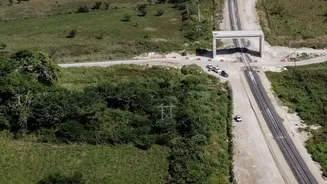
The decision to prioritise the Gujarat portion of the corridor, specifically the section between Surat and Vapi, is strategic. Construction progress, including the erection of piers and viaducts, has been significantly faster in Gujarat compared to parts of the alignment in Maharashtra. As of late 2026, major milestones have been achieved here. The 50-km Surat-Bilimora section, which is part of the initial launch corridor, has already seen the energisation of its overhead electrical equipment. This crucial step, completed in November 2026, powers the line and paves the way for the trial runs scheduled to begin around May 2027. Furthermore, civil works for eight stations along the route have been completed, with architectural finishing now underway.
Japanese Technology, Indian Manufacturing
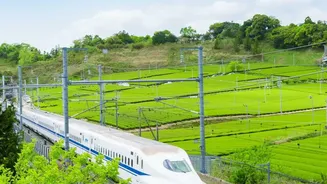
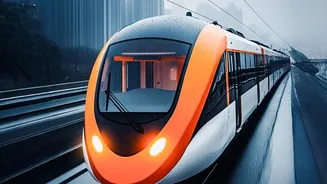
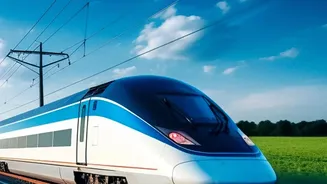
The project is a showcase of international cooperation and domestic manufacturing. The corridor is being built using Japan’s renowned Shinkansen technology, a system with a remarkable safety record of over 60 years without a single passenger fatality. While the core technology is Japanese, there is a strong emphasis on the 'Make in India' initiative. Indigenous B28 trainsets, designed for speeds of 280 kmph, are being manufactured by the Integral Coach Factory (ICF) and BEML. The first body frame of these trains is complete and undergoing structural testing ahead of track trials. Critical infrastructure components, such as transformers and masts for the advanced 2x25 kV electrification system, are also being manufactured in India.
Engineering Marvels on the Horizon
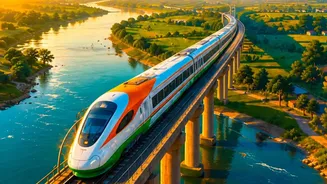
The entire MAHSR project is an engineering feat, featuring elevated viaducts, numerous river bridges, and several tunnels. One of the most talked-about components is India's first undersea rail tunnel. A 7-kilometre section of the 21-km tunnel in Maharashtra will run beneath Thane Creek. To accomplish this, enormous tunnel boring machines (TBMs), each as tall as a four-storey building, were launched in July 2026 to begin excavation. Even on the initial Gujarat stretch, significant work has been completed, including bridges over four rivers and the installation of thousands of noise barriers to minimise sound pollution for nearby residents.
The Bigger Picture: A Network of Speed
The launch of the Surat-Vapi section is more than just a new train route; it is the birth of high-speed rail in India. Once the full 508-km corridor is operational, it is expected to slash travel time between Mumbai and Ahmedabad from around eight hours by road to just under two hours by bullet train. This will connect major economic hubs like Mumbai, Thane, Surat, Vadodara, and Ahmedabad, potentially transforming business and leisure travel between the two states. The successful implementation of this first corridor is seen as a template for a future network of high-speed lines connecting other major Indian cities, heralding a new era in the country's transportation landscape.