




What Makes a Satellite ‘Small’?
When we think of satellites, images of bus-sized machines often come to mind. But the term 'small satellite' or 'smallsat' generally refers to any satellite with a mass under 500 kilograms. This category is further broken down into several classes: minisatellites
(100-500 kg), microsatellites (10-100 kg), and nanosatellites (1-10 kg). The most famous type of nanosatellite is the CubeSat. Originally developed in 1999 as a standardised and affordable educational tool, a basic CubeSat unit (or '1U') measures just 10x10x10 centimetres. These can be stacked together to create larger, more capable satellites, but their small, modular design is what makes them revolutionary. This standardisation has been a game-changer, allowing for mass production and the use of off-the-shelf components, drastically reducing manufacturing time and cost.
Lower Costs, Bigger Opportunities
The single biggest impact of small satellites is economic. By shrinking the size, the costs of development and launch plummet. Instead of needing a dedicated rocket, smallsats can hitch a ride as secondary payloads on larger launches, a concept known as 'ridesharing'. This has slashed the price of entry into space, opening the door for universities, startups, and even developing nations to run their own space missions. With shorter development cycles, often just one to two years, companies can innovate faster, testing new technologies in space with a lower degree of financial risk compared to traditional, multi-year satellite projects. This affordability and speed are democratising access to the final frontier, fostering a new ecosystem of innovation that was previously unthinkable.
A Universe of Applications
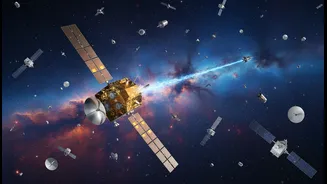
Despite their size, small satellites are incredibly versatile. They are being deployed in large groups, or 'constellations', to provide services like global internet connectivity, especially in remote and underserved areas. Companies like Planet Labs and Spire Global have launched fleets of smallsats for Earth observation, providing daily, high-resolution imagery used to monitor everything from agricultural health and climate change to deforestation and disaster response. They also serve as crucial platforms for scientific research, technology demonstration, and even interplanetary missions. In a stunning display of their potential, two CubeSats named MarCO accompanied NASA's InSight lander to Mars, relaying critical data during its descent. This proved that smallsats have a future not just in Earth's orbit, but in deep space exploration as well.
India's Growing Stake in the Small Satellite Boom
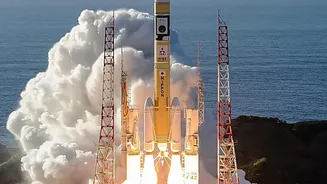
India is rapidly becoming a key player in the small satellite market. The Indian Space Research Organisation (ISRO) has not only developed its own Small Satellite Launch Vehicle (SSLV) specifically designed for this market but also facilitates commercial launches for domestic and international clients through its commercial arm, NewSpace India Limited (NSIL). This has nurtured a booming private space sector in the country, with over 200 registered space startups as of early 2024. These companies are involved in every part of the value chain, from designing and manufacturing satellites and their components to developing launch vehicles and providing data services. By fostering this ecosystem, India is positioning itself as a globally competitive hub for small satellite development and launch services, further fuelling the democratisation of space.