






What is the Chandrayaan-4 Mission?
At its heart, Chandrayaan-4 is a lunar sample-return mission. The primary goal is to achieve what only three other countries—the United States, the former Soviet Union, and China—have ever done: land on the Moon, collect soil and rock samples, and bring
them safely back to Earth for analysis. Planned for launch around 2028, this mission builds directly on the capabilities demonstrated by Chandrayaan-3's successful soft landing in 2023. However, it adds several layers of complexity, making it one of the most challenging missions ISRO has ever undertaken.
The Unprecedented Complexity
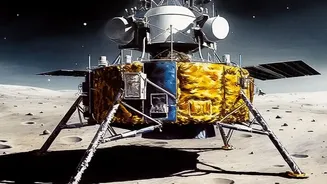
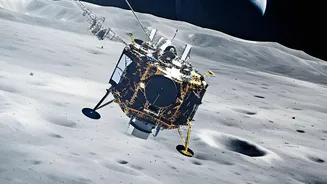
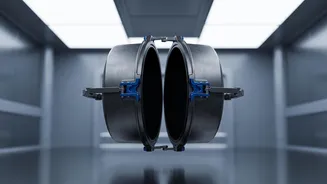
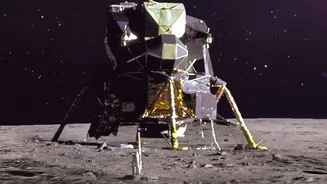
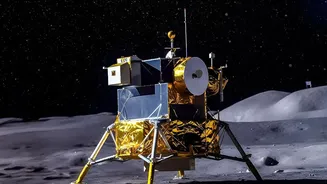
Simply landing on the Moon is a monumental feat, but bringing something back is exponentially harder. Chandrayaan-4 requires a sequence of perfectly executed manoeuvres that leave no room for error. The mission plan includes a safe landing, using a robotic arm to collect both surface and subsurface samples, and sealing them in a container. Then, a part of the spacecraft—the Ascender module—must launch itself off the lunar surface, a first for India. This module then has to autonomously rendezvous and dock with another spacecraft waiting in lunar orbit, transfer the precious cargo, and begin the long journey home. This intricate dance of machines millions of kilometres away showcases a new level of confidence and capability.
An Innovative Two-Launch Strategy
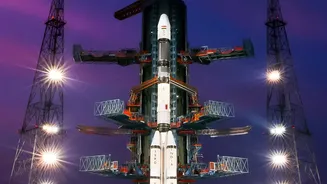
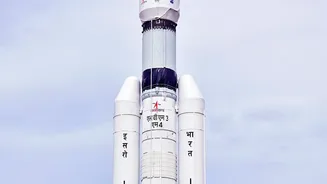
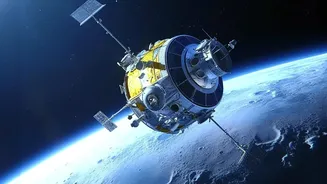
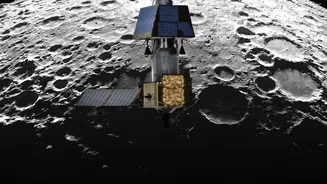
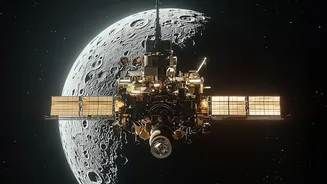
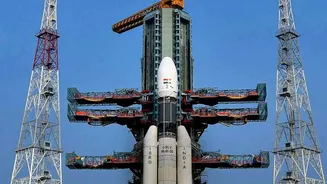
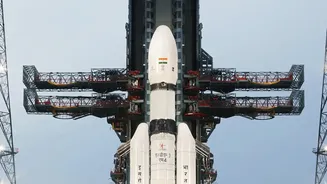
The mission's immense complexity is reflected in its architecture. Chandrayaan-4 will consist of five separate modules: a Propulsion Module, Descender (lander), Ascender, Transfer Module, and a Re-entry Module. Because the combined weight of these components is too heavy for a single launch, ISRO will use two of its powerful LVM3 rockets. The modules will be launched separately and then dock in Earth's orbit to form the complete spacecraft before heading to the Moon. This dual-launch, in-orbit assembly strategy is a critical new capability, demonstrating ISRO's ability to construct complex systems in space, a necessary step for future projects like a permanent space station.
Building on Past Successes
Chandrayaan-4 is not starting from scratch. The triumphant landing of Chandrayaan-3 proved ISRO's mastery of lunar descent, providing a solid foundation. Furthermore, ISRO has been methodically testing the technologies needed for this next leap. Experiments like the Space Docking Experiment (SPADEX) are designed to perfect the autonomous rendezvous and docking capabilities crucial for the mission's success. Even the Chandrayaan-3 propulsion module was used for a post-mission experiment where it was brought back from lunar orbit to Earth's orbit, a small but vital demonstration of the return capability needed for a sample retrieval.
The Scientific Goldmine in Lunar Dust
The scientific value of bringing back physical lunar samples cannot be overstated. While rovers can perform on-site analysis, bringing regolith (lunar soil) to labs on Earth allows for far more detailed studies using a wide range of advanced equipment. These samples, especially if retrieved from the largely unexplored southern polar region, could hold clues about the Moon's origin, the history of our solar system, and the presence of water ice—a resource critical for future long-term lunar habitation. Owning these unique samples also gives India a significant position in global space science, enabling international collaborations and sample exchanges.
A Stepping Stone to Greater Ambitions
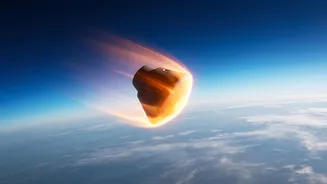
Ultimately, Chandrayaan-4 is more than just a scientific quest; it's a crucial stepping stone. The technologies being developed and proven—from robotic sample collection and lunar ascent to orbital docking and high-speed atmospheric re-entry—are the essential building blocks for India's future human spaceflight ambitions. Mastering these steps is fundamental to the long-term goal of landing an Indian astronaut on the Moon by 2040. The mission solidifies India's place as a top-tier space power, capable of end-to-end interplanetary missions.