


The Anatomy of a Misleading Snack
The snack industry thrives on impulse. Brands use alluring words to create health halos around products that may not deserve them. A 2025 study found that 72% of Indian consumers actively seek snacks with health benefits, a demand that marketers are eager
to meet, but not always with full transparency. Recent actions by the Food Safety and Standards Authority of India (FSSAI) highlight this issue, with notices sent to companies for using terms like 'Healthy' or 'True Vitamin' on products without sufficient justification. These buzzwords are powerful; they make us feel good about our choices without needing to do the hard work of investigation. Terms like 'made with whole grains' might only mean a small fraction of the flour is whole, while the rest is refined. 'Real fruit' can be claimed even if a product contains as little as 10% fruit pulp, with the remainder being sugar and additives. This marketing strategy is designed to make you choose quickly, based on the promise of health, rather than the reality of the ingredients.
The Truth Is on the Back
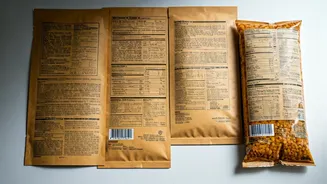
The secret to clarity isn’t on the front of the packet; it’s in the fine print on the back. FSSAI mandates that all packaged foods display a nutrition label and a full list of ingredients. This is where the truth lives, but it can be confusing. Many consumers find nutrition labels hard to understand. The first thing to check is the ingredient list. Ingredients are listed in descending order by weight. If sugar, salt, or refined flour (maida) are among the first three, it's a red flag. The second critical step is understanding the 'Per 100g' column, not just the 'Per Serving' numbers. Brands often use unrealistically small serving sizes to make calorie, sugar, and fat content appear lower. A packet of biscuits might list the nutritional information for just two biscuits, even though many people would eat the whole row. Focusing on the 'per 100g' values allows for a fair comparison between different products, removing the serving size trick from the equation.
A Simple Framework for Clarity
To cut through the noise, you don't need to be a nutritionist. You just need a simple system. When you pick up a snack, flip it over and use this quick check: Check the Ingredients: Are the first few ingredients whole foods you recognise, or a list of processed starches, sugars, and chemicals? Fewer ingredients is often a good sign. Check the 'Per 100g' Column: As a general rule, for a savoury snack, more than 10g of sugar per 100g is high. For sodium, anything above 600mg per 100g is considered high salt content. Check the Fat: Pay attention to saturated and trans fats. High levels of these can undermine the 'healthy' claim on the front of the package. This simple, three-step process shifts the power back to you. It forces you to ignore the marketing hype and evaluate the product based on what it actually contains. This isn't about classifying foods as 'good' or 'bad,' but about understanding what you are truly eating.
Shop for Yourself, Not for the Hype
The rise of health-consciousness in India is a positive trend. People are moving from mindless indulgence to intentional, mindful snacking. However, this has also fueled a surge in 'health-washing', where products are marketed to seem healthier than they are. The ultimate goal of snack shopping shouldn't be to find the 'perfect' healthy snack as defined by a package. It should be about finding foods that fit your personal health goals, budget, and taste. Sometimes, that might be a packet of roasted makhana, which has become a preferred healthy snack for many. Other times, it might be a small portion of a more indulgent treat. Clarity means you make that choice consciously, fully aware of what you're consuming. The snack industry is a business, and marketing is its primary tool. But as a shopper, your greatest tool is information. By learning to ignore the loud promises and read the quiet facts, you can turn a confusing chore into an act of empowerment.