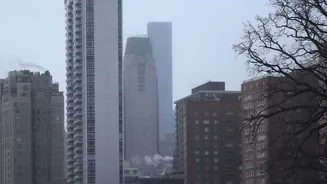









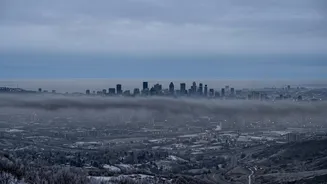
As winter approaches, a familiar grey haze settles over many Indian cities. This smog is not just fog; it’s a toxic cocktail trapped by a weather event called a temperature inversion, making a powerful case for tackling pollution at its source.
The Atmosphere's Winter Lid
Normally,
the air closer to the ground is warmer than the air above it. This warm air rises, carrying pollutants with it and dispersing them high into the atmosphere. But during cooler months, especially on calm, clear nights, the ground radiates heat and cools down rapidly. This process cools the layer of air nearest to the surface, making it colder and denser than the layer of air immediately above it. This phenomenon, where a band of warm air sits on top of a layer of cooler air, is known as a temperature inversion. It effectively puts a lid on the atmosphere, preventing the normal vertical mixing of air. The cool, dense air below cannot rise through the warm, lighter air above, trapping everything at ground level.
How a Weather Event Becomes a Health Crisis
A temperature inversion on its own is just a weather pattern. It becomes a public health emergency when it combines with high levels of pollution. When an inversion layer forms over a city, it traps all the pollutants being produced at the surface. This includes particulate matter (PM2.5 and PM10), nitrogen oxides, carbon monoxide, and sulfur dioxide. Unable to disperse, these pollutants accumulate, drastically increasing their concentration in the air we breathe. This is why air quality often plummets to 'Severe' levels during winter mornings in northern India, creating a thick, visible smog that can linger for days. This phenomenon is particularly pronounced in valleys or areas surrounded by hills, which further restrict air movement. The result is a toxic blanket that causes a range of health issues, from eye irritation and coughing to severe respiratory and cardiovascular diseases like asthma, heart attacks, and reduced lung function.
Identifying the Ground-Level Culprits
The pollution trapped by inversions comes from sources all around us. These are often called ground-level or surface emissions. In India's urban and semi-urban areas, the primary contributors are manifold. Industrial pollution from factories and power plants accounts for a significant share. Vehicular emissions from cars, trucks, and buses choke the air, especially in congested cities. Dust from construction sites and unpaved roads constantly adds to the particulate load. Furthermore, the burning of waste at landfills and in residential areas, along with biomass burning for cooking and heating in lower-income households, releases huge amounts of harmful smoke. Seasonal activities like post-harvest crop residue burning in neighbouring agricultural states also contribute significantly to the smog that blankets the Indo-Gangetic Plain.
Why Targeting Surface Emissions is Key
While we cannot control the weather patterns that cause inversions, we can control the emissions that make them so dangerous. The core strategy must be to reduce pollution at its source. Some have argued for solutions like 'smog towers' or large-scale tree planting, but evidence suggests these have limited effectiveness compared to stopping pollution from being released in the first place. Since the inversion traps pollutants near the ground, focusing on reducing these ground-level emissions offers the most direct and effective path to cleaner air. Elevating smokestacks for industrial emissions can help push pollutants above the inversion layer, but this doesn't solve the problem for the vast majority of sources like traffic and construction dust. Therefore, a comprehensive strategy must tackle the full spectrum of surface_level pollution sources.
A Multi-Pronged Strategy for Cleaner Air
An urgent and effective emission reduction strategy requires action on multiple fronts. For transport, this means stricter vehicle emission standards, transitioning to electric vehicles, and strengthening public transportation to reduce the number of private cars on the road. For industry, it involves enforcing the use of cleaner fuels and installing pollution control technologies. Construction sites must be mandated to follow dust mitigation practices like covering materials and spraying water. Waste management needs a complete overhaul to prevent open garbage burning through better segregation and processing. Finally, providing farmers with viable alternatives to crop burning is essential. Initiatives like India's National Clean Air Programme (NCAP) and the establishment of Low Emission Zones (LEZs) are steps in the right direction, aiming to coordinate these efforts across cities and states.