







From Coastal Staple to Cafe Star
Walk into a chic cafe in Mumbai or Delhi, and you might find kokum-infused creations on the menu. From fizzy coolers and gin cocktails to inventive food pairings like seabass ceviche, chefs and mixologists are embracing its unique sour and slightly sweet
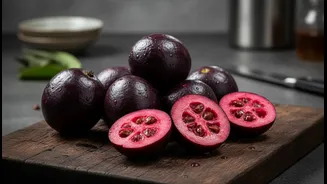
flavour profile. This newfound fame marks a significant journey for an ingredient long cherished in the coastal regions of western India. For generations, kokum (Garcinia indica) was a household staple in Maharashtra, Goa, and Karnataka, primarily known as a souring agent for curries and the star of the digestive drink, sol kadhi. To many outside these regions, it was often dismissed as a lesser-known cousin of tamarind. Now, it's being rediscovered by a new generation of chefs and consumers, who are drawn to its vibrant colour and complex taste, experiencing it for the first time not in a traditional curry, but as a novel, exciting flavour.
A Legacy of Cooling and Curing
The current hype, however, barely scratches the surface of kokum's rich history. For centuries, it has been a cornerstone of both cuisine and traditional medicine, especially Ayurveda. Native to the Western Ghats, the fruit is prized for its cooling properties, making kokum sherbet a go-to beverage to combat the harsh Indian summer heat. In Ayurvedic traditions, kokum is valued for its ability to aid digestion, acting as a natural antacid and liver tonic. Traditional preparations often combine it with other ingredients to manage various ailments, from digestive issues to skin rashes. The fruit's rind is typically dried and preserved, ensuring a year-round supply for flavouring fish curries and dals, where it imparts a distinct tangy taste and a beautiful reddish-purple hue that is milder and more complex than tamarind.
The Hands That Harvest
Behind every trendy kokum latte is a farmer, likely in the Konkan region. Kokum is an important, albeit often under-appreciated, fruit crop in states like Maharashtra. It's traditionally grown in homestead gardens or as an intercrop with coconut and arecanut, rather than in large, dedicated orchards. For many rural and tribal communities, the collection, processing, and sale of kokum products—from the dried rind (amsul) to kokum butter extracted from the seeds—provide a vital source of income. The processing is often labour-intensive and done on a small or cottage scale. As demand from urban centres and international markets grows, there's potential for this to significantly benefit these growers. However, it also raises questions about whether the market is structured to pass these profits back to the primary producers or if the benefits will be absorbed by intermediaries in the supply chain.
Appreciation Over Appropriation
The journey of an ingredient from a regional kitchen to a global trend is often a double-edged sword. While it brings welcome attention and economic opportunities, it can also lead to a dilution of cultural context. When an ingredient is celebrated purely for its novelty and aesthetic appeal—its 'Instagrammability'—we risk losing the stories, traditions, and knowledge associated with it. The current trend is part of a larger, positive movement where Indian chefs are looking inward and celebrating indigenous ingredients. But this exploration comes with a responsibility. The challenge is to innovate while honouring the ingredient's roots. This means acknowledging its traditional uses, understanding its role in regional cuisines, and ensuring that its new-found popularity benefits the communities that have cultivated it for centuries. Consumers, too, play a role by seeking out this context and appreciating kokum not just as a new flavour, but as a piece of living history.