






First, What Is ‘Structural Feedback’?
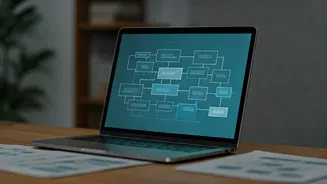
Before we dive into AI’s role, let’s be clear about what we mean by ‘structure’. It’s the skeleton of your thesis. It’s not about grammar or spelling, but the logical flow of your ideas. A strong structure ensures that your introduction sets up a problem,
your literature review provides context, your methodology is sound, your results are clearly presented, and your conclusion logically follows from your evidence. It’s the invisible architecture that makes an argument compelling and easy to follow. For generations, students have relied on supervisors, peers, and writing centres for this feedback. The process is slow, often frustrating, and dependent on others’ availability. This is the exact pain point that AI tools claim to solve: instant, on-demand structural analysis.
How AI Acts as Your Structural Co-Pilot
AI writing assistants, particularly large language models (LLMs) like ChatGPT, Claude, and specialized academic tools, can approach structure in several ways. You can paste in your thesis statement and ask it to generate a potential chapter-by-chapter outline. This can be a fantastic way to break through writer’s block and see a possible path forward. More powerfully, you can feed it a messy draft of a chapter and ask it to analyse the flow. A good prompt might be: “Review this chapter draft. Does the argument progress logically? Are there any gaps in reasoning between paragraphs? Suggest a more effective order for the key points.” The AI can then identify paragraphs that feel out of place, suggest transition sentences to bridge ideas, or point out where your evidence doesn’t quite support your claim. It acts like a tireless reader who is solely focused on coherence and logic.
The Good: Your 24/7 Writing Mentor
The primary benefit is immediacy. Instead of waiting a week for your guide to read a chapter, you get feedback in seconds. This allows for a more iterative writing process, where you can make small adjustments and immediately see their impact. For students juggling coursework, jobs, and the immense pressure of post-graduate research, this is a game-changer. AI can also be a dispassionate critic. It doesn’t know you personally and won’t soften its feedback to spare your feelings. It will bluntly point out a logical fallacy or a weak connection, which can be exactly what you need to hear. This helps you spot weaknesses in your argument that you are too close to see yourself, strengthening your work before it ever reaches your supervisor’s desk.
The Bad: The Machine Lacks Nuance
However, an AI is not a human expert. Its biggest weakness is a lack of deep, contextual understanding. It hasn’t read the 50 niche papers you have. It doesn’t understand the specific debates within your field or the subtle implications of your research. Its feedback on structure can therefore be generic. It might suggest a perfectly logical flow that is, unfortunately, completely standard and misses the unique contribution you’re trying to make. Furthermore, AI models are prone to ‘hallucinations’—making things up with great confidence. It might suggest a connection that doesn’t exist or misinterpret a key term. Relying on it too heavily can smoothen your writing into a generic, soulless piece of text that lacks your unique academic voice and insight.
The Ugly: Navigating Ethics and Plagiarism
This is the most critical consideration. Using AI to generate an outline or reorganise your *own* sentences is generally considered a tool for brainstorming and editing. But asking it to write or rewrite paragraphs for you crosses a serious ethical line into plagiarism. Most universities in India and abroad are rapidly developing policies on AI usage. The golden rule is transparency. If you use an AI tool for more than basic grammar checks, you should know your institution’s policy. Some may require you to disclose its use. The goal of a thesis is to demonstrate *your* ability to think critically, conduct research, and formulate an argument. Outsourcing the core intellectual work to an AI defeats the entire purpose of the degree and is a grave academic offense. Use it as a sounding board, not as a ghostwriter.