
The Martian Air Problem
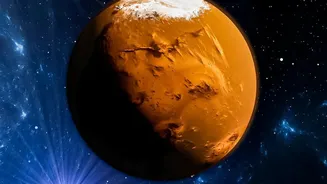
Landing humans on Mars is one of the great goals of our time, but survival there presents immense challenges. The most immediate is the air itself. The Martian atmosphere is incredibly thin, about 100 times less dense than Earth's, and is composed of nearly
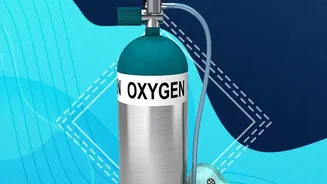
96% carbon dioxide (CO2). For humans, it is unbreathable. For decades, the only solution seemed to be hauling massive quantities of oxygen from Earth, a logistically complex and astronomically expensive proposition. Every kilogram launched into space costs thousands of dollars, and a crew would need metric tons not just for life support, but also as a critical component of the rocket propellant required to lift off from Mars for the journey home. This reliance on Earth-based supplies has long been a barrier to establishing a sustainable human presence on the Red Planet.
A Tree on Mars Called MOXIE
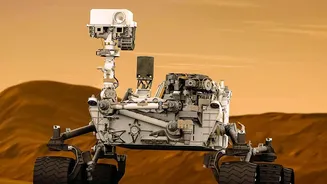
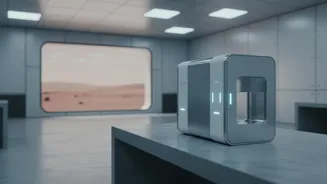
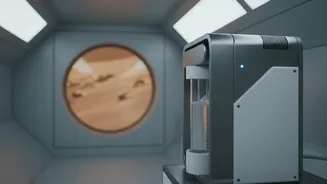
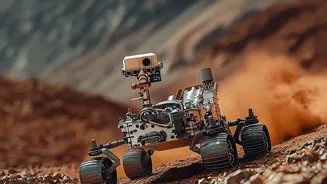
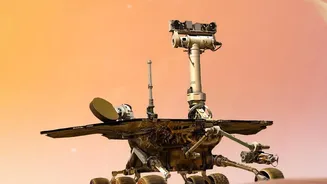
Enter the Mars Oxygen In-Situ Resource Utilization Experiment, or MOXIE. Tucked inside the Perseverance rover, this toaster-sized device was designed to do something revolutionary: make oxygen on another planet. MOXIE works through a process called solid oxide electrolysis. It inhales the CO2-rich Martian air, compresses it, and then heats it to around 800 degrees Celsius. Inside its core, an electrochemical reaction splits the CO2 molecules into oxygen ions and carbon monoxide. The oxygen ions are then combined to form pure, breathable oxygen (O2). Between 2021 and 2023, MOXIE successfully ran 16 times, proving the concept works in the harsh, variable conditions of the Martian environment, producing oxygen at a rate of up to 12 grams per hour—about the same as a modest tree on Earth.
The Challenge of Scaling Up
While MOXIE was a stunning success, its output was small. In total, it generated 122 grams of oxygen, enough to keep a small dog alive for about 10 hours. Supporting a human crew and fueling a Mars Ascent Vehicle requires a system roughly 200 times larger. Scaling up is not as simple as building a bigger MOXIE. A future system would need to run continuously for thousands of hours to produce the estimated 25 to 30 tons of oxygen needed for a return trip. This requires significant advancements in durability and efficiency. The compressor, which consumes a large portion of the power, needs to be optimized, and the entire system must be robust enough to withstand constant thermal cycling—heating up for production and cooling down—without degrading. Engineers are now working on designs for these mission-scale stacks, with some newer variants showing a 33-fold increase in scale over the original MOXIE technology.
More Than Just a Breath of Fresh Air
The oxygen produced on Mars has a dual purpose that is critical for mission architecture. While breathable air for habitats is essential, it represents only a fraction of the total oxygen required. The vast majority—about 78% of the propellant's mass—is needed as an oxidizer for the rocket fuel that will power the Mars Ascent Vehicle. A crew would need about 25 metric tons of oxygen to burn with approximately seven tons of fuel to escape Mars' gravity. By manufacturing the oxygen on-site, a Mars mission can drastically reduce the mass it needs to launch from Earth. This concept, known as In-Situ Resource Utilization (ISRU), is considered a game-changer, making long-term exploration more affordable, sustainable, and independent from Earth.
The Next Generation Oxygen Factory
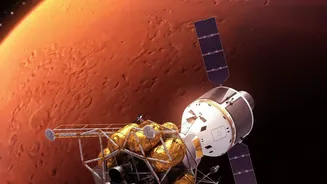
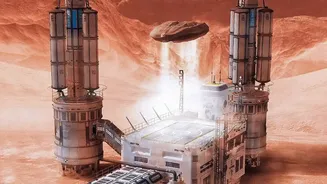
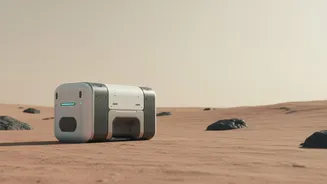
The success of MOXIE has kicked off the race to build its full-scale successor. The next phase isn't just about a bigger electrolyzer; it's about developing an integrated, autonomous factory. This system will need to collect and filter atmospheric CO2, generate oxygen continuously, and, crucially, liquefy and store that oxygen in cryogenic tanks, ready for use. NASA is already seeking innovative designs for systems that can produce oxygen at a rate of 2 to 3 kilograms per hour. These future oxygen plants will be pre-landed on Mars, working for over a year to fill up the propellant tanks before the first human crew even begins its journey. MOXIE's legacy is that it retired significant risks and proved that with careful engineering, creating a life-sustaining resource from the thin Martian air is not science fiction, but a tangible reality for the next generation of explorers.