




The Treasure in the Shadows
For decades, the Moon was thought to be a completely dry, barren world. That picture changed dramatically in 2008 when ISRO's Chandrayaan-1 mission definitively detected water molecules. This discovery reshaped our understanding of the Moon and sparked
a new space race. The prize? Water ice, believed to be trapped in vast quantities within Permanently Shadowed Regions (PSRs) at the lunar poles. These are craters where the inner rims are so steep that the floors haven't seen sunlight in billions of years, creating perfect cold traps for ice. This ice isn't just for drinking; it can be split into hydrogen and oxygen, providing breathable air for astronauts and, crucially, rocket propellant. Harnessing this resource, a concept known as In-Situ Resource Utilization (ISRU), would make long-term lunar bases and missions to Mars far more feasible by reducing the immense cost of launching everything from Earth.
ISRO's Detection Toolkit
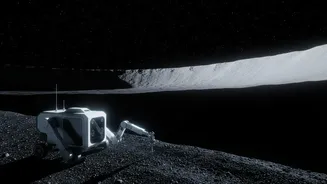
Finding the ice is the first major hurdle. Following the initial discoveries, subsequent ISRO missions and international collaborations have been building a detailed map. The Chandrayaan-2 orbiter's advanced radar has been crucial in peering beneath the surface to identify potential ice deposits. Future missions, however, will need to get up close. The upcoming Lunar Polar Exploration (LUPEX) mission, a joint effort between ISRO and Japan's JAXA, is a key next step. This mission will deploy a sophisticated rover designed to drill into the lunar surface and analyze subsurface samples. It will also carry instruments like a Neutron Spectrometer System, which can detect the presence of hydrogen—a key component of water—without even needing to drill, giving scientists a clearer picture of where the most promising ice deposits are located. Recent studies involving ISRO scientists have suggested that there could be 5 to 8 times more ice just a few meters below the surface than on it, making these advanced detection and drilling capabilities essential.
From Icy Regolith to Drinkable Water
Once located, extracting and purifying the ice presents a formidable engineering challenge. The ice isn't a clean, solid block but is mixed with lunar soil, or regolith, and frozen as hard as rock in temperatures below -200°C. The most common proposed method involves heating the icy regolith in a contained chamber. As the regolith is heated, the ice bypasses the liquid stage and turns directly into water vapour, a process called sublimation. This vapour is then captured and channelled to a separate 'cold trap', where it freezes again, but this time as much purer ice, leaving the soil and other contaminants behind. This purified ice can then be melted into liquid water. Further filtration and purification steps would then be applied to ensure it is safe for drinking or ready for electrolysis—the process of splitting it into hydrogen and oxygen.
Chandrayaan-4 and the Next Leap
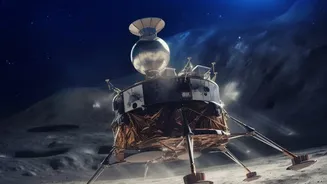
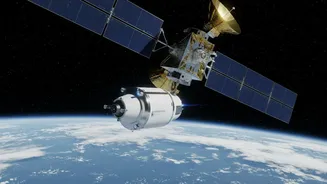
ISRO is not just planning to find the water; it is planning to bring it home. The Chandrayaan-4 mission, targeted for around 2028, is India's ambitious lunar sample-return mission. It aims to land near the lunar south pole, use a robotic arm and drill to collect soil and ice samples, and then launch them back to Earth. This incredibly complex mission, which involves five separate spacecraft modules and two heavy-lift rocket launches, is designed to prove India's capability in every critical phase of advanced lunar exploration: soft landing, robotic collection, ascending from the Moon, docking in lunar orbit, and safely returning a payload to Earth. Analyzing these pristine samples on Earth will provide invaluable insights into the Moon's history and the origin of its water, while mastering the technology will pave the way for India to send astronauts to the Moon by 2040.