



The Priceless Cargo on Mars
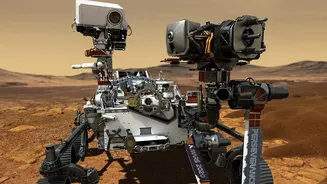
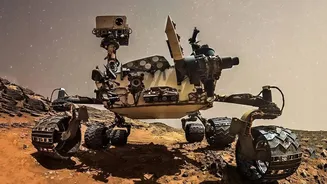
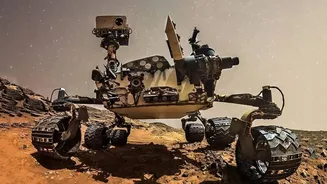
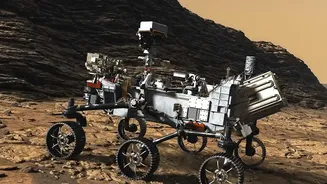
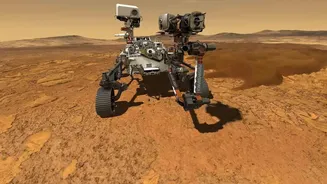
Since 2021, the Perseverance rover has been diligently collecting and caching rock and soil samples in the Jezero Crater on Mars. Scientists believe these pristine samples hold the key to answering one of humanity's biggest questions: was there ever life
on Mars? Analyzing them in advanced laboratories on Earth could reveal biosignatures that a rover-based lab could never detect. The original Mars Sample Return (MSR) program was a multi-part, multi-billion-dollar mission designed to retrieve these precious tubes and fly them home. It was a complex plan involving multiple spacecraft, a fetch rover, and a sophisticated ascent vehicle to launch the samples off the Martian surface.
An Overly Ambitious Plan
The initial MSR plan was ambitious, but an independent review concluded it was perhaps too ambitious. The review board found the mission's budget and schedule to be unrealistic, with projected costs spiralling well beyond initial estimates. The complexity of the mission, which required multiple, perfectly executed steps by different robotic systems, introduced significant risk. There were concerns that the original architecture was becoming too big to succeed, bogged down by its own weight and expense. NASA was faced with a stark choice: radically simplify the mission or risk its potential cancellation.
Introducing the PSRA
In response to these challenges, NASA has now put forward the Perseverance Sample Return Architecture, or PSRA. This is not a completely new mission but a significant streamlining of the old one. The core idea is to reduce the number of 'moving parts' and, therefore, the points of potential failure. The PSRA is NASA's pragmatic answer to the review board's findings, designed to make the sample return mission more achievable within a more constrained budget and a more realistic timeframe. It represents a major pivot, moving from a 'do it all' approach to a 'do what's essential' philosophy.
What's New in the Plan?
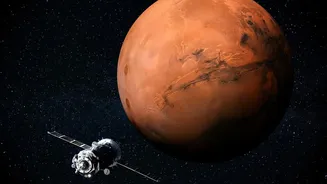
The biggest change under the PSRA is a greater reliance on the hardware already on Mars. Instead of sending a separate 'fetch rover' to collect the sample tubes, the new baseline plan is for the Perseverance rover itself to drive the samples directly to the Sample Retrieval Lander. This removes an entire robotic system from the equation, saving cost, time, and reducing mission complexity. Perseverance has proven to be a durable and reliable vehicle, and this new plan leverages its success. The mission will still require a lander to carry a small rocket (the Mars Ascent Vehicle) to blast the samples into orbit, and an orbiter to catch that package and fly it back to Earth, but the surface operations have been dramatically simplified.
Challenges and the Road Ahead
While the PSRA makes the mission more direct, it's not without its own set of challenges. The plan places a lot of faith in the long term health of the Perseverance rover, which will have been operating on Mars for years by the time the lander arrives. NASA will maintain the option to include helicopters, inspired by the success of the Ingenuity drone, as a backup for sample collection if needed. The new architecture is now undergoing further refinement, with NASA and its partners working to finalize the design and confirm the new cost and schedule projections. The goal is to present a more robust and credible plan that secures the mission's future. The scientific prize remains the same, but the path to claiming it has been redrawn to be leaner, smarter, and hopefully, more successful.