
From Humble Huts to Urban High-Rises
Lippan Kam, which translates to “mud-washing work,” is a traditional mural craft native to the Kutch region of Gujarat. For centuries, it was practiced primarily by women of pastoral communities like the Rabari, Mutwa, and Kumbhar to decorate their circular
mud huts, known as 'bhungas'. This art form was deeply connected to daily life and the environment. The mixture of clay and animal dung served a practical purpose, acting as a natural insulator that kept homes cool in the blistering desert summers and warm during cold winters. The embedded mirrors, or 'aabhla', were believed to ward off the evil eye while also capturing and reflecting scarce light, brightening up the dark interiors. The intricate motifs were not just decorative but a visual language, telling stories of their lives, beliefs, and the surrounding nature.
The Soul of the Craft
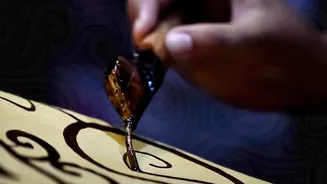
The original process was a testament to using locally available materials. Artisans would prepare a dough from clay and camel or wild ass dung, which is rich in fibre and acts as a strong binding agent. This mixture would be applied by hand directly onto the moistened walls of the bhungas. Without any pre-drawn designs, experienced artisans would shape the clay mixture into beautiful freehand patterns, creating borders and filling them with geometric shapes, peacocks, camels, and other motifs inspired by their embroidery and daily life. Small pieces of mirror were then painstakingly embedded into the wet clay relief. Once dried, the entire mural was often coated with a layer of white clay or sand from the salt marshes of Kutch, giving it a distinctive pristine finish that made the mirror work pop.
A Modern Makeover for a New Generation
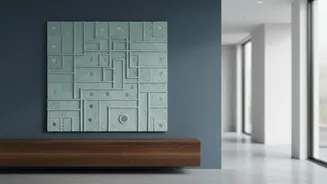
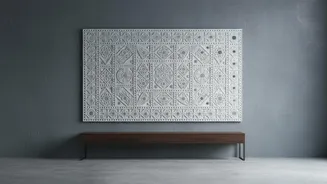
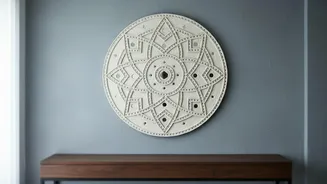
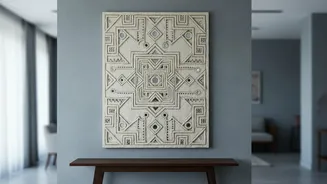
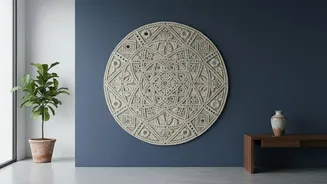
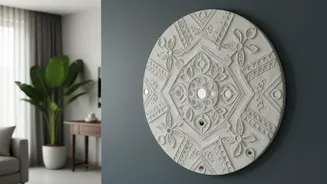
For Lippan Kam to transition from a rural mural to a decorative object in a city apartment, it had to evolve. The traditional materials, while perfect for the Kutch climate, are fragile and not suited for transport or modern homes. Today’s artisans have ingeniously adapted the craft. Instead of walls, they now use sturdy bases like MDF boards or plywood, making the art portable. The traditional dung and mud mixture has been replaced with more durable and odour-free alternatives like ceramic powder, chalk powder, or air-dry clay mixed with adhesives like Fevicol. This modern dough is easier to work with and ensures the artwork lasts longer. Artisans now use pre-cut acrylic mirrors in various shapes, and while the classic white finish remains popular, many are experimenting with vibrant acrylic paints to match contemporary colour palettes, from soft pastels to bold metallic shades.
The Artisans Driving the Change
This modernization is not just about changing materials; it's about creating new livelihoods and preserving a priceless heritage. The growing interest in traditional crafts has provided a significant economic boost for the artisan communities of Kutch. Events like the Rann Utsav have given the craft immense exposure, connecting artisans directly with a national and even global audience. While some purists worry about the craft losing its connection to its architectural origins, this evolution is what keeps the tradition alive. It allows the artisans' skills, passed down through generations, to find new expression and appreciation. Many artists now take commissions for customized pieces, working with interior designers and architects to create bespoke installations for luxury homes, hotels, and cafes, ensuring their skills are both valued and financially rewarded.
Why Lippan Resonates with Urban India
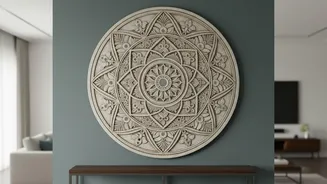
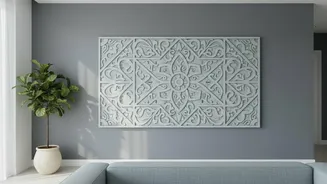
The appeal of modern Lippan art in high-end urban homes is multi-faceted. In an age of mass-produced decor, a handcrafted Lippan panel offers a touch of authenticity and a connection to cultural roots. Its textured, three-dimensional quality adds depth and character to minimalist interiors, while its shimmering mirrors can bring a touch of bohemian glamour to any room. Each piece tells a story of the desert, of community, and of masterful craftsmanship. For many homeowners, incorporating a piece of Lippan art is more than just a design choice; it is a celebration of India's rich artistic heritage. It is a way to own something unique and soulful that bridges the gap between a storied past and a contemporary present, turning a simple wall into a canvas for cultural expression.