


The Undisputed Champion
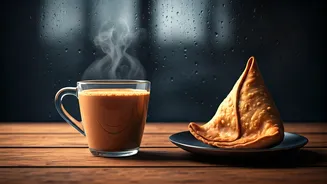
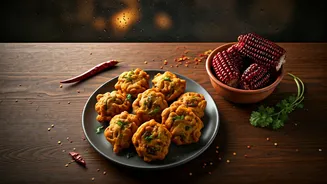
Let’s be honest, the competition is fierce. There’s the roasted bhutta (corn on the cob), its kernels blackened and slathered with lemon and masala, a smoky ode to street-side vendors. There’s the mighty samosa, its flaky pastry giving way to a spiced
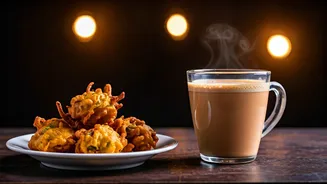
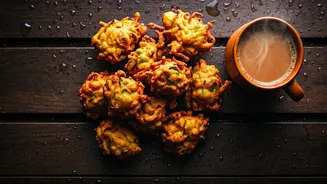
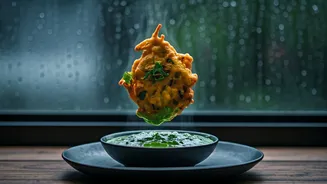
potato filling, a heavyweight in its own right. And of course, there's the simple comfort of a steaming cup of adrak chai. But when the rain is relentless and the mood calls for something truly special, the undisputed champion emerges from a spluttering kadai of hot oil: the pakora. Call it bhajiya, bonda, or fritter—its essence remains the same. The pakora isn't just a snack; it's a feeling. It’s the sound of batter hitting hot oil, a sizzle that competes with the pitter-patter of raindrops outside. It’s the communal act of huddling in the kitchen, waiting for the next batch to be strained, golden-brown and impossibly tempting.
A Symphony of Simplicity
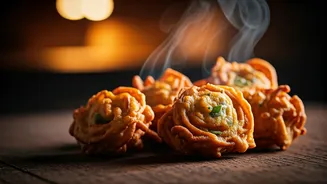
What is the pakora’s secret? Its genius lies in its simplicity and its infinite adaptability. At its core, it is nothing more than a chosen ingredient—a slice of onion, a sliver of potato, a spinach leaf, a cube of paneer—dipped in a seasoned gram flour (besan) batter and deep-fried to perfection. The batter, a simple concoction of besan, water, and spices like turmeric, red chilli powder, and ajwain (carom seeds), is the master key. It creates a crispy, flavourful shell that encases the main ingredient, steaming it gently from the inside. The result is a textural masterpiece. The first bite yields a satisfying crunch, an audible crackle that gives way to a soft, flavour-infused interior. It’s this contrast that makes the pakora so addictive. The earthy, nutty flavour of the gram flour batter provides the perfect canvas for whatever lies within.
The Magic of Versatility
This is where the pakora truly leaves its competitors behind. Its versatility is its superpower. Feeling classic? The kanda bhaji (onion pakora), with its sweet, caramelised onion slivers held together by crispy batter, is an all-time great. Need something more substantial? Aloo pakoras, with their soft, fluffy potato centres, are deeply satisfying. Want a touch of green? Palak pakoras offer a light, leafy crispness. For something more indulgent, paneer pakoras provide a delightful, melt-in-your-mouth experience. This adaptability means there is a pakora for every mood, every preference, and every half-empty vegetable drawer. It’s an impromptu snack born from whatever is at hand, a testament to the ingenuity of the Indian kitchen. It doesn't require elaborate planning or exotic ingredients, making it the perfect answer to a sudden rain-induced craving.
A Ritual of Rain and Togetherness
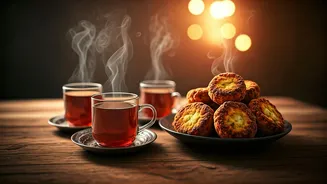
More than the taste or texture, the pakora is synonymous with a cherished ritual. It’s the snack of togetherness. Nobody makes just a few pakoras for themselves. It’s an event that calls for a platter, piled high and served with green chutney and tangy tamarind sauce, to be shared among family and friends. It evokes memories of childhood, of mothers and grandmothers expertly dropping batter into hot oil while children wait impatiently. It’s the centrepiece of conversations that unfold on verandas and balconies as the monsoon transforms the world outside. The pakora isn’t just food; it’s the edible form of the comfort, warmth, and connection we seek on a grey, rainy day. It’s a sensory trigger that instantly transports you to a place of cosy contentment.